
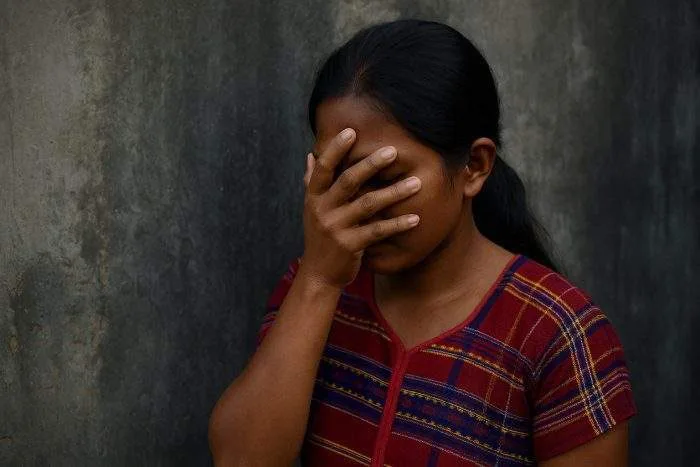
From January to September 2025, at least 21 incidents of violence targeted national minority women in the Chittagong Hill Tracts (CHT), the Parbatya Chattagram Jana Samhati Samiti (PCJSS) said in a statement released Sunday.
The incidents—spanning rape, attempted rape, sexual harassment, and murder after rape—occurred in the three hill districts: Khagrachari, Bandarban, and Rangamati. PCJSS said six women and girls were raped, seven incidents of attempted rape took place, one woman was murdered after rape, eight faced sexual harassment, and four were tortured.
PCJSS emphasized that such violence against indigenous women is not new in the CHT region, and claimed that for decades many victims have not received justice. The statement was issued in the wake of a wave of sectarian clashes triggered by a protest over the rape of a Marma girl in Khagrachari.
Recent sectarian violence in Khagrachari-Guimara
On September 27, an anti-rape protest in Khagrachari town escalated into sectarian clashes. The demonstration was organized following alleged sexual violence against a Marma girl. The following day, violence spread to Guimara, especially at Ramsu Bazar, where three Marma youths were killed and dozens were injured, according to local reports.
In its statement, PCJSS referenced those clashes as further evidence of communal tensions in the region. The organization asserted that, since the 1997 CHT Peace Accord, at least 22 sectarian communal attacks have occurred under the influence of vested interest groups.
PCJSS called for a judicial inquiry into the September incidents, compensation and medical support for victims, and legal action against those responsible in Khagrachari-Guimara.
Broader human rights situation in CHT
PCJSS’s half-yearly reports provide additional context. In the period from January to June 2025, the group recorded 103 human rights violations in CHT linked to security forces, armed groups, settlers, and communal actors. Around 315 Jumma people (indigenous groups) were affected in those incidents. (These may include land grabbing, abductions, torture, and other abuses.)
Within those violations, PCJSS noted that 15 incidents during the first half of 2025 involved violence against minority women and girls, affecting 16 victims. For the same half-year in 2024, just four such incidents affecting nine women were officially recorded.
Security forces, law enforcement agencies, communal and fundamentalist groups, and land grabbers are named as actors in those violations.
Historical and regional context
The Chittagong Hill Tracts, comprising Khagrachari, Rangamati, and Bandarban, have long been a sensitive zone in Bangladesh, marked by ethnic diversity and a history of conflict. Indigenous groups—such as the Chakma, Marma, Tripura, Mro, Bawm, and others—differ in language, religion, and social customs from the Bengali majority.
A peace accord signed in 1997 between the government and PCJSS intended to address autonomy, land rights, and governance, but many observers argue that full implementation has lagged. Over the years, tensions over land, resource control, and identity have fueled periodic outbreaks of communal violence and rights violations.
Analyses of human rights in the CHT region emphasize that indigenous women often face intersecting vulnerabilities: gendered violence atop ethnic marginalization. Amnesty International and other groups have documented underreporting, social stigma, and difficulties in accessing justice for survivors. In earlier decades, some studies found that as many as 95% of survivors feared stigma, and 60% did not pursue legal action.
Requests and government response
PCJSS has formally demanded:
- A judicial probe into the events of September 27–28
- Compensation and medical care for victims
- Legal accountability for those involved in the Khagrachari-Guimara attacks
As of now, no public response from the national government or the CHT administration is evident in the PCJSS statement.
Outlook and ongoing challenges
While these 21 documented incidents offer a grim snapshot, actual numbers may be higher due to underreporting and social barriers. Ensuring proper investigation, legal redress, and protection for minority women in the region remain significant challenges in the broader struggle for human rights and communal harmony in the CHT.
The September clashes highlight how local protests over gendered violence can escalate rapidly into broader sectarian conflict in a region already fraught with historical grievances. The direction of accountability and legal action in the coming weeks could test both the will of regional authorities and national human rights institutions.
If you like, I can also prepare a shorter version for media outlets or a timeline visual of the 21 incidents mapped by district.



COMMENTS