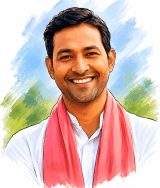

Dhaka: Former Speaker of Bangladesh’s Jatiya Sangsad, Shirin Sharmin Chaudhury, has been released on bail after spending five days in custody, in a case that has drawn renewed scrutiny over the legal and political environment facing figures associated with the previous Awami League government.
Chaudhury was released from Kashimpur Central Jail in Gazipur at around 6:30 p.m. on Sunday, according to Assistant Inspector General of Prisons Jannatul Farhad, who confirmed the development to journalists at the facility. Senior Jail Superintendent Kawalin Nahar said she was “handed over to her relatives following due procedure” upon release.
The former Speaker had been sent to jail on April 7 in connection with an attempted murder case linked to the July 2024 unrest.
Arrest tied to post-uprising cases
Chaudhury had largely remained out of the public eye since August 2024, when the Awami League government was ousted and an interim administration backed by military and Islamist elements assumed control under Nobel laureate Muhammad Yunus.
On April 7, she was arrested by Detective Branch (DB) police from her residence on Road 8/A in Dhaka’s Dhanmondi area. Police had sought a two-day remand, while her legal team filed a bail petition. The court rejected both requests and ordered her to be sent to jail.
According to the case statement, the charges relate to an incident on July 18, 2024, during mass protests in Azimpur, where demonstrators were allegedly attacked with firearms. One individual, Ashraful—also known as Fahim—sustained a gunshot injury to the eye and later filed a case naming former Prime Minister Sheikh Hasina and more than 100 others.
Legal observers note that many of these cases have been filed months after the events, often naming large numbers of political figures. Critics argue that this pattern—implicating prominent individuals in what they describe as questionable cases—raises concerns about due process and the potential use of the legal system for political purposes.
A broader pattern of legal pressure
Since the political transition in August 2024, numerous Awami League leaders, activists, and officials have faced arrests, legal cases, or administrative actions. Human rights organizations and analysts have expressed concern over what they describe as a climate of intimidation and selective enforcement.
According to rights group Ain O Salish Kendra (ASK), at least 318 people were killed between August 5 and 8, 2024, in violence surrounding the political transition. Minority organizations have also reported thousands of incidents of targeted attacks in the weeks that followed.
In a statement released in Dhaka last year, ASK said, “The pattern of violence and the lack of accountability remain deeply concerning, particularly where political affiliation appears to influence both targeting and response.”
Political analysts say the arrest of a figure as prominent as Chaudhury reflects deeper tensions within the country’s governance and legal institutions. Some analysts argue that individuals detained in politically motivated cases should be reviewed through a transparent legal process to ensure fairness and justice.
A Dhaka-based legal expert, speaking at a discussion hosted by a civil society group earlier this year, noted, “Justice must not only be done but must be seen to be done. The credibility of institutions depends on fairness, especially in politically sensitive cases.”
Role and legacy of a prominent figure
Shirin Sharmin Chaudhury, a senior Awami League leader, first entered parliament in 2009 as a reserved seat member and later served as State Minister for Women and Children Affairs. She became Speaker of Parliament in 2013, making history as the first woman to hold the position in Bangladesh.
Following the dissolution of parliament on August 6, 2024—one day after Sheikh Hasina left the country—constitutional provisions allowed her to remain in office until a successor was sworn in. However, she resigned on September 2, just 27 days later.
Her recent arrest marked one of the highest-profile detentions of a former constitutional officeholder since the change in power.