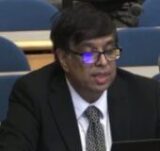

LONDON, July 16, 2025 — A high-level parliamentary briefing was held at Westminster on Tuesday to examine the escalating democratic and human rights crisis in Bangladesh under its unelected interim government. The event, hosted by MP Bob Blackman and the Bangladesh Unity Forum, brought together legal experts and former lawmakers to address growing concerns over the country’s political repression, misuse of justice, and exclusionary electoral practices.
Speakers included:
• Bob Blackman MP, Member of Parliament for Harrow East (Chair)
• Martyn Day, former SNP MP for Linlithgow and East Falkirk
• S M Rezaul Karim, Senior Supreme Court Lawyer and former Bangladeshi Minister
• Steven Powles KC, Barrister at Doughty Street Chambers
The central focus of the session was the deteriorating state of democratic norms and accountability in Bangladesh since the controversial rise of the interim government led by Nobel Laureate Dr. Muhammad Yunus in August 2024.
ICC Communication Over Widespread Political and Religious Violence
Legal experts revealed that an Article 15 communication has been formally submitted to the International Criminal Court (ICC), calling for an independent investigation into a surge in politically and religiously motivated violence. The submission cites widespread human rights abuses including:
• Attacks on minorities, journalists, police, and lawyers;
• Arbitrary arrests and false charges against individuals linked to the former Awami League government;
• Unchecked mob violence and incitement to religious hatred.
According to testimonies, the interim government has offered blanket immunity to those who participated in the violent uprising of July-August 2024. An official statement from the interior ministry assured that “students and citizens” involved in the protests would not face prosecution, effectively shielding perpetrators from accountability.
Speakers further alleged that the judicial system in Bangladesh has lost all semblance of independence, citing the dismissal of 18 senior judges and systematic exclusion of legal professionals affiliated with the previous administration.
“The International Crimes Tribunal has become a political tool, while the government strategically avoids referring Sheikh Hasina to the ICC to maintain control over domestic proceedings,” noted one panelist.
Democratic Process Undermined by Party Ban and Delayed Elections
Panelists also condemned the use of Bangladesh’s Anti-Terrorism Act to ban the country’s largest political party, the Awami League, in May 2025. They argued that this action violates constitutional guarantees for participatory elections and sets a dangerous precedent.
“There is no constitutional basis for an unelected government,” said Martyn Day. “And yet, elections have been indefinitely delayed, and the largest political voice in the country has been criminalized.”
The interim government has now proposed an election date of February 2026, but observers expressed skepticism over whether any free or credible elections could take place under current conditions.
A separate communication is being prepared for UN Special Rapporteurs, challenging the political party ban and its implications for democratic governance.
Moreover, legal experts emphasized that under the Bangladeshi Constitution, elections cannot be legally held without the resignation of the Prime Minister. Sheikh Hasina, despite being sidelined by the current regime, has not formally stepped down—raising serious concerns about the legality of any future electoral processes.
International Response Urged
The event concluded with a unified call for international institutions, including the ICC and United Nations, to intervene and uphold democratic standards and human rights in Bangladesh.
MP Bob Blackman described the situation as “deeply alarming” and stressed the need for global accountability. “The people of Bangladesh deserve a government that represents them, not one that rules by force and fear.”
The panel urged the UK Government and global democracies to closely monitor developments in Bangladesh and support efforts to restore electoral integrity and judicial independence.