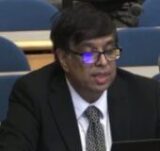
Moscow, July 15 — As speculation intensifies over the future of Russia’s leadership, one name consistently emerges from the Kremlin’s inner circle: Nikolai Patrushev, a longtime ally of President Vladimir Putin and one of the most influential figures in Russian national security.
Patrushev, 74, currently serves as Presidential Aide after stepping down in May 2024 as Secretary of the Security Council, a position he held for 16 years. His career spans decades in Russia’s intelligence apparatus, including a pivotal role as Director of the Federal Security Service (FSB) from 1999 to 2008, succeeding Putin himself.
A Legacy of Loyalty and Influence
Born in Leningrad in 1951, Patrushev rose through the ranks of the KGB alongside Putin, forging a bond that has endured through Russia’s post-Soviet transformation. He is widely regarded as a key architect of Russia’s assertive foreign policy, including the annexation of Crimea in 2014 and the invasion of Ukraine in 2022.
Patrushev’s worldview is deeply shaped by Cold War-era geopolitics. He has repeatedly accused the West of seeking to dismantle Russia’s sovereignty and has promoted conspiracy theories about Western-led depopulation schemes and NATO expansionism.
The Succession Question
While Putin has not publicly named a successor, analysts and insiders suggest Patrushev is among the top contenders. His hawkish stance, strategic acumen, and unwavering loyalty make him a natural choice for continuity within the Kremlin’s power structure.
“He’s the ideological backbone of Putin’s regime,” said Mark Galeotti, a Russia expert. “If Putin were to step down or become incapacitated, Patrushev is one of the few trusted enough to maintain the system without radical change”.
Despite being older than Putin, Patrushev’s age may not be a disadvantage. Reports indicate the Kremlin favors candidates over 50 for future leadership roles, reinforcing his viability.
A Hardliner with Global Reach
Patrushev has played a central role in shaping Russia’s security alliances, particularly with China, Iran, and Venezuela, and has been instrumental in crafting Russia’s updated national security doctrine, which emphasizes preemptive force to protect sovereignty.
His recent appointment as Putin’s top adviser has granted him greater latitude to promote ultra-nationalist narratives, including claims that Ukraine may cease to exist as a sovereign state. This shift allows the Kremlin to test extreme positions without formally adopting them.
What Lies Ahead
As Russia navigates economic strain, international isolation, and a protracted war in Ukraine, the question of succession looms large. Patrushev’s prominence signals that any transition of power is likely to preserve the ideological and strategic foundations laid by Putin.
Whether he ultimately ascends to the presidency or remains a behind-the-scenes power broker, Nikolai Patrushev’s influence on Russia’s future is undeniable.
Nikolai Patrushev: Putin’s Trusted Confidant and Potential Successor