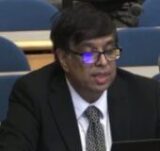

Serious questions are being raised about the objectivity and effectiveness of United Nations High Commissioner for Human Rights, Volker Türk, amid his continued silence on widespread and well-documented human rights violations in Bangladesh following the political transition of August 2024.In his recent remarks before the United Nations Human Rights Council (UNHRC), Türk voiced concern about a newly passed amendment in Bangladesh that allows the banning of political parties and associated activities. He stated:> “I am concerned about recent changes to legislation to allow the banning of political parties and organizations and all related activities. This unduly restricts the freedoms of association, expression, and assembly.”However, critics were quick to point out that while Türk condemned the legislation, he failed to mention the very context in which it was enacted: the blanket ban on the Awami League (AL), the country’s largest and oldest political party. This omission comes despite a clear recommendation from the February 2025 OHCHR Asia fact-finding mission, which warned against the banning of any political parties in Bangladesh as undemocratic and dangerous.Observers note that this is not an isolated lapse. Since Dr. Muhammad Yunus assumed leadership of the interim government in August 2024, Türk’s office, once highly vocal on Bangladesh’s rights record, has grown conspicuously quiet. This has sparked concerns among diplomats, activists, and journalists who are documenting a growing list of alarming incidents:Mass Arrests: Over 100,000 people—mostly AL supporters—have reportedly been arrested under “Operation Devil Hunt.”Fabricated Cases: At least 1,500 sweeping murder and riot cases have been filed against tens of thousands of political opponents.Press Suppression: 292 journalists have been charged, with 13 held without bail, while many others have lost jobs due to political pressure.Communal Violence: Over 2,300 attacks on religious minorities have been recorded, with minority rights defenders also targeted through legal harassment.Mob Violence: 119 deaths and widespread destruction of cultural and private property have been blamed on politically-backed groups.Custodial Deaths: 24 AL members have died in custody—many reportedly due to torture or neglect.Political Killings: 133 AL figures have been killed by rival groups, yet investigations remain absent or inadequate.Rise of Extremism: Islamist groups aligned with the interim regime have imposed rigid moral codes on culture, media, and public life.Suppression of Dissent: The right to peaceful protest and assembly has been violently curtailed.Despite this dire backdrop, Türk’s recent UNHRC appearance focused largely on technical observations, with little acknowledgment of these violations. He also emphasized hope for an “expanded OHCHR presence” in Bangladesh—a proposal many now view skeptically.A Question of Influence?Given the UN rights office’s active role in critiquing the pre-August 2024 Hasina administration, many are now asking why this vigilance has seemingly evaporated. A possible answer being floated—both within diplomatic circles and civil society—is Türk’s alleged personal rapport with Dr. Muhammad Yunus.While no official confirmation exists regarding any direct personal link between the two, suspicions persist that Türk’s neutrality may be compromised by social or ideological alignment with Yunus, a Nobel Laureate long respected in international circles. Critics argue that such proximity could be undermining the impartiality and responsiveness of the OHCHR under Türk’s leadership.Waning CredibilityAs questions over Türk’s silence mount, confidence in the OHCHR’s ability to ensure accountability and uphold human rights in Bangladesh is eroding fast. The call for an expanded UN rights office in Dhaka is now met with skepticism: If the current structure has failed to speak out, can a larger presence truly make a difference?Without urgent clarification, the UN’s credibility in the region may suffer irreversible damage. For now, the world watches as Bangladesh spirals deeper into political violence, with its people paying the ultimate price—amid the troubling quiet of those sworn to protect them.