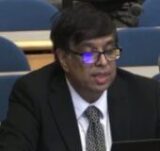

By Dr. A.K. Abdul Momen
Former Foreign Minister of Bangladesh
Dhaka, June 20, 2025 —
At a recent international forum, Dr. Muhammad Yunus—Nobel Laureate and Bangladesh’s interim chief advisor—claimed that “Bangladeshis sell their votes for money.” This inflammatory and sweeping generalization has provoked deep resentment across Bangladesh. Many citizens view the statement as a gross insult, portraying an entire nation as ignorant and morally corrupt. It undermines the very people whose democratic choices have shaped the country’s political landscape over the past five decades.
Adding to this concern, Dr. Yunus’s close associate and A current Commissioner, Dr. Badiul Alam Majumdar, has proposed barring non-graduates from contesting local elections. This elitist policy suggestion threatens to disenfranchise a large segment of rural and underprivileged populations, many of whom may not have had access to higher education but possess integrity, leadership, and public trust.
Leadership cannot—and should not—be measured by formal academic degrees alone. Some of the most influential figures in history did not graduate from universities: the Prophet Muhammad (peace be upon him), Prophet Jesus (pbuh), Prophet Moses (pbuh), Abraham Lincoln, Indira Gandhi, Golda Meir, Thomas Edison, Bob Dylan, and Bill Gates, to name a few. Their impact on global civilization speaks to the power of vision and character, not credentials.
In Bangladesh’s own history, former Prime Minister Khaleda Zia was not a university graduate, yet she led the nation for over a decade. To suggest that such individuals are unfit to lead, simply because of lacking a degree, reflects a deeply problematic understanding of democracy and merit.
Dr. Yunus has also come under criticism for his celebrated microcredit model. Although widely praised abroad, many in Bangladesh have long argued that it has trapped millions in cycles of debt. Research indicates that approximately 91% of microcredit recipients have fallen from poverty into deeper economic distress. For the poor, these loans have often become a burden rather than a lifeline.
It is particularly troubling that such remarks come from someone who has never stood in an election or been tested by the public through the democratic process. To dismiss the electorate as easily manipulated or morally compromised is not just elitist—it is deeply disrespectful.
If Dr. Yunus truly wishes to serve the people of Bangladesh, he must begin by respecting their dignity. A public apology would be an appropriate first step.
Dr. A.K. Abdul Momen is a Bangladeshi diplomat and former Foreign Minister of Bangladesh. He has served as Bangladesh’s Permanent Representative to the United Nations and has been active in promoting international cooperation and democratic development.