
Washington, D.C. – June 19, 2025 | theVoice.news
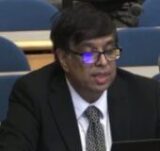
Bangladesh’s National Security Advisor Dr. Khalilur Rahman met with U.S. Deputy Secretary of State Christopher Landau, reflecting Washington’s continued interest in supporting democratic progress and regional stability in Bangladesh ahead of the upcoming national elections.

Bangladesh’s National Security Advisor Dr. Khalilur Rahman met with U.S. Deputy Secretary of State Christopher Landau in Washington this week, in a meeting that, while brief in public statements, carried deeper implications for the future of U.S.-Bangladesh relations. Although the official readout focused on trade and regional cooperation, the United States has consistently and clearly reiterated its expectations for democratic norms in Bangladesh.
While this particular meeting did not include a public statement on press freedom, judicial independence, or political participation, those priorities remain central to U.S. policy toward Bangladesh. In multiple recent State Department briefings, spokespersons have emphasized Washington’s commitment to inclusive elections, the protection of civil liberties, and a fair justice system for the people of Bangladesh.
“The United States wants to see Bangladesh uphold the democratic values enshrined in its constitution,” a State Department official stated earlier this year. “That includes allowing free political expression, safeguarding press freedom, and ensuring that the judiciary remains independent and impartial.”
This latest meeting comes at a time of heightened international attention on Bangladesh’s internal politics. The interim government led by Dr. Muhammad Yunus has enacted legal reforms that allow for banning political parties—moves that have drawn concern from human rights groups and international observers. The United Nations High Commissioner for Human Rights, Volker Türk, recently warned that such measures “risk undermining fundamental freedoms” and urged Dhaka to protect democratic space and dissent.
While no new commitments were announced following the Rahman-Landau meeting, diplomatic sources suggest that democracy and human rights remain key agenda items in ongoing U.S.-Bangladesh dialogue. The photo-friendly encounter should not be mistaken for complacency; rather, it reflects the continued balancing act of public diplomacy and behind-the-scenes pressure.
As Bangladesh approaches its next national election, the United States appears to be signaling that it expects more than procedural votes—it expects a process that genuinely reflects the will of the people, protects journalists, and guarantees equal political opportunity.
— Reported by The Voice News Team | Diplomacy & South Asia Affairs Desk