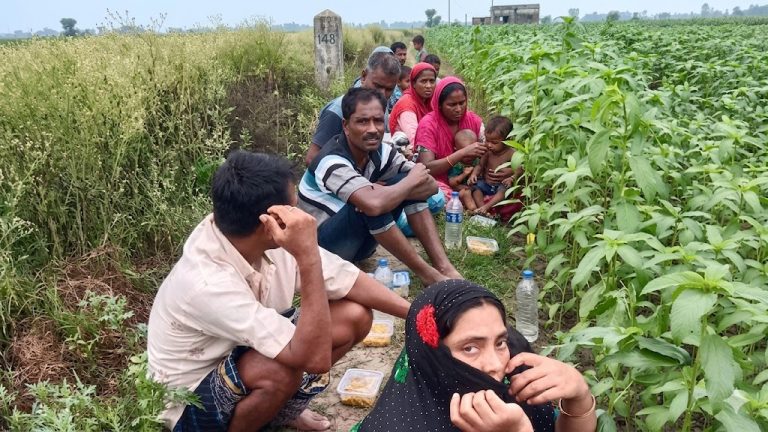
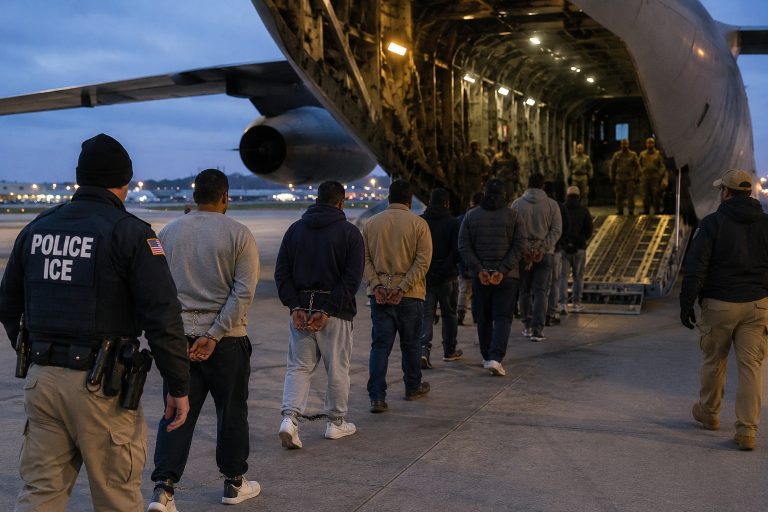
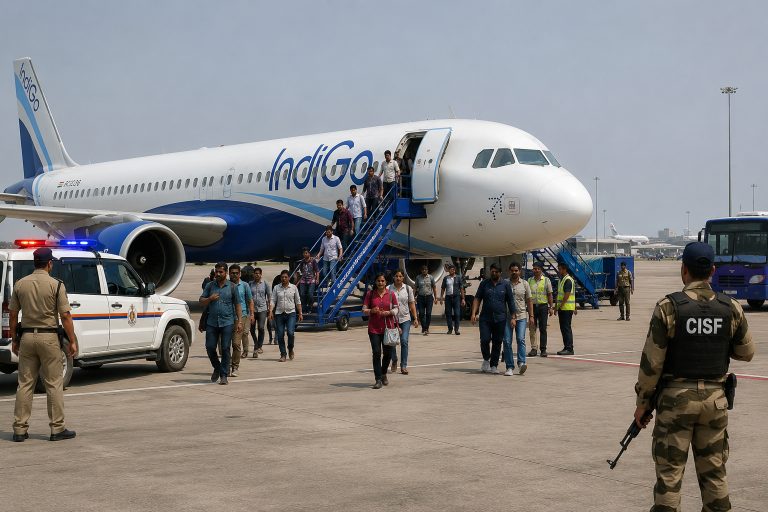
KUSHTIA — Trapped under a blazing sun in a patch of barren field, a toddler aged barely a year and a half clings to his mother. They are part of a group of 12 human beings—four women, four men, and four children—who have suddenly found themselves transformed into geopolitical pawns, stranded on the “zero-line” separating India and Bangladesh.
The group remains marooned at the Pragpur border in the Daulatpur Upazila of Kushtia district. They are caught in a grim limbo: pushed forward by one state’s security apparatus and blocked by another, they have spent agonizing days and nights exposed to a severe heatwave and the terrifying uncertainty of what tomorrow holds.
This distressing scene unfolded at dawn on a Friday, near boundary pillar number 48. Local villagers reported seeing the group being driven toward the border by India’s Border Security Force (BSF) in an informal deportation maneuver locally termed a “push-in.” When the group crossed into Bangladesh territory, alert locals noticed the movement and quickly alerted the Border Guard Bangladesh (BGB). In a joint effort by BGB personnel and nearby residents, the group was turned back to the zero-line, preventing their entry.
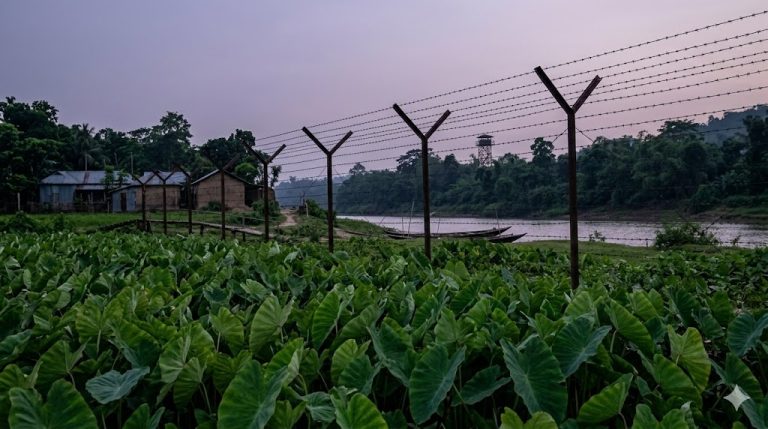
Since then, the 12 individuals have been living under the open sky, their lives reduced to a grueling survival test. Driven by pure empathy, local Bangladeshi villagers have occasionally braved the tension, crossing a small bamboo footbridge over the Mathabhanga River to deliver drinking water and basic food to the stranded group. Yet, despite these small acts of community kindness, the atmosphere remains thick with terror and exhaustion.
A Bureaucratic Standoff in No Man’s Land
Efforts to resolve the impasse through formal military channels have stalled. A scheduled flag meeting between the BGB and BSF, meant to decide the fate of the stranded families, failed to take place as planned.
Expressing the administrative challenges and the immediate security measures taken on the ground, Lieutenant Colonel Rashed Kamal Rony, the Commanding Officer of the 47 BGB Battalion, addressed the situation on Friday evening:
“We are maintaining the highest state of alert along the frontier. The BSF has made repeated attempts to push in people during night hours, in some cases by turning off border lights. While we have sought immediate flag meetings to resolve this specific incident through appropriate diplomatic protocols, a positive response is yet to be realized. Until a formal bilateral resolution is reached, these individuals are forced to remain at the zero-line.”
The situation in Pragpur is not an isolated incident. Following the confrontation on Friday morning, BSF units reportedly intensified efforts to initiate fresh push-ins across other points in the Daulatpur frontier, including the Dharmadaha area. In response, a joint vigil comprising BGB troops and local border communities was established, maintaining an all-night watch under strict instructions to block any unauthorized crossings.
The Broader Crisis: Statistics and Geopolitical Friction
The standoff in Kushtia is part of a sharply escalating trend along the 4,096-kilometer shared border between India and Bangladesh—one of the longest and most complex frontiers in the world. According to data compiled by human rights monitoring groups and political alliances in Dhaka, more than 50 distinct push-in incidents have been recorded along the frontier over a recent three-month period alone. These operations involved attempts to informally deport approximately 2,479 individuals into Bangladesh.
The International Society for Human Rights (ISHR) noted a significant surge in border friction, emphasizing that while nations have an undeniable right to secure their perimeters, the methods deployed must align with basic international human rights standards. The crisis is compounded by a rise in border fatalities, with human rights organizations reporting nineteen Bangladeshi citizens killed and dozens injured in border-related incidents over a short timeframe.
This rise in frontier instability coincides with deep political shifts in the region, which have heavily strained relations between New Delhi and Dhaka. In official bilateral forums—such as the Director General-level Border Coordination Conference held in New Delhi—both nations consistently pledge to maintain peace, counter human trafficking, and manage borders through legal repatriation procedures. However, the reality on the ground often tells a starkly different story, where domestic political rhetoric frequently translates into aggressive, informal border management tactics.
Shifting the Lens to a Humanitarian Emergency
While politicians debate migration policies and military commanders discuss border protocols, humanitarian workers argue that the core of the issue is being dangerously ignored: the flagrant violation of human dignity.
Civil society organizations on both sides of the border are increasingly calling for an immediate end to the practice of treating vulnerable migrants as faceless security threats. Commenting on the rising systemic vulnerability of border-dwelling populations, Nasiruddin Patwari, a prominent civic coordinator advocating for frontier communities, remarked during a recent press brief in Dhaka:
“The residents living near the zero-line find themselves trapped in an increasingly perilous humanitarian situation. We are witnessing a dangerous breakdown of basic compassion, where impoverished men, women, and infants are caught in a relentless tug-of-war between states. Security protocols must not be executed at the expense of human life; these people must be treated as human beings first, rather than instruments of political friction.”
The ongoing standoff highlights a profound legal and ethical contradiction. Under international law, informal, forced expulsions—without legal due process or verifiable identification of nationality—violate fundamental humanitarian tenets. When these operations occur, they strip individuals of their legal rights and expose them to extreme physical danger, such as the severe heatwave currently gripping the region.
As the sun sets over the Mathabhanga River, the immediate future for the 12 people marooned at pillar number 48 remains entirely uncertain. Their plight serves as a stark reminder that as long as border management remains a zero-sum political game, the heaviest price will continue to be paid by the poorest and most vulnerable, whose only crime is being caught on the wrong side of an invisible line.