Home Blog

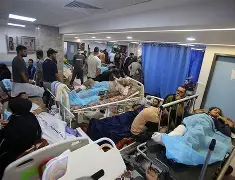
13 Hospitals and Health Facilities Damaged in Iran Attacks: WHO

The World Health Organization (WHO) has reported that 13 hospitals and health facilities in Iran have been damaged during recent attacks amid the escalating conflict involving the United States and Israel.

According to the global health agency, the strikes have also killed four health workers and injured at least 25 others. The conflict, which began with joint U.S.–Israeli attacks on February 28, has continued to intensify across the region.

Reports indicate that the ongoing hostilities have resulted in the deaths of around 1,230 people in Iran so far. In neighboring Lebanon, Israeli strikes have killed more than a hundred people. Meanwhile, Iran’s retaliatory attacks have reportedly left 13 civilians dead in Israel and killed six U.S. soldiers.

Children are also among the victims. On Sunday, an attack targeted the Shajareh Tayebeh School in the southern Iranian city of Minab, resulting in casualties among students.

WHO Director-General Tedros Adhanom Ghebreyesus said during a press briefing that 13 health facilities in Iran and one in Lebanon had been affected by the attacks. However, he did not explicitly identify which side was responsible for targeting the medical sites.

“Under international humanitarian law, healthcare facilities must be protected and must never be attacked,” Tedros said.

WHO’s Regional Director for the Eastern Mediterranean, Hanan Balkhy, added that four ambulances in Iran had also been damaged. Some hospitals and healthcare installations suffered minor damage due to nearby explosions.

She also noted that hospitals and clinics in parts of Lebanon had been closed after residents were instructed to evacuate the area.

Earlier, WHO said a hospital in the Iranian capital Tehran had to be evacuated after an explosion occurred near the facility.

The organization also warned that the ongoing conflict is threatening international humanitarian supply systems. Operations at its global emergency logistics hub in Dubai have been temporarily suspended due to security risks.

Balkhy said the hub processed more than 500 emergency orders for 75 countries last year. However, security concerns, airspace closures and restrictions on access to the Strait of Hormuz have made it impossible to continue operations.

She warned that humanitarian health supply chains are now at serious risk as the conflict spreads across the region.


Shayla Ahmed Joins The Voice as Chief Managing Editor

Washington, DC — March 1 — The Voice News Media Team has announced the appointment of Shayla Ahmed as its Chief Managing Editor, strengthening the organization’s editorial leadership and digital engagement.

Shayla Ahmed , a prominent online commentator and human rights activist, officially joined The Voice on March 1. She is widely recognized for her work as a political critic and social advocate, actively engaging in discussions on governance, civil liberties, and human rights issues through digital platforms and public discourse.

With a strong presence in online activism, Shayla has contributed to raising awareness on social justice issues and has built a reputation as an influential voice in political and civic conversations.

In her new role as Chief Managing Editor, she will help oversee editorial strategy, content development, and digital outreach for The Voice. Her involvement is expected to further strengthen the platform’s commitment to independent journalism, policy analysis, and public-interest reporting.

Leadership at The Voice expressed confidence that Shayla’s experience in advocacy, media engagement, and public communication will play an important role in expanding the organization’s reach and enhancing its editorial impact.

The Voice is an independent news and analysis platform focusing on diplomacy, politics, and policy, with coverage spanning the United States, South Asia, and global affairs.

Media Contact:
The Voice News
Email: tugrilcz@gmail.com

U.S. Orders Evacuation of Non-Emergency Embassy Staff from Three Countries

The United States has instructed non-emergency personnel at its embassies in Saudi Arabia, Oman, and Cyprus to leave the countries immediately due to rising security threats amid ongoing regional tensions.

According to notices sent Wednesday by the U.S. Department of State, the decision follows heightened concerns over potential attacks targeting American diplomatic missions in the region.

In a statement issued to the U.S. Embassy in Saudi Arabia, the State Department warned of possible continued threats after a recent attack near the U.S. diplomatic compound in Riyadh. “Following the attack on the U.S. Embassy in Riyadh, the Department of State anticipates that similar incidents may continue,” the notice said, directing all non-essential staff to depart the country without delay.

Separate, shorter notices were also sent to U.S. embassies in Oman and Cyprus, citing general security concerns and ordering the immediate departure of non-emergency personnel.

The move comes after a series of drone attacks reported earlier this week. On Monday, a drone strike targeted a British air force base in Cyprus. On the same day, multiple drone attacks were reported at the southern port city of Duqm in Oman.

The situation underscores growing instability in parts of the Middle East, raising fears of further escalation and threats to diplomatic missions and foreign personnel in the region.

Speakers Criticize Bangladesh Election at Paris Press Conference

An international press conference held in Paris has raised concerns over the credibility and inclusiveness of Bangladesh’s recently concluded national election, with speakers arguing that the exclusion of progressive, secular, and liberal democratic parties from meaningful participation threatens the foundation of sustainable democratic governance.

The event, organized by the South Asian Rights Initiative, took place on March 1 at a four-star hotel in the French capital. It was chaired by the organization’s President, Delwar Hossain Qayes, and moderated by General Secretary Hasan Ahmed and Sushanta Das Gupta.

Addressing journalists, the speakers asserted that a questioned election lacking broad-based participation cannot serve as the basis for a durable democratic system. They emphasized that inclusive and credible electoral processes are essential to strengthening democratic institutions and ensuring political stability.

Among those who spoke at the conference were Bangladesh Awami League President Sheikh Hasina, Senior Joint General Secretary Dr. Hasan Mahmud, Jubo League President Fazle Shams Parash, General Secretary Mainul Hossain Khan Nikhil, UK Awami League Joint General Secretary Anwaruzzaman Chowdhury, former minister SM Rezaul Karim, former MP Saifuzzaman Shekhar, All-European Awami League General Secretary Md. Mujibur Rahman, France Awami League President MA Kashem, and poet Mary Howlader.

Human rights activists Khalilur Rahman Mamun, Golam Jilani Jewel, Barrister Masud Akhtar, and Zakaria Mahmud also delivered remarks, highlighting concerns over political participation and democratic standards.

Several other leaders and representatives from Awami League’s France chapter and the South Asian Rights Initiative were present at the event.

The speakers called upon the international community to closely monitor the situation and to give serious attention to ensuring that future elections in Bangladesh are participatory, transparent, and widely accepted by all stakeholders.

Elderly Mother of Chhatra League Leader Brutally Attacked in Jashore

A 75-year-old woman was brutally attacked in Jashore’s Deyara Union, allegedly due to her son’s political affiliation, in an incident that has triggered widespread condemnation and alarm.

The victim is the mother of Zahid, a local leader of the Bangladesh Chhatra League in Deyara Union under Jashore Sadar upazila. According to local and family sources, a group of assailants launched a sudden attack on the elderly woman and severed a tendon in her leg with a sharp weapon.

The injured woman, described as frail due to her age, was rescued in critical condition and rushed for medical treatment. Residents have termed the assault “cowardly and inhumane,” alleging that the attack was carried out out of political vengeance linked to her son’s involvement in student politics.

The incident occurred in Jashore district and has since sparked intense reactions both locally and on social media. Members of the local community and civil society have condemned the attack as a gross violation of human rights and an example of extreme political violence.

Protesters and residents have demanded the immediate arrest of those responsible. “There must be no delay or leniency. The perpetrators must be brought to justice swiftly and given exemplary punishment,” several locals said.

Community leaders have urged law enforcement agencies to conduct a fair and thorough investigation and ensure that those involved are held accountable. They stressed that targeting innocent family members—especially elderly women—over political rivalries is unacceptable and poses a serious threat to social stability.

The attack has created a climate of fear in the area, with many residents expressing concern over rising political intolerance. Civil society representatives have called on citizens to speak out against violence and defend the safety and dignity of vulnerable individuals.

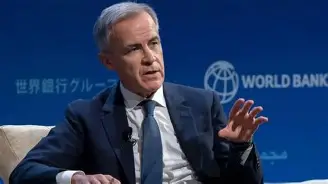
Global Order Is Breaking Down, Says Mark Carney

Mark Carney has warned that the current global order is “breaking down,” pointing to the ongoing war in the Middle East as a stark example of how influential countries are increasingly acting without regard for international laws and norms.

Speaking at the Lowy Institute in Sydney, the Canadian prime minister said geopolitically powerful states are progressively ignoring established international rules, with the consequences being felt worldwide.

“Geostrategically influential countries are increasingly operating without respect for international regulations and norms,” Carney said in his address. “The cost of such behavior is ultimately borne by others.”

He described the unfolding conflict in the Middle East as a clear manifestation of the disorder affecting the international system, arguing that the erosion of rules-based cooperation is undermining global stability.

Carney emphasized that unchecked actions by major powers risk deepening instability and weakening multilateral institutions designed to preserve peace and security.
His remarks come at a time of escalating tensions in the region, with the conflict raising concerns about broader geopolitical fallout and the future of the rules-based international order.

9,000 Americans Leave Middle East Since Start of War

Nearly 9,000 American citizens have left the Middle East since the start of joint U.S.–Israel military operations against Iran, U.S. Secretary of State Marco Rubio confirmed on Tuesday.
The evacuation comes amid escalating hostilities following coordinated airstrikes by the United States and Israel targeting sites across Iran. On the fourth day of the conflict, U.S. President Donald Trump warned that the window for negotiations with Tehran had effectively closed, saying it was now “too late” to halt the fighting.

Heavy bombardment continued in the Iranian capital, Tehran, on Tuesday. According to reports, several hundred Iranian civilians have been killed since the outbreak of hostilities, including 165 children and school staff. Six American service members have also reportedly died in the conflict.

In retaliation, Iran has launched drone and missile strikes targeting oil facilities in the Gulf region and U.S. diplomatic missions. Rubio confirmed that a drone struck near the U.S. Consulate in Dubai, hitting a parking lot adjacent to the building and causing a fire. All embassy personnel were reported safe.

Rubio also said that approximately 1,600 U.S. citizens have requested assistance from the State Department as they seek to leave the region.

Meanwhile, senior national security officials from the Trump administration are briefing members of Congress on the rationale behind the military campaign. Alongside Rubio, Defense Secretary Pete Hegseth, CIA Director John Ratcliffe, and Chairman of the Joint Chiefs of Staff General Dan Caine are scheduled to address both chambers.

Although Republicans hold slim majorities in both the Senate and the House of Representatives and have largely supported Trump’s policies, some lawmakers from the president’s own party have joined Democrats in questioning whether congressional approval should have been secured before deploying U.S. forces abroad.
Source: TRT World

Heavy Border Clashes Enter Seventh Day as Pakistan–Afghanistan Tensions Escalate

Dateline: LAL PUR, Afghanistan / PESHAWAR, Pakistan, March 4

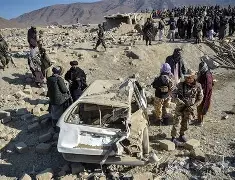
Residents living along the volatile border between Pakistan and Afghanistan say they are considering fleeing their homes as intense shelling and explosions continued for a seventh consecutive day on Wednesday.

The renewed fighting marks the most serious escalation in years between the South Asian neighbors, once allies but now increasingly at odds. The latest clashes follow Pakistani airstrikes on major Afghan cities last week, a move that has sharply heightened tensions across the frontier.

The situation has added to instability in a region already unsettled by ongoing U.S. and Israeli strikes on Iran, further raising fears of wider unrest.

Islamabad has defended its actions, stating that the airstrikes — some of which reportedly targeted installations linked to the Taliban government — were aimed at halting Afghan support for militant groups accused of carrying out attacks inside Pakistan.

The Taliban administration has denied providing assistance or sanctuary to militant organizations, rejecting Islamabad’s allegations.

With cross-border artillery fire and aerial bombardment continuing, residents on both sides of the frontier say uncertainty and fear are growing, prompting many families to weigh the possibility of displacement if the violence intensifies further.

Iran Signals Openness to CIA Talks on Ending War, Says Report

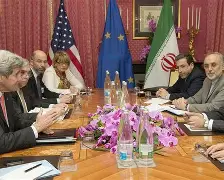
Operatives from Iran’s Ministry of Intelligence have signalled a willingness to open discussions with the Central Intelligence Agency (CIA) regarding a potential end to the ongoing conflict, according to a report published Wednesday by The New York Times.

The newspaper, citing Middle Eastern and Western officials briefed on the matter, said the proposal was conveyed through the intelligence service of an unnamed third country. The officials spoke on condition of anonymity due to the sensitivity of the issue.

Neither the White House nor the CIA immediately responded to requests for comment.

Despite the reported outreach, officials in Washington remain sceptical about whether either Iran or the administration of Donald Trump is prepared to pursue an immediate diplomatic “off-ramp,” the report said.

Earlier this week, Iran’s ambassador to the United Nations in Geneva dismissed the prospect of near-term negotiations with the United States. His remarks came days after the U.S. and Israel launched joint strikes targeting sites inside Iran.

On Tuesday, President Trump stated that Tehran had expressed interest in talks but suggested the opportunity may have passed, as U.S. military operations against Iran continued.

Middle East Conflict Sparks Panic Among Bangladeshi Expatriates

Escalating hostilities involving Iran, United States and Israel have triggered widespread instability across the Middle East, fueling anxiety among millions of Bangladeshi expatriates and their families back home.

The conflict, which intensified following the reported killing of Iran’s Supreme Leader Ayatollah Ali Khamenei, has rapidly spread beyond the initial flashpoints. In response to US-Israeli strikes on Tehran, Iran has launched missile and drone attacks targeting Israel and several neighboring countries. The involvement of Hezbollah has further expanded the conflict, drawing Lebanon into direct confrontation.

Within three days of the outbreak, hostilities reportedly extended to Saudi Arabia, United Arab Emirates, Qatar, Kuwait, Bahrain, Jordan, Oman, Iraq and even Cyprus. Reports indicate that at least two Bangladeshi expatriates have been killed in the violence.
The security situation has deteriorated sharply, with drone strikes reported near the US Embassy in Riyadh, located just minutes away from the Bangladesh Embassy. The ongoing attacks have placed the region’s security infrastructure under severe strain.

Flight Disruptions Deepen CrisisAir travel between Dhaka and several Middle Eastern destinations has been severely disrupted. Authorities at Hazrat Shahjalal International Airport confirmed that dozens of flights were canceled within days of the escalation. Since Saturday, nearly 150 flights have reportedly been suspended due to airspace closures and heightened security risks.

Biman Bangladesh Airlines announced the suspension of services on six major Middle Eastern routes, including Dubai, Abu Dhabi, Sharjah, Dammam, Doha and Kuwait, until at least March 5. Although flights to Riyadh and Jeddah remain operational, uncertainty persists.

Many expatriate workers who traveled to Bangladesh on leave are now stranded, unable to return to their workplaces. Several fear losing their jobs as visa deadlines approach. “My joining date is March 5, but my flight was canceled,” said Anwar, a Saudi-based worker stuck in Dhaka. “I don’t know if my company will accept the delay.”

The Ministry of Expatriates’ Welfare and Overseas Employment has urged affected workers to contact its 24-hour hotline (16135) for assistance regarding visa complications and travel disruptions.

Families at Home in Distress

An estimated five to six million Bangladeshis work across the Middle East, with more than half based in Saudi Arabia alone. The conflict has left both expatriates and their families in Bangladesh deeply worried.

Monirul Haque, a Bangladeshi worker in Riyadh, said the situation remained tense. “After the reported attack near the US Embassy, fear has spread everywhere. We are calling home every hour. Our families are asking us to return, but flights are suspended.”

Officials say the government has formed a special cell to coordinate with Bangladeshi missions abroad and address visa-related issues for workers unable to return on time. The Ministry of Foreign Affairs has also stated that ensuring the safety of Bangladeshi nationals abroad remains its top priority.

As the conflict shows no immediate sign of de-escalation, uncertainty continues to loom over millions of expatriate workers whose livelihoods depend on stability in the Gulf region.