
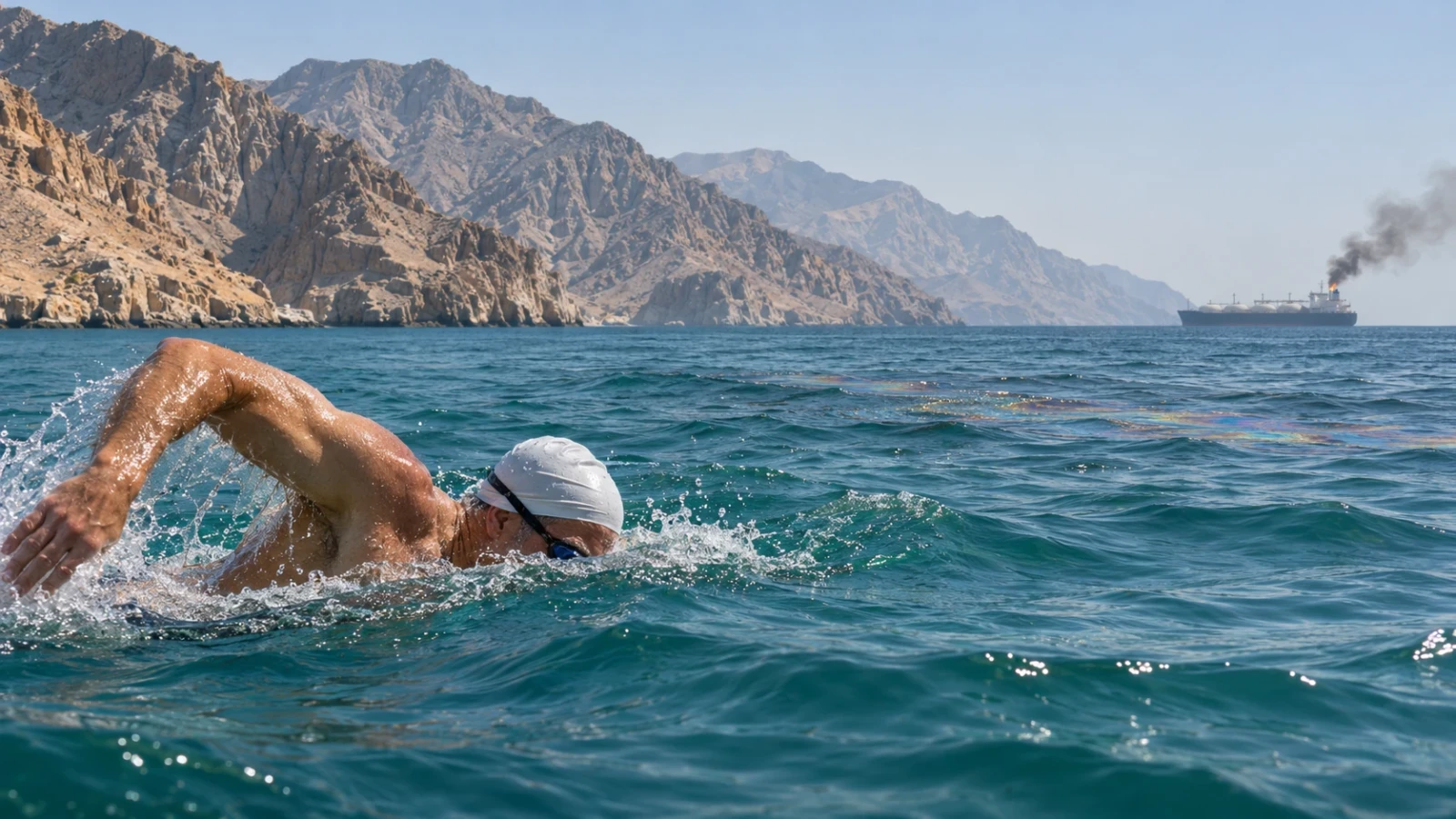
British endurance swimmer Lewis Pugh has completed a three-day swim across the Strait of Hormuz to draw attention to the environmental destruction caused by the ongoing US-Iran conflict. The United Nations Patron of the Oceans covered approximately 15 kilometres through the strategic waterway.
Calls for End to Conflict and Environmental Action
The 56-year-old swimmer, born in Plymouth, Devon, England, urged an end to the conflict, calling for the reopening of the Strait of Hormuz and urgent action to address the environmental damage caused by the war.
Speaking to the BBC, Pugh said war causes immense human suffering, but nature is also a victim of conflict and receives far less attention.
He stressed that the environmental consequences of war can persist long after the fighting has ended.
Swims Near Burning LPG Ship
According to the Lewis Pugh Foundation, an incident involving an oil tanker occurred approximately four kilometres from where Pugh was swimming on the first day of his journey.
Over 100 Bombs, Firearms and Ammunition Seized in Teknaf; Two Arrested
On the second day, he witnessed flames rising from a vessel carrying liquefied petroleum gas (LPG), named Tara Gas. The ship was on fire, and Pugh swam close to the burning vessel.
Pugh said his first concern was for the sailors aboard the ship.
“The flames were enormous. These vessels carry highly flammable gas, and any attack on them could have devastating consequences—not only for the crew but also for the surrounding marine environment,” he said.
Threat to Marine Ecosystems
Pugh warned that oil spills and other forms of pollution could have long-term consequences for marine ecosystems, including coral reefs, seagrass meadows and mangrove forests.
The Strait of Hormuz, which connects the Persian Gulf with the Gulf of Oman, is one of the world’s most important maritime trade routes. Before the conflict, around 20 per cent of the world’s energy products were transported through the strategic passage.
The strait is also home to diverse marine wildlife, including dugongs, sea turtles and whale sharks.
Nature Often Overlooked in War
Pugh said the environmental consequences of armed conflicts are often overshadowed by their humanitarian impact.
War causes deaths, separates families and destroys homes, hospitals and schools, he noted. However, damage to nature is another major consequence that often goes unnoticed.
He warned that the destruction of marine habitats and pollution caused by attacks on vessels could threaten biodiversity and damage the region’s fragile marine environment for years to come.
Source: BBC






COMMENTS