
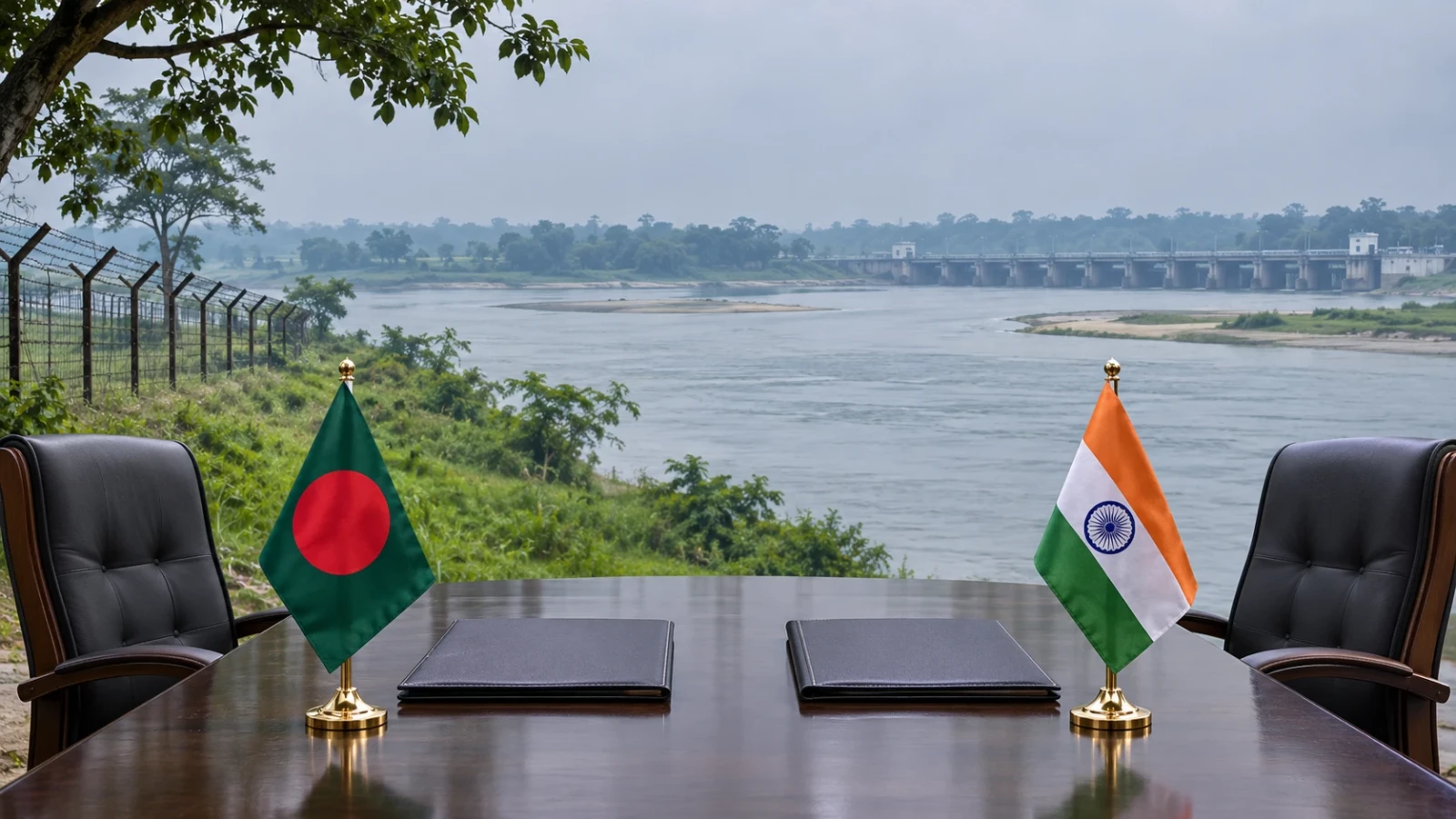
Dhaka-New Delhi relations appear to be facing a prolonged diplomatic impasse, with more than 40 bilateral mechanisms struggling to deliver tangible progress on key areas of cooperation, including water-sharing, trade, border management and consular affairs.
The postponement of the fifth Bangladesh-India consular dialogue, despite preparations already undertaken by Dhaka, has added to concerns about the state of bilateral engagement. Although officials have cited scheduling difficulties, the delay comes against the backdrop of unresolved political and diplomatic differences that have continued to strain relations between the two neighbours.
Sheikh Hasina Seeks New Passport, NID from Bangladesh High Commission in New Delhi
The underlying problem appears to extend beyond the postponement of an individual meeting. A persistent trust deficit, particularly over the political fallout of Sheikh Hasina’s departure from Bangladesh and her continued presence in India, has complicated efforts to restore normal diplomatic engagement.
Hasina’s extradition remains one of the most sensitive issues between the two governments. Dhaka has repeatedly sought her return under the bilateral extradition treaty, while New Delhi has yet to agree to the request. Her continued political activities from Indian territory have further complicated the relationship.
However, Bangladesh’s High Commission in New Delhi has clarified that the decision to postpone the consular dialogue was taken before Hasina’s November 9 request for a new passport and national identity card was submitted. This indicates that the postponement should not automatically be linked to that particular development.
The consular dialogue, established in 2017, was designed to strengthen people-to-people relations through regular discussions on visa services, consular assistance and mutual legal cooperation.
An inter-ministerial meeting was held at Bangladesh’s Ministry of Foreign Affairs on November 3 to prepare for the fifth round of discussions. The proposed agenda included cross-border issues, border management, streamlining visa procedures, repatriation of detained citizens, the release and return of fishermen and mutual legal assistance.
The fourth round of the dialogue took place in New Delhi on May 29, 2024, when both sides agreed to strengthen cooperation on consular matters, visa arrangements, repatriation, mutual legal assistance and extradition cases. They also agreed to strengthen the Revised Travel Arrangement to facilitate movement between the two countries.
The latest postponement raises questions about why the existing diplomatic framework has failed to generate meaningful progress on several longstanding issues.
Political differences overshadow bilateral cooperation
Beyond the consular dialogue, several contentious issues continue to complicate Bangladesh-India relations.
Border management remains a major concern for Dhaka, particularly over border killings, alleged push-ins and other activities along the shared frontier. Bangladesh has repeatedly raised concerns over the safety of its citizens and the need for stronger accountability and coordination.
Visa restrictions have also affected people-to-people exchanges, while trade-related disagreements and reciprocal restrictions have added to economic friction.
The political dimension remains particularly sensitive. Bangladesh’s demand for Hasina’s extradition and India’s position on the matter have emerged as significant obstacles to rebuilding confidence between the two governments.
These differences have also affected efforts to arrange high-level political engagement, with the relationship yet to return to the level of cooperation that existed before August 2024.
Ganges Water Treaty adds urgency
Meanwhile, longstanding disagreements over transboundary water management are becoming increasingly pressing.
The 1996 Ganges Water Sharing Treaty is due to expire on December 12, 2026. Its renewal is particularly important for Bangladesh, which depends on an equitable sharing arrangement during the dry season.
Despite the approaching deadline, formal discussions on renewal have yet to begin, according to information provided by India’s Ministry of External Affairs to Parliament in February 2026.
India has maintained that the Joint Rivers Commission provides an established framework for discussing all shared rivers, including the Ganges.
On November 3, Indian Ministry of External Affairs spokesperson Randhir Jaiswal reiterated that New Delhi remained willing to discuss bilateral issues through existing structured mechanisms.
He said India wanted to take its relationship with Bangladesh forward in a positive, constructive and forward-looking manner.
However, he offered no specific update on developments concerning the renewal of the Ganges treaty.
For Bangladesh, the challenge is not limited to securing a renewed water-sharing agreement. It also needs to strengthen cooperation over other shared rivers, address longstanding border concerns and restore effective channels of diplomatic communication.
With more than 40 bilateral mechanisms in place, the lack of substantial progress highlights a widening gap between the institutional framework for cooperation and the political willingness needed to make it work.
The central question is whether Dhaka and New Delhi can overcome their political differences and rebuild mutual trust before unresolved disputes begin to undermine cooperation across an even wider range of bilateral interests.
Dhaka 14 November

COMMENTS