
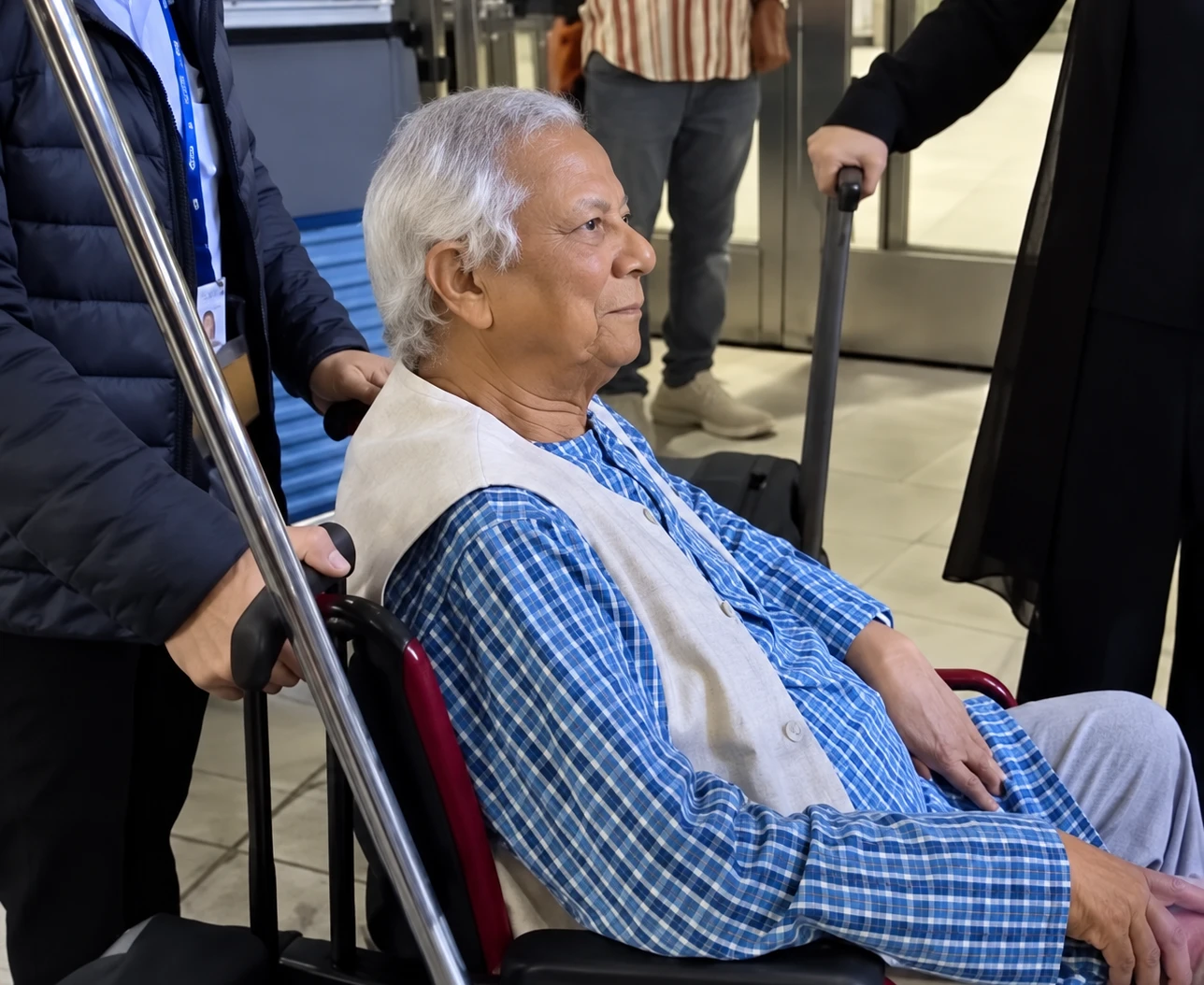
BREAKING – NEW YORK — Former interim government Chief Adviser Professor Muhammad Yunus faced a hostile reception from a group of Bangladeshi expatriates at New York’s John F. Kennedy International Airport on Monday, in an apparent sign of growing anger among sections of the diaspora over his tenure in Bangladesh.
A video circulating on social media shows several people confronting Yunus and shouting slogans, including “You are a terrorist,” “You killed Bangladeshis,” “You destroyed Bangladesh” and “Go back.” Others accused him of acting against Bangladesh and even against US President Donald Trump.
Yunus arrived at Terminal 8 of JFK Airport at around 4:00 p.m. on Monday aboard Qatar Airways Flight 701 from Doha. He was seen in a wheelchair as he emerged from the terminal area. During the confrontation, Yunus and Lamia Morshed reportedly moved quickly back inside.
The incident has raised questions about whether Yunus, once widely celebrated internationally for his Nobel Peace Prize and leadership of the interim administration, is losing support among sections of Bangladeshis living abroad. The protesters’ slogans reflected anger over his administration’s record and allegations of serious failures during its tenure. However, the video alone does not establish how representative these protesters are of the wider Bangladeshi diaspora.
In a strong reaction, Bangladesh’s Ministry of Foreign Affairs condemned the incident and said the government believed the individuals involved were suspected of having links to the suspended Awami League. The allegation has not been independently verified.
The ministry said it had instructed Bangladesh’s mission in the United States to take up the matter with local law enforcement agencies to identify those responsible and seek appropriate action.
While the government has characterised the incident as harassment linked to political actors, the confrontation has also highlighted the potential for Yunus’s domestic political legacy to follow him abroad, where some expatriates appear willing to express their grievances publicly.




COMMENTS