
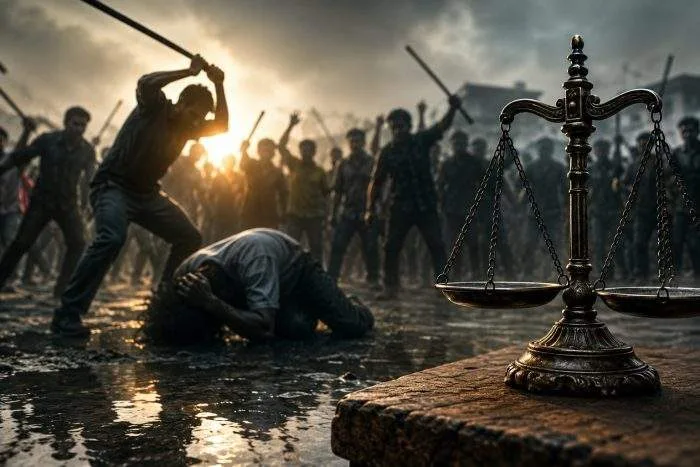
At least 54 people were killed and 145 injured in 137 incidents of mob violence and lynching across Bangladesh in just three months, exposing the continuing threat of vigilante attacks and raising serious concerns about the country’s ability to protect citizens from extrajudicial violence.
The deaths occurred between July and September 2026, according to a quarterly human rights monitoring report released Monday, Oct. 12, by the Human Rights Support Society (HRSS).
The findings show that mob violence claimed more than three times as many lives as political clashes during the same period. Political violence killed 17 people and injured at least 1,227 others in 183 incidents.
The report also documented widespread violence against women and children, attacks on journalists, deaths in prisons and law enforcement custody, and violence involving political parties.
Compiled from reports published by 16 national news outlets, information collected by HRSS and its own fact-finding investigations, the findings present a troubling picture of Bangladesh’s human rights situation.
Mob Killings Continue Across Bangladesh
HRSS recorded 137 incidents of mob violence and lynching during the three-month period, leaving at least 54 people dead and 145 injured.
The attacks were linked to allegations of theft, robbery, snatching, religious insults, rape and attempted rape, as well as personal disputes and struggles for local dominance.
The figures translate into an average of 18 deaths a month, or roughly one person killed every two days.
The quarterly toll also indicates that mob attacks remained a persistent problem rather than isolated outbreaks of violence.
Earlier HRSS monitoring found that 31 people were killed and 69 injured in mob violence in June alone. Another 17 people were killed and 51 injured in 49 incidents in July.
Together, the June figure and the latest quarterly findings indicate that at least 85 people died in mob violence between June and September, according to the organization’s monitoring data.
Such attacks often involve groups assaulting individuals accused of wrongdoing without allowing allegations to be investigated or determined through the legal system.
The continuing fatalities raise questions about the effectiveness of policing, the prevention of collective violence and the enforcement of the rule of law.
Political Violence: BNP Infighting Accounts for Most Deaths
The HRSS report documented 183 incidents of political violence between July and September, leaving 17 people dead and at least 1,227 injured.
Of those killed, nine were affiliated with the ruling Bangladesh Nationalist Party (BNP), two with Bangladesh Jamaat-e-Islami, three with the Awami League and three with other political groups.
Internal conflicts within the BNP accounted for 69 incidents, resulting in nine deaths and at least 540 injuries.
Another 31 clashes between BNP and Jamaat supporters left at least one person dead and 338 injured.
Sixteen confrontations between BNP and Awami League supporters resulted in two deaths and 81 injuries.
The report also documented 14 clashes involving the BNP and the National Citizen Party (NCP), leaving 70 people injured.
Another 31 confrontations between the BNP and other political groups injured 69 people.
Overall, 161 of the 183 incidents of political violence involved either internal BNP disputes or clashes between BNP supporters and other political organizations.
HRSS attributed much of the political violence to factional rivalries, disputes over political influence, control of land and businesses, extortion and election-related tensions.
At least six incidents were directly linked to electoral disputes, leaving 45 people injured.
More Than 2,500 Arrested in Political Cases
The report also highlighted the scale of criminal proceedings involving political activists.
More than 126 cases were filed against political leaders and activists during the three months.
The cases named 2,541 individuals, while approximately 7,915 additional people were listed as unidentified suspects.
Police arrested at least 2,577 people in connection with political cases.
Of those arrested, 2,412 were affiliated with the Awami League, 112 with the BNP, 36 with Jamaat-e-Islami and 17 with the NCP, according to HRSS.
The organization also reported the arrest of 37 alleged extremists.
Separately, more than 37,000 people were arrested during regular and special law enforcement operations nationwide.
The figures underline the extensive use of criminal proceedings and arrests amid continuing political tensions.
Journalists Face Assaults, Threats and Legal Cases
HRSS documented 88 incidents of violence, intimidation and harassment involving journalists between July and September.
A total of 135 journalists were affected, including 63 who were injured, 27 who were assaulted or humiliated, and 18 who received threats.
Nine journalists were detained.
Another 18 journalists were accused in four cases filed under the Cyber Security Act.
The organization also recorded 18 incidents in which law enforcement agencies allegedly obstructed meetings and demonstrations, leaving 128 people injured and eight detained.
Those affected included political activists, students, workers and ordinary pedestrians.
The findings raise concerns about press freedom, freedom of assembly and the ability of journalists to report without intimidation or legal pressure.
Violence Against Women and Children Remains Widespread
The report recorded 783 women and girls subjected to violence during the quarter.
Among them, 253 were raped, including 154 victims younger than 18.
Forty-two women and girls were subjected to gang rape, while 12 victims were killed after being raped. Another victim died by suicide following rape.
HRSS also documented sexual harassment involving 220 women and girls, including 103 children.
Dowry-related violence left 13 women dead and 17 injured, while two others died by suicide.
Domestic violence claimed the lives of 137 women and injured 68. Another 72 women died by suicide in cases categorized by the organization under domestic violence.
The report separately recorded abuse involving 733 children. Of them, 189 died, while 544 suffered physical or psychological abuse.
The figures reflect serious concerns about the protection of women and children from sexual violence, domestic abuse and other forms of mistreatment.
Prison Deaths and Allegations of Custodial Torture
At least 37 prisoners died in Bangladesh’s jails between July and September, according to HRSS.
The deceased included 14 convicted prisoners and 23 detainees awaiting trial.
Five additional people died in law enforcement custody, while another person died after allegedly being subjected to torture.
The report did not establish that every prison death resulted from unlawful conduct.
Nevertheless, the deaths raise questions about prison conditions, access to medical treatment and safeguards against abuse in detention.
Attacks on Minorities and Worker Deaths
The quarterly monitoring also documented six attacks on religious and ethnic minority communities, leaving six people injured.
Two temples, five religious idols and four homes were attacked or vandalized, according to HRSS.
Violence and abuse involving workers were also widespread.
The organization recorded 251 incidents of worker-related violence and abuse, resulting in 71 deaths and at least 260 injuries.
Separately, 164 workers died in workplace accidents.
HRSS linked the workplace fatalities to unsafe working environments and inadequate protective equipment.
Rights Group Calls for Action to Restore Rule of Law
HRSS Executive Director Ejazul Islam called for coordinated efforts by the government and society to improve the human rights situation, strengthen democratic institutions and establish the rule of law.
He urged authorities to take effective measures against political and mob violence, attacks on journalists, violence against women and children, and deaths in custody.
The report’s findings highlight the scale of the challenge facing Bangladesh, where mob attacks, political rivalries and other forms of violence continue to claim lives.

COMMENTS