
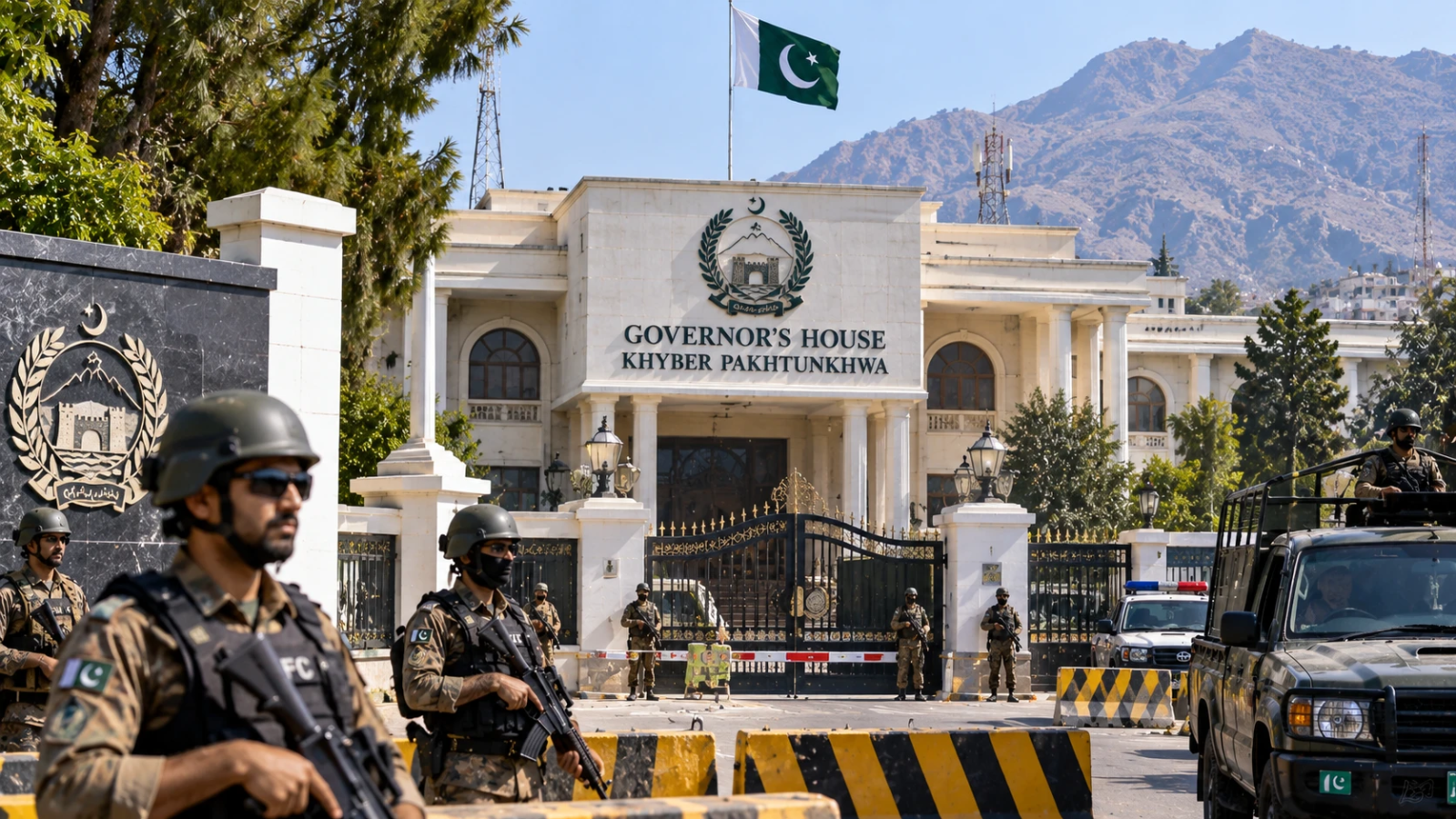
ISLAMABAD — Pakistan’s federal government has imposed an emergency and governor’s rule in Khyber Pakhtunkhwa (KP), following approval by President Asif Ali Zardari on the recommendation of the federal cabinet, according to Pakistani media reports.
The decision took effect on Sunday after an emergency meeting of the federal cabinet chaired by Prime Minister Shehbaz Sharif to review the province’s security situation.
According to a statement from the Prime Minister’s Office, cabinet members were briefed on the security challenges in KP and expressed concern over what they described as the provincial government’s deliberate withdrawal from the fight against terrorism.
Considering the gravity of the situation, the cabinet recommended that the prime minister advise the president to exercise his constitutional powers under Articles 232 and 234 to impose emergency measures and governor’s rule in the province.
A statement from the President’s House confirmed that the measures had been approved under the two constitutional provisions, which deal with the declaration of an emergency and the breakdown of constitutional governance in a province.
Following the decision, the federal government appointed Dr Muhammad Fakhr Alam Irfan as the chief secretary of Khyber Pakhtunkhwa. The appointment took immediate effect and will remain in force until further orders, according to an official notification.
Irfan, a Grade-22 officer of the Pakistan Administrative Service, previously served as secretary of the Power Division under the federal Ministry of Energy. He is from Mardan, a city in Khyber Pakhtunkhwa.
Constitutional Provisions
Article 232 of Pakistan’s Constitution allows the president to declare an emergency if the country’s security, or that of any part of it, is threatened by war, external aggression or internal disturbances beyond a provincial government’s control.
Where an emergency is declared on the grounds of internal disturbances beyond a provincial government’s control, the Constitution requires a resolution from the relevant provincial assembly. An emergency declaration made by the president on his own initiative must be placed before both houses of parliament for approval within 10 days.
During an emergency, parliament gains the authority to legislate for the affected province on matters notincluded in the Federal Legislative List, while provincial legislative powers remain subject to constitutional provisions.
Article 234 provides for federal intervention when the constitutional machinery of a province fails. A proclamation under this provision must be placed before a joint sitting of parliament and will cease to operate after two months unless approved by a joint resolution. Extensions may be granted in periods of up to two months, but the proclamation cannot remain in force for more than six months.
Notably, Article 233, which provides the president with certain powers concerning the suspension of fundamental rights during an emergency, was not cited in the summary signed by President Zardari.
The move places Khyber Pakhtunkhwa under extraordinary federal measures amid continuing concerns over security and counterterrorism efforts. Further details about the implementation of governor’s rule and its implications for the provincial administration were not provided in the statements cited in the report.




COMMENTS