
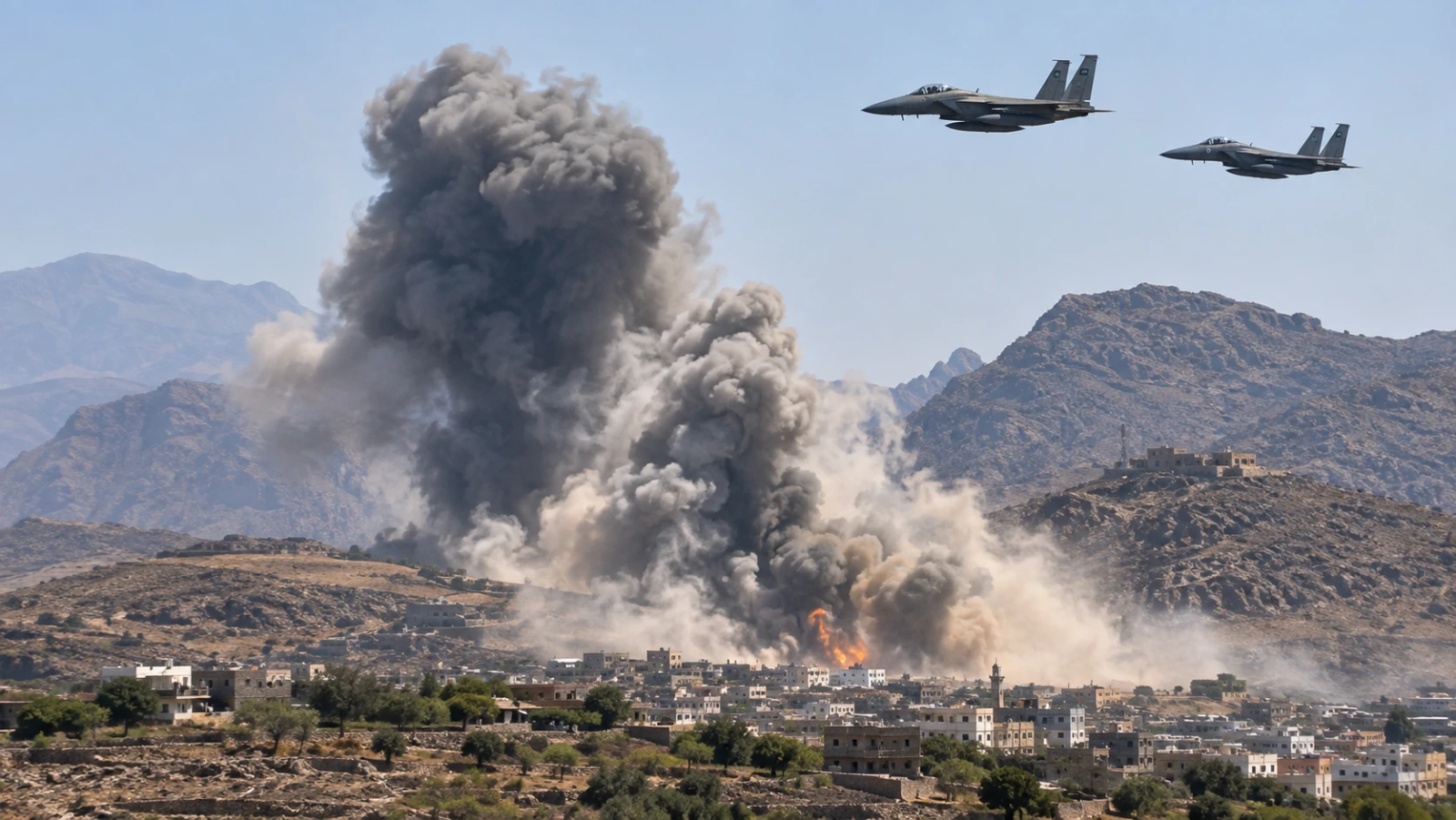
Saudi Arabia carried out 58 airstrikes against Houthi rebel positions in Yemen over a 24-hour period, according to Yahya Saree, spokesman for the Houthi military wing.
In a statement posted on Telegram on Monday, Saree said the Saudi-led attacks were conducted between Saturday night and Sunday night.
“The criminal Saudi enemy carried out 58 airstrikes in Yemen over the past 24 hours,” Saree said.
The Houthi-affiliated Al Masirah television channel reported that the strikes targeted areas in Saada, Monabbih district and Al Jawf province in northern Yemen. The three areas are regarded as key strongholds of the Houthi movement.
The latest wave of airstrikes is believed to have been carried out in response to a Houthi drone and missile attack on Saudi Arabia’s Sarurah military base on September 12.
Tensions between Saudi Arabia and the Iran-backed Houthi movement have escalated sharply since the final week of August. The Houthis have launched several missile attacks that reportedly caused significant damage to parts of Saudi Arabia’s energy sector.
The situation intensified further on September 11, when Houthi fighters reportedly seized control of the Bab el-Mandeb Strait, the strategic waterway linking the Red Sea with the Gulf of Aden.
The development is considered a major setback for Saudi Arabia, particularly amid the reported closure of the Strait of Hormuz due to the ongoing US-Iran conflict. Saudi Arabia has traditionally relied on maritime routes, including the Bab el-Mandeb, for the transportation of a significant portion of its oil exports.
Saudi Arabia began conducting air operations in Yemen on September 8. According to Houthi sources, more than 130 airstrikes had been carried out by the Saudi air force before Sunday’s latest attacks.
Meanwhile, Yemen’s government forces have also launched operations aimed at retaking northern Yemen and the capital, Sanaa, from Houthi control.
Saudi Arabia’s Defence Ministry has not publicly commented on the recent air operations. However, AFP reported that the Saudi strikes have so far largely focused on supporting Yemeni government forces on the front lines, rather than targeting the Houthis’ main centres of power, including Sanaa.
The conflict between Saudi Arabia and the Houthis dates back to Yemen’s civil war, which began in 2014. The following year, the Iran-backed Houthi movement seized control of Sanaa, forcing then-President Abd-Rabbu Mansour Hadi to flee to Saudi Arabia.
Saudi Arabia subsequently launched a military intervention in Yemen in 2015 in an effort to restore the internationally recognised government.
Yemen remains divided between the Houthis and the Saudi-backed Presidential Leadership Council, which represents the internationally recognised government. The prolonged conflict has left the country deeply fragmented and has contributed to one of the world’s most severe humanitarian crises.





COMMENTS