
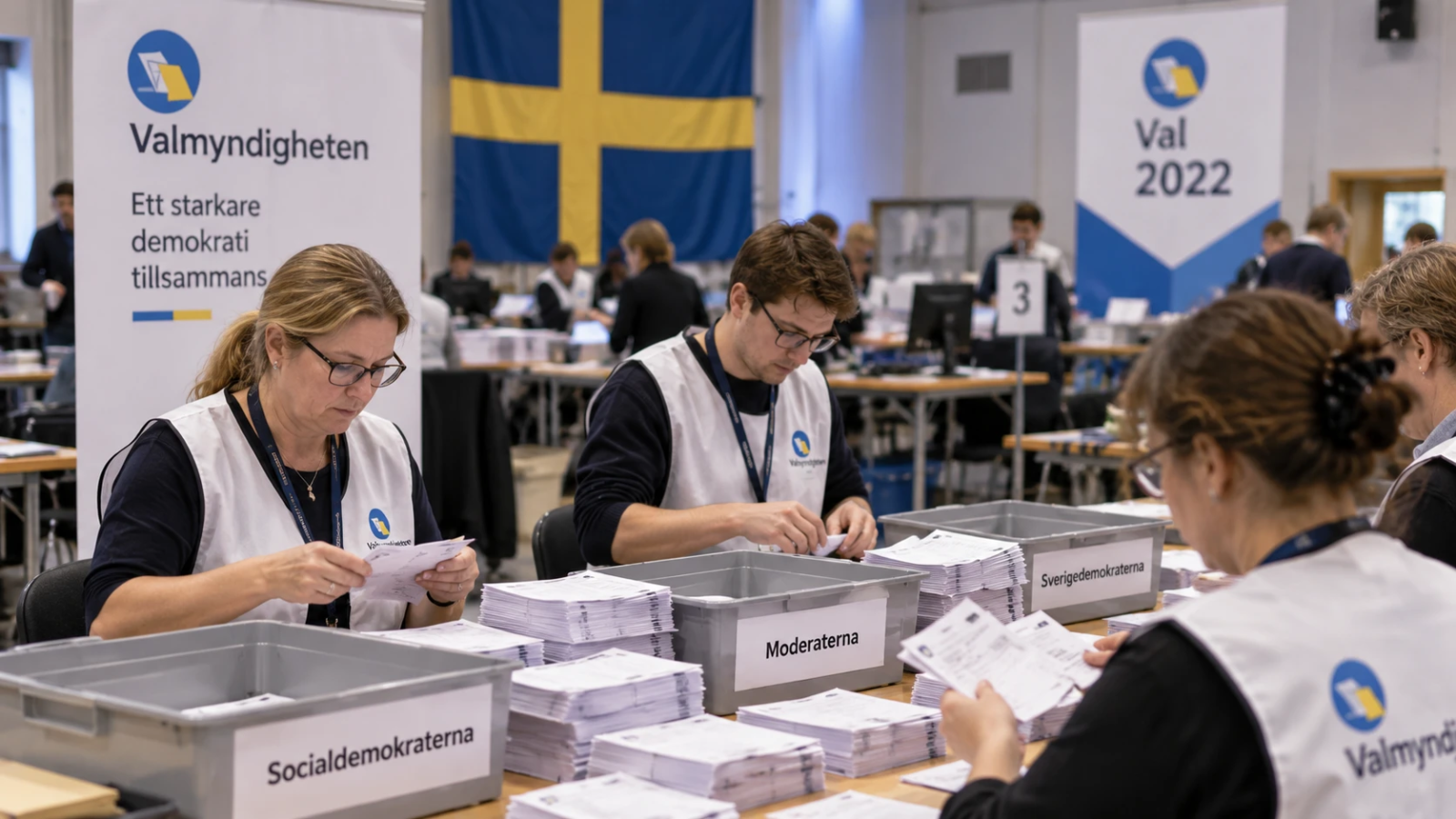
Sweden’s political landscape is witnessing a closely contested general election, with the centre-left opposition bloc holding a narrow lead over the governing right-wing alliance in the preliminary results.
Voting in Sweden ended at 8:00 p.m. local time on Sunday (September 13). By Monday, around 94.4 percent of the votes had been counted. According to election authorities, the opposition bloc is projected to win 176 of the 349 seats in parliament, while the governing right-wing alliance could secure 173 seats.
With only a three-seat difference between the two blocs, however, it remains unclear which side will ultimately form the next government.
Magdalena Andersson Claims Opposition Bloc Is Ahead
Magdalena Andersson, leader of Sweden’s Social Democratic Party, told supporters on Sunday that the opposition bloc was ahead in the vote count.
She said that if the preliminary results remain unchanged, Sweden could see the formation of a new government.
Despite the opposition bloc’s lead, the Social Democrats themselves appear to have performed poorly by historical standards. The party has secured around 28.1 percent of the vote, which could be its weakest result in more than a century. Compared with the 2022 election, the party’s vote share has fallen by 2.2 percentage points.
Prime Minister Urges Caution
Prime Minister Ulf Kristersson, who leads the governing alliance, has also acknowledged the uncertainty surrounding the outcome.
Kristersson said he would contact leaders of other political parties once the final results are available. Discussions would then focus on possible political combinations and the prospects for forming a government.
However, the vote count is not yet complete. Some postal ballots remain to be counted, along with votes cast at Swedish embassies abroad. The counting of these ballots is expected to begin on Wednesday, meaning the final result may not be known until later in the week.
Opposition Lead Narrowed During Campaign
The opposition bloc had enjoyed a much stronger position earlier in the year, leading by nearly 10 percentage points in opinion polls.
That advantage gradually diminished as election day approached. By the final stage of the campaign, the gap between the two blocs had narrowed to just 2–3 percentage points, making the contest increasingly unpredictable.
Sweden Democrats Lose Ground
The Sweden Democrats, a key partner of the right-wing bloc, received around 17.6 percent of the vote, down from 20.5 percent in 2022.
Party leader Jimmie Åkesson said it was too early to determine which political bloc would form the next government.
The Sweden Democrats remain a controversial force in Swedish politics because of the party’s historical links to the neo-Nazi movement. Following the 2022 election, the party became the largest party in the right-wing camp and subsequently provided crucial parliamentary support to Kristersson’s minority government, although it has not formally joined the government.
With the final ballots still to be counted, Sweden faces several more days of political uncertainty before the next government becomes clear.





COMMENTS