
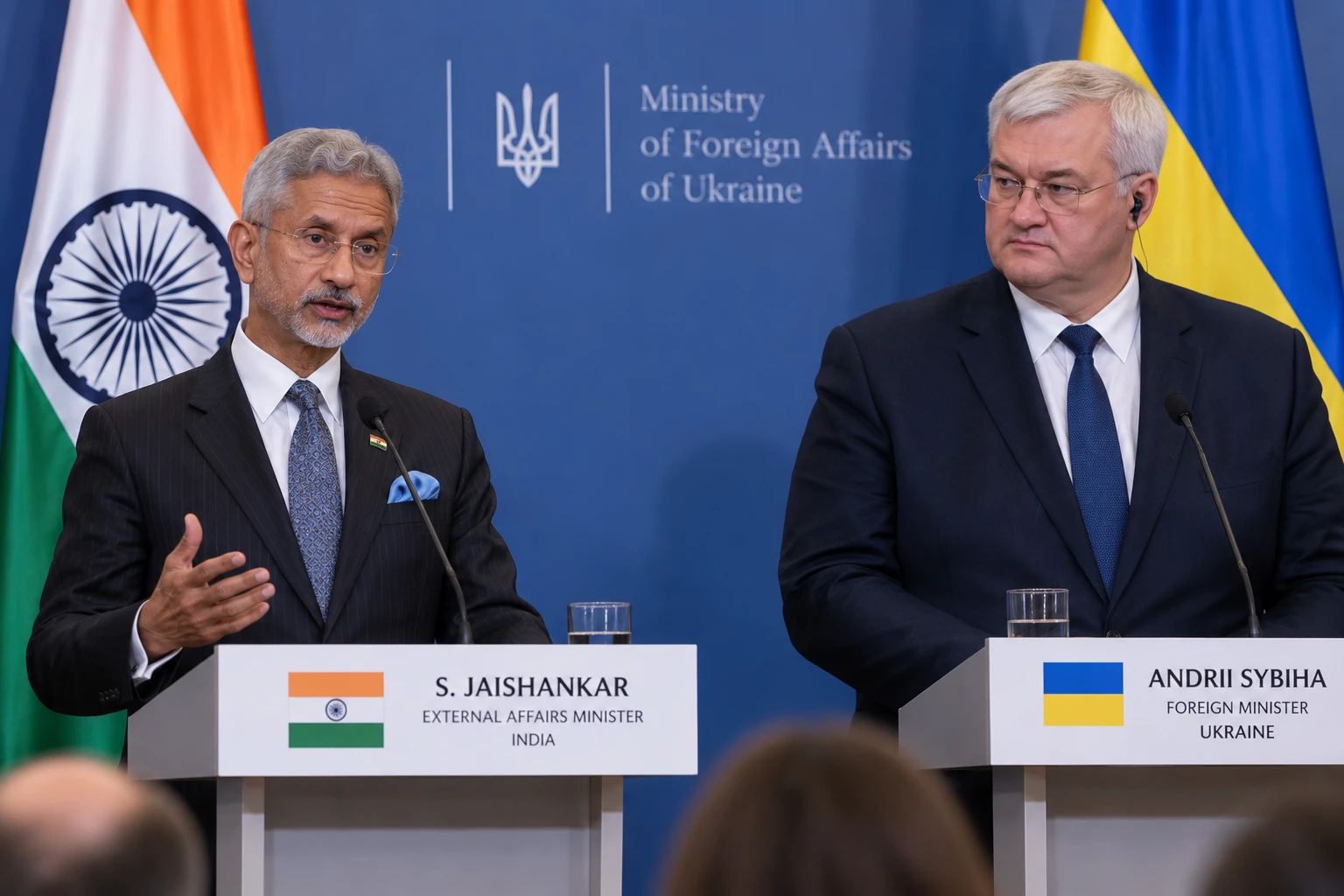
NEW DELHI — India has rejected the argument that ending oil trade with Russia would help bring the war in Ukraine to an end, with Foreign Minister S. Jaishankar saying the conflict can only be resolved through dialogue, diplomacy and negotiations.
Speaking to reporters in Kyiv on Friday after meeting Ukrainian Foreign Minister Andrii Sybiha, Jaishankar addressed growing Western pressure on India over its continued imports of Russian crude oil.
He said the resolution of the war should not depend on whether countries buy oil, aluminium, minerals, metals or fertilisers from Russia.
“Wars are not resolved by stopping trade in commodities,” Jaishankar said, emphasizing that negotiations and diplomatic engagement were the way forward.
India cites energy security
Jaishankar also highlighted India’s enormous energy requirements, noting that ensuring fuel supplies for a population of around 1.4 billion people remains a major challenge.
He said India respected Ukraine’s position on the issue but expected other countries to respect India’s position as well.
The comments came amid questions over possible US sanctions and tariffs targeting countries that continue to purchase Russian crude.
Western countries, including the United States and Britain, have sought to reduce Russia’s energy revenues in an effort to weaken Moscow’s economic capacity to sustain the war.
US weighs tougher trade measures
A bipartisan bill passed by the US Senate last month reportedly proposed giving President Donald Trump authority to impose tariffs of up to 100% on goods from countries that continue importing Russian oil and gas.
The measure is aimed at restricting the flow of money into Russia’s economy through international trade.
Russia remains India’s top crude supplier
Despite mounting Western pressure, Russia remains India’s largest source of crude oil.
India’s imports of Russian crude reached record levels in June and July before declining in August.
According to maritime intelligence firm Kpler, India imported around 2.1 million barrels of Russian crude per day in August, compared with approximately 2.6 million barrels per day in June and July.
Even after the decline, Russian crude accounted for more than 40% of India’s total crude oil imports in August.
Before Russia’s invasion of Ukraine in 2022, Russian crude represented only about 0.2% of India’s total crude imports. Western sanctions and the subsequent reshaping of global oil markets turned India into one of the biggest buyers of relatively discounted Russian oil.
India imports around 88% of the crude oil it consumes, with roughly one-third of those imports currently coming from Russia.
Asian markets become crucial for Russian oil
Western sanctions have significantly reduced Russia’s access to European energy markets, increasing the importance of Asian buyers such as India and China.
Despite restrictions affecting Western shipping, insurance and financial services, Asian markets have provided Russia with an important alternative destination for its crude exports.
India’s continued demand has helped sustain Russian oil exports, underscoring the competing priorities at the heart of the dispute: Western efforts to pressure Moscow economically, and India’s need to secure affordable and reliable energy supplies.
India’s position on Russian oil therefore reflects not only commercial interests but also its broader strategic and diplomatic calculations over the Ukraine conflict.



COMMENTS