
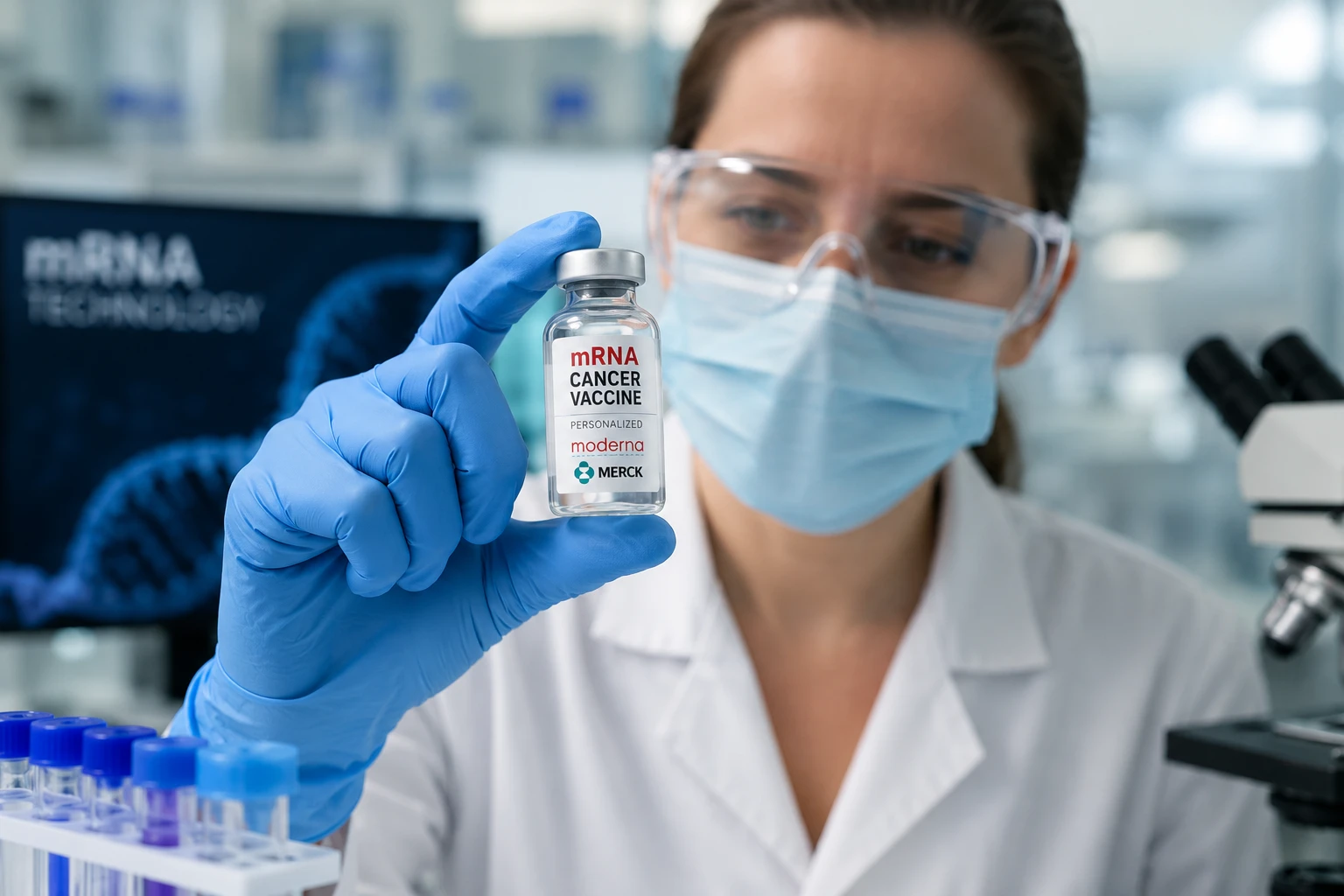
Voice Desk, 20 August: A new personalized cancer vaccine has shown promising results in reducing the risk of melanoma returning after surgery, raising hopes for a new approach to cancer treatment.
Developed by US pharmaceutical companies Moderna and Merck, the vaccine is designed for patients with high-risk melanoma, a potentially deadly form of skin cancer. It is administered after surgery alongside the cancer drug Keytruda.
Preliminary results from a Phase 3 trial involving more than 1,000 patients showed that those receiving the vaccine in combination with Keytruda remained cancer-free for longer than patients who received Keytruda alone. The combination also reduced the risk of the cancer spreading to other parts of the body.
A vaccine tailored to each patient
Unlike conventional vaccines, the new treatment is individually designed for each patient based on the specific characteristics of their cancer.
During surgery, a small sample of the patient’s tumor is collected and its DNA is analyzed to identify specific mutations in the cancer cells. Scientists then use that information to create a personalized mRNA vaccine.
The vaccine is intended to train the immune system to recognize and attack cancer cells that may remain in the body after surgery.
The technology uses mRNA, the same broad technology used in several COVID-19 vaccines.
Experts urge caution
Cancer specialists have described the findings as encouraging but warned against viewing the vaccine as a definitive breakthrough yet.
The complete trial results have not been published, and the findings have not yet undergone independent peer review. Even if the trial is ultimately successful, the vaccine will require approval from regulatory authorities before it can become widely available.
Researchers also do not yet know exactly how long patients will remain free of cancer.
Trials under way for other cancers
Moderna and Merck are also studying similar personalized vaccines for several other types of cancer, including lung, bladder and kidney cancers.
Moderna CEO Stéphane Bancel described the latest findings as an important moment for cancer research.
The results nevertheless offer fresh hope that personalized vaccines could eventually become an important tool for preventing cancer from returning after surgery.




COMMENTS