
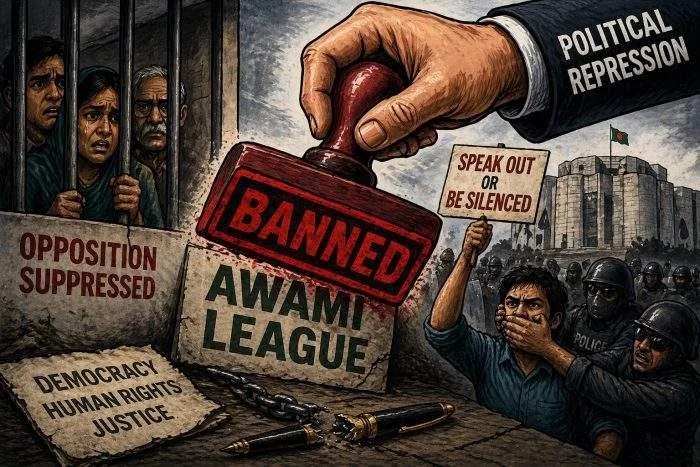
Dhaka, April 23 — A leading international conflict prevention organization has urged Bangladesh’s current leadership to confront the politically sensitive issue of the opposition Awami League, warning that its continued exclusion from politics risks deepening instability at a critical moment for the country.
In a new briefing released Thursday, the International Crisis Group (ICG) said the government led by the Bangladesh Nationalist Party must move swiftly to stabilize both the political landscape and the economy, while avoiding confrontational tactics that could inflame tensions.
Thomas Kean, Senior Consultant on Bangladesh and Myanmar at the Crisis Group, said in the report’s release context that the question of the Awami League’s future cannot be ignored.
“Given its pivotal role in Bangladesh politics since independence, the party’s temporary ban is not sustainable over the longer term,” Kean stated, emphasizing the need for a realistic political pathway.
The report, titled “Bangladesh’s New Government Gets Down to Business,” highlights the urgency for reconciliation and institutional reform, noting that sidelining a historically dominant political force risks undermining democratic credibility and long-term governance stability.
Pressure Mounts on Political Reconciliation
The Crisis Group urged the government to avoid escalating tensions with opposition forces and instead review legal cases against Awami League members. It also encouraged regional diplomacy, particularly with India, which maintains longstanding ties with the Awami League leadership.
“Rebuilding strained relations with India should be a priority,” the report noted, adding that Dhaka must balance its engagement with other global powers including China and the United States.
The recommendation comes at a time when Bangladesh’s political environment remains fragile, following a period of upheaval marked by widespread allegations of violence, repression, and institutional politicization. Rights groups have documented hundreds of deaths and thousands of incidents targeting political opponents and minority communities in recent months.
Analysts warn that excluding a major political force like the Awami League—deeply rooted in the country’s independence history—could further polarize society and weaken already strained institutions.
Economic Crisis Deepens Amid Global Shocks
Beyond politics, the report paints a stark picture of Bangladesh’s economic challenges. The government faces mounting pressure from rising global energy prices, driven in part by escalating tensions in the Middle East, including recent conflict involving Iran.
Bangladesh, heavily reliant on imported fuel and fertilizer from the region, is already experiencing the effects.
“The conflict in the Middle East is pushing up energy prices and disrupting trade,” the report said, warning that the economic shock could “drain foreign exchange reserves, lower GDP growth, and push up inflation.”
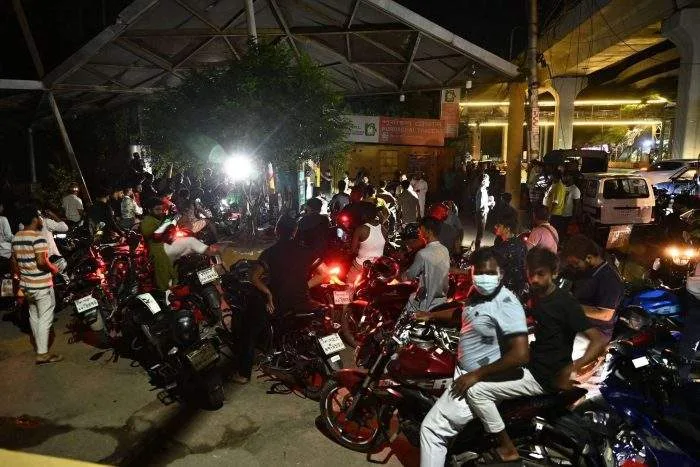
Fuel shortages, power outages, and long queues at petrol stations have become increasingly common, while fertilizer production has been disrupted, threatening agricultural output.
A prominent economist cited in the report warned that the impact of the Middle East conflict could hit Bangladesh’s economy “like an earthquake,” underscoring the severity of the situation.
Reform Window Narrowing
The BNP government has introduced a 180-day reform plan focused on infrastructure, energy supply, and investment. However, the Crisis Group cautioned that the window for meaningful progress is limited.
“The stakes are high for the BNP,” Kean said. “It should move quickly to take advantage of the narrow post-election window for political and economic reforms.”
The report also stresses that economic growth alone will not satisfy public expectations. Citizens are demanding tangible improvements in governance, public safety, and institutional performance.
“Bangladeshis are expecting to see real improvements in the performance of state institutions and public security,” Kean added.
Uncertain Path Ahead
Despite its electoral mandate, the current government faces significant uncertainty. Bangladesh’s political history, marked by strong anti-incumbency sentiment, suggests that public support could erode quickly if reforms fail to deliver.
The Crisis Group warned that failure to meet political and economic expectations could trigger renewed unrest.
For many observers, the message is clear: sustainable stability in Bangladesh will require not only economic recovery but also inclusive politics—bringing all major stakeholders, including the Awami League, back into the democratic process.


COMMENTS