
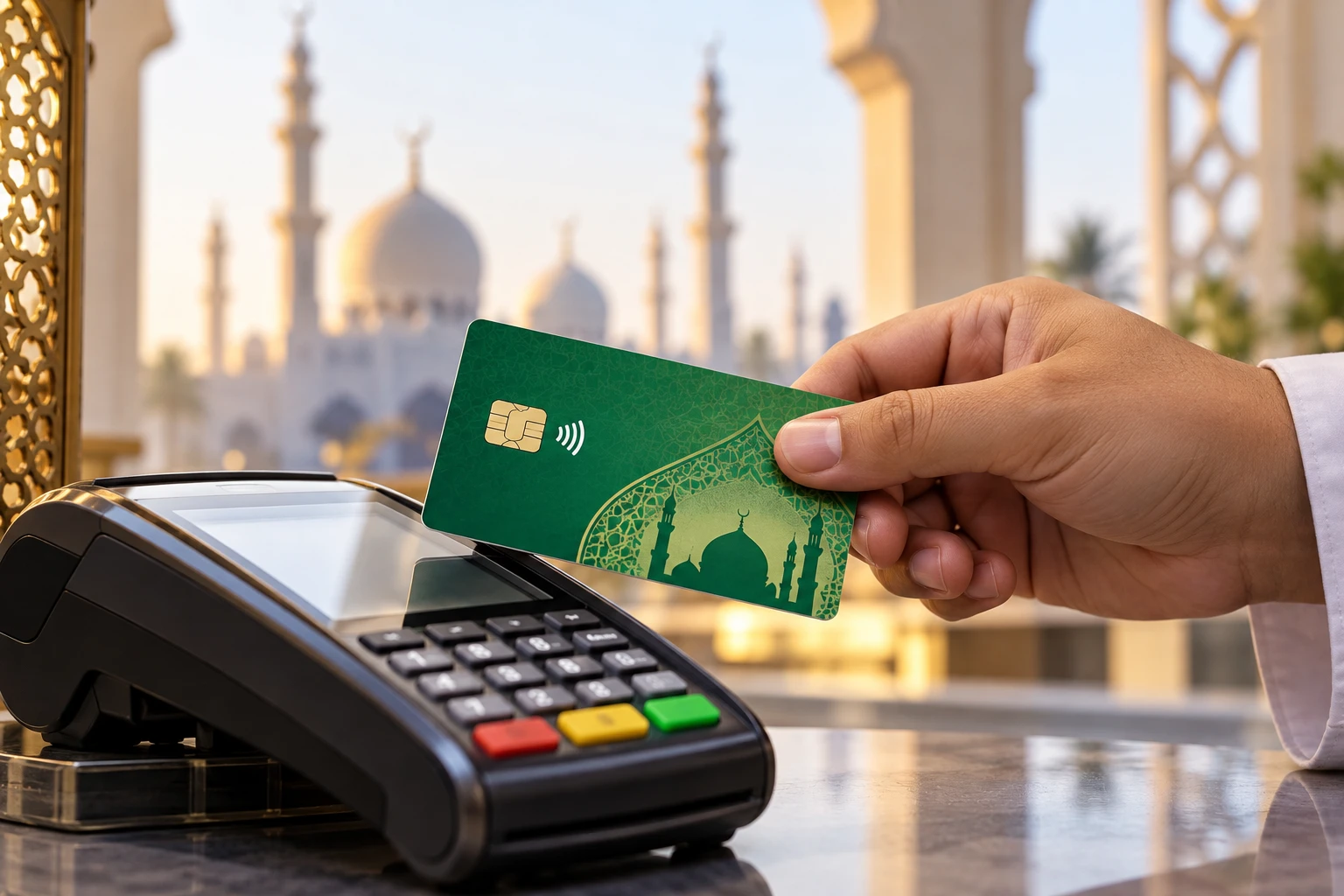
Bangladesh Bank has issued the country’s first comprehensive guidelines for Islamic credit cards, barring their use for businesses involving alcohol, gambling, nightclubs, conventional insurance, dating or matchmaking services and pork-related products, among a wider range of activities deemed non-compliant with Shariah principles.
The framework requires Islamic credit card transactions to remain interest-free and directs banks to use technological controls to prevent payments to prohibited categories of merchants.
The central bank’s Islamic Banking Regulation and Policy Department issued the guidelines through IBRPD Circular No. 01 on Sept. 27. The rules took effect immediately and apply to banks offering Islamic credit card services.
Under the guidelines, banks must block designated Merchant Category Codes, or MCCs, at the system level. MCCs are four-digit codes used by international card networks to identify the type of business operated by a merchant.
The prohibited categories listed by Bangladesh Bank extend beyond alcohol, gambling and pork. They include casinos, lotteries and betting services; bars and discotheques; adult entertainment and content; escort, dating and matchmaking services; tobacco businesses; conventional insurance; interest-based financial services; certain pawn shops; non-halal meat businesses; and cryptocurrency trading and speculative margin or contract-for-difference platforms.
The guidelines also list political organizations where transactions are prohibited by applicable law or by the relevant Shariah Supervisory Committee.
If a customer conducts an illegal transaction, the issuing bank must immediately cancel the card and report the matter to Bangladesh Bank.
The rules also set limits on how banks can earn money from Islamic credit cards.
Credit purchases, cash advances and delayed payments can be structured as Qard Hasan, or interest-free loans. Banks cannot charge interest or profit on the amount lent.
They may instead collect “ujrah,” or service fees, for specified services such as issuing, renewing or replacing a card, providing payment-network facilities and maintaining the account. Those fees cannot increase because of the customer’s outstanding balance, credit limit or delay in repayment.
Banks are also prohibited from treating late-payment penalties as income.
Under the framework, a customer may make a contractual commitment, known as “iltizam bi al-tabarru,” to donate a specified amount if payment is delayed. Any money collected under that arrangement must be kept in a separate charity account rather than treated as bank income and distributed under the supervision of the bank’s Shariah committee.
The guidelines introduce security and consumer-protection requirements alongside the Shariah restrictions. Two-factor authentication is mandatory, while customer consent must be obtained through a one-time password before a new card is activated.
Banks must also refund unauthorized transactions within seven working days after receiving a request to block a lost or stolen card, subject to the conditions set out in the guidelines.
Islamic banks registered with Bangladesh Bank and conventional banks operating Islamic branches or windows can issue taka-denominated Islamic credit cards. Banks issuing foreign-currency or dual-currency versions must also have authorized dealer status for foreign-exchange transactions.
The framework requires banks to maintain Shariah governance, risk-management, internal-control, accounting, disclosure and customer-protection arrangements for their Islamic credit card operations.
Bangladesh Bank issued the guidelines under Section 45 of the Bank Company Act, 1991, as amended, as Islamic banking services and digital payments continue to expand in the country.






COMMENTS