
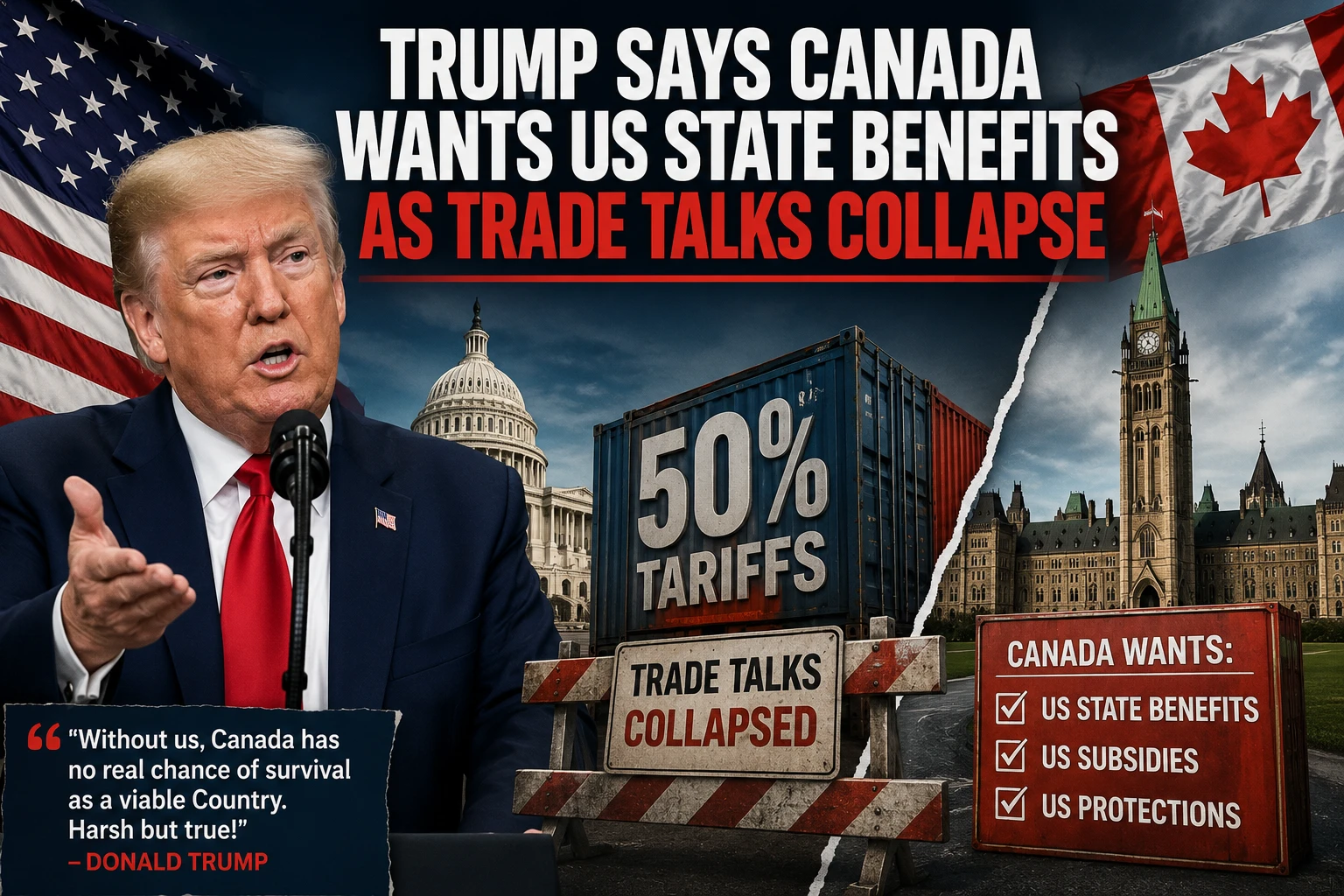
Washington, 23 August – US President Donald Trump has accused Canada of seeking the benefits of being a US state without actually becoming one, after trade negotiations between the two countries collapsed.
The breakdown in talks has triggered new 50% US tariffs on around $20 billion worth of Canadian imports. Canadian Prime Minister Mark Carney has described the measures as a “miscalculation” intended to hurt and divide Canada.
Carney said Canada would respond with matching tariffs “dollar-for-dollar” from 8 September. The measures are expected to cover products including steel, dairy goods, appliances and electronics.
“You’re at war when you get attacked. We got attacked,” Carney said, accusing Washington of demanding too much while offering too little.
Trump has repeatedly suggested since returning to office that Canada could become the United States’ “51st state”, comments that have angered Canadian political leaders.
The latest tariffs cover about 5% of Canadian goods imported into the US, including wine, dairy products, cement, clothing and hockey equipment. They come on top of existing US tariffs on Canadian steel, aluminium, automobiles and lumber.
Carney said the US had presented unacceptable conditions, including restrictions on Canada’s ability to negotiate trade agreements with other countries. US trade officials, however, accused Canada of introducing new demands and reversing previously agreed positions.
Canadian provincial leaders and opposition politicians have largely backed Carney’s response. Ontario Premier Doug Ford said Trump “can’t be trusted”, while British Columbia Premier David Eby warned that the US demands could reduce Canada to “the economic equivalent of the 51st state”.
The dispute threatens one of the world’s most deeply integrated trading relationships. Canada, the United States and Mexico conduct roughly $1.6 trillion in annual trade under the US-Mexico-Canada Agreement (USMCA).
The collapse of the latest negotiations also raises questions about the future of USMCA, which replaced the North American Free Trade Agreement during Trump’s first presidency.
Carney acknowledged that the failure to reach a new agreement was “certainly not good news” for the future of the North American trade relationship.





COMMENTS