
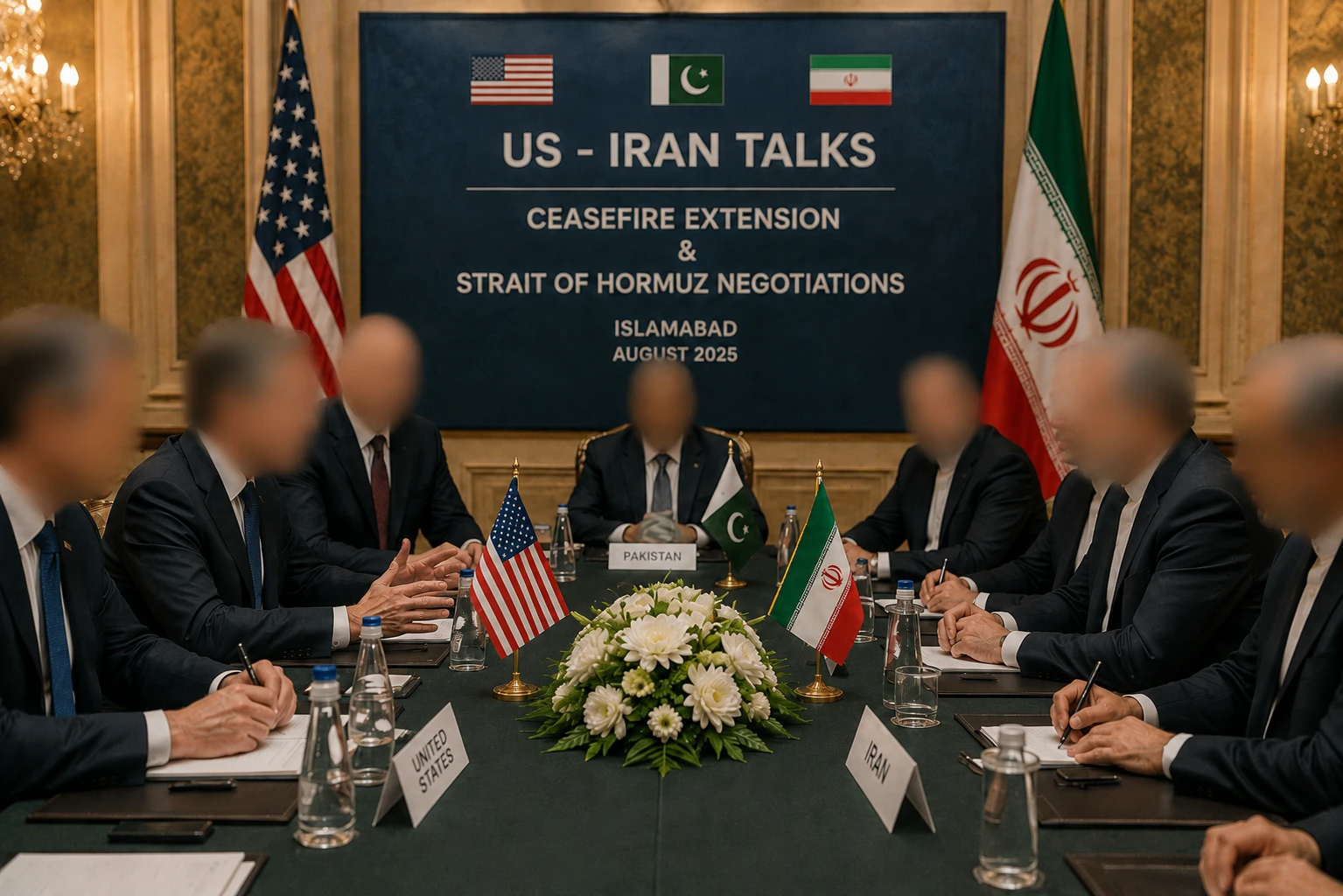
WASHINGTON/TEHRAN — August 13, 2026: The United States and Iran have agreed to extend their 60-day ceasefire before it expires on August 17, according to sources cited by Turkey’s state-run Anadolu Agency. The extension is part of an Islamabad Memorandum of Understanding aimed at keeping the two sides at the negotiating table.
The agreement comes amid renewed diplomatic efforts by Pakistan to prevent a return to large-scale hostilities and create conditions for a broader settlement between Washington and Tehran.
Pakistan has played a central role in mediating between the two countries. Pakistani Interior Minister Mohsin Naqvi has been engaged in talks with Iranian officials as Islamabad steps up efforts to resolve the crisis.
Strait of Hormuz remains key obstacle
Despite the extension, major differences remain, particularly over the Strait of Hormuz, one of the world’s most important energy-shipping routes.
Iran has demanded that the United States halt attacks on Iran and its allies, provide compensation for wartime losses, release frozen Iranian funds and lift economic and port restrictions before Tehran agrees to fully reopen the strategic waterway.
Washington, meanwhile, has maintained pressure on Tehran over maritime security and freedom of navigation. The competing demands have raised doubts over whether the ceasefire extension can lead to a comprehensive agreement.
The two sides have previously struggled to resolve disagreements over the status of the Strait, sanctions relief and other security issues. The Islamabad framework was intended to provide a temporary window for negotiations rather than settle all outstanding disputes immediately.
Regional tensions continue
The ceasefire extension comes as tensions remain high across the region. The United States has continued to assert that the situation around the Strait of Hormuz is under control, while Iran has rejected demands that would effectively place the waterway under exclusive US control.
Separately, violence has continued to affect shipping routes in the wider region. In the Bab el-Mandeb Strait, a cargo vessel reportedly came under attack by Iran-backed Houthi fighters, leaving at least four crew members dead. Two rescuers were also reportedly killed in a subsequent attack.
The latest developments underscore the fragile nature of the ceasefire. While the extension provides Washington and Tehran with additional time for diplomacy, the unresolved dispute over the Strait of Hormuz and broader regional security issues could still threaten the truce.
For now, Pakistan’s mediation efforts remain focused on keeping the ceasefire in place and persuading both sides to move toward a longer-term political settlement.





COMMENTS