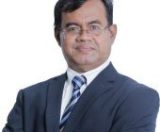

On June 30, the International Crimes Tribunal (ICT) no. 2 in Dhaka will deliver its judgment against Hasanul Haq Inu (Inu), president of the Jatiya Samajtantrik Dal (JSD), in connection with the killing of six people in Kushtia during the ‘July 2024 movement’. The case has drawn attention well beyond the courtroom, and rightly so. But before weighing in on what the verdict ought to say about Bangladesh, it is worth being precise about what this case actually is.
Short Summary of the Discharge Petition Filed by Hasanul Haque Inu
Hasanul Haque Inu’s defense counsel had filed a comprehensive discharge petition before the International Crimes Tribunal, seeking his complete exoneration from all charges connected to the July-August 2024 quota reform movement that culminated in the fall of the Awami League government.
The petition’s central contention was that the quota reform movement, by mid-July 2024, had ceased to be a peaceful student agitation and had instead degenerated into an armed insurrection, infiltrated by Jamaat-e-Islami, Islami Chhatra Shibir and elements aligned with the BNP. In support, the defense pointed to the Narsingdi jail break, the killing of police personnel at Enayetpur and Eliotganj, the use of 7.62mm military-grade weapons by civilians, and what it described as public admissions by movement coordinators, including Hasib Al-Islam and Asif Mahmud Shojib Bhuyain, that violence had been a deliberate strategy. On this footing, the defense argued that Inu’s televised remarks describing the protesters as infiltrated by terrorist and communal elements amounted to factual commentary rather than incitement, and therefore could not meet the legal threshold prescribed under Sections 3(2) and 4 of the International Crimes (Tribunals) Act, 1973.
The petition addressed each charge individually, denying any verified evidence of a shoot-at-sight order said to have been issued at a meeting of July 19 at Gonobhaban (Prime Minister’s House), and challenging the authenticity and chain of custody of the phone recordings allegedly exchanged between Inu, Sheikh Hasina and the Kushtia police superintendent. It also pointed out to what it called chronological inconsistencies in the prosecution’s case, including an instance where a victim was reportedly killed before the date of the call alleged to have caused his death. The defense further stressed that Inu held no ministerial, parliamentary or command position during the relevant period, and that command responsibility under Section 4(3) could therefore not be invoked against him, adding that the call transcripts, read in proper context, showed him urging restraint and the prompt release of detainees rather than ordering violence.
Beyond the specific charges, the petition mounted a broader institutional challenge, contending that the 2024 amendments to the ICT Act were unconstitutionally retroactive, and that they selectively imported the International Criminal Court’s Elements of Crimes while omitting its procedural safeguards. It also argued that the OHCHR fact-finding report had been misused as evidence despite explicit disclaimers that it was never intended for use in criminal proceedings, and alleged that several prosecution witness statements bore signs of mechanical duplication while others remained undisclosed to the defense. The petition additionally flagged a purported conflict of interest involving the Chief Prosecutor’s past political affiliations with Jamaat, as well as concerns over a digital forensic witness with a personal history of alleged enforced disappearance.
A significant portion of the application was devoted to Inu’s biography as a 1971 freedom fighter and a lifelong secular, anti-Jamaat political figure, supported by contemporaneous JSD statements and media interviews given between 12 July and 4 August 2024, in which he had repeatedly called for dialogue, for reform of the quota system rather than its abolition, and for restraint on the part of law enforcement. The petition concluded by asserting that the prosecution’s case rested on conjecture, unauthenticated digital material and politically driven haste rather than admissible evidence, and that none of the eight charges disclosed a prima facie case under the Act, before formally praying that Inu be discharged from the proceedings in their entirety.
Rejection of the Discharge Petition
On 2 November 2025, the Tribunal rejected the discharge petition and proceeded to frame charges against him. In its order, the Tribunal held that Hasanul Haque Inu, as a senior political leader, conspirator, abettor, and policymaker, had actively participated in the planning, incitement, and execution of crimes against humanity. The charges framed against him include murder, other inhumane acts, and persecution on political grounds under Section 3(2)(a), (g), (h), read with section 4(1), 4(2), and 4(3) of the International Crimes (Tribunals) Act, 1973 as against the sole accused person, in terms of Rule 29 of the Rules of Procedure. These offences are punishable under Sections 20(2) and 20A of the same Act.
What the Case Is and Is Not
This is not a 1971 war crimes case. Inu is being tried, along with Sheikh Hasina and her former home minister, over the crackdown on student protesters in July and August 2024. He faces eight charges of crimes against humanity, the most serious being command responsibility for a phone conversation in which he, Sheikh Hasina, and a former Dhaka mayor are alleged to have discussed using drones to track protesters, after which police shot several people dead in Dhaka and killed several others in Savar. The prosecution has called for the maximum penalty, arguing that Inu lent political cover to a campaign of curfews and lethal force.
That distinction from 1971 matters. Conflicting the two cases does a disservice to both, and to the families on either side of this history who deserve clarity, not a muddle.
The Case for Skepticism
Inu’s defenders make a case that should not be waved away. He held no ministerial post during the 2024 uprising. His lawyers say prosecution witnesses themselves conceded he was not present in Kushtia when the killings occurred, and that the case against him leans heavily on intercepted phone conversations and reported remarks rather than direct evidence that he ordered violence.
There is also a wider pattern worth naming honestly. Bangladesh’s politics since Sheikh Hasina’s fall have shifted considerably, and not always in directions that look ideologically neutral. Jamaat-e-Islami, an organization whose senior leadership was convicted by Bangladesh’s own tribunal for collaboration and war crime during the Liberation War, has found new political room in this period, even as Awami League-aligned figures face prosecution and masse. Inu spent much of his career arguing that such a party had no legitimate place in Bangladesh’s democracy. That history is not proof of anything about the Kushtia case specifically, but it does explain why many of his supporters see something more than law at work here, and why the optics, a veteran of the pro-liberation left in the dock before a tribunal whose name was forged to try the killers of 1971, strike them as bitterly ironic at best.
The Case against Skepticism
But fairness cuts the other way too, and the other side of the ledger is substantial. The tribunal indicted Inu only after framing eight specific charges following investigation, and ten prosecution witnesses testified, including the investigating officer, and the defense was given nine full days to argue its case, beginning April 2 and continuing through closing arguments on May 14. The prosecution says its recordings were forensically verified as unaltered. Nearly fifty people were killed nationwide during the uprising, and in the related case against Sheikh Hasina, the tribunal has already found, in its published verdict, that an intercepted call involving Inu preceded police killings on August 5.
Fair Trial Requires Evidence, Not Political Retribution
A fair trial is not measured by the popularity of the accused, nor by the historical significance of the political era from which he emerged. In the case of Hasanul Haq Inu, the International Crimes Tribunal must remain firmly anchored to the principles of due process, evidentiary scrutiny, and individual criminal responsibility. The tribunal’s task is not to pass judgment on the legacy of the Liberation War, the Mujib era, or subsequent political rivalries, but to determine whether the prosecution can prove beyond reasonable doubt that the accused committed, ordered, or was otherwise responsible for specific crimes under its jurisdiction. Justice loses credibility when legal proceedings are perceived as instruments of political retribution rather than impartial adjudication. For the ICT to maintain public confidence and international legitimacy, it must demonstrate that its verdict rests solely on facts, evidence, and law. Only a trial that is visibly fair, neutral, and free from political influence can ensure that accountability is achieved without sacrificing the fundamental principles of justice.
Determining Factors – What Should Decide This
Bangladesh’s wound from 1971 has never fully healed. It should not be reopened carelessly to settle the arguments of 2026. Inu’s fate in this case should turn on what the evidence shows about Kushtia in 2024, not on what he represents from 1971, and not on who is cheering loudest from the sidelines. A tribunal that has just sentenced a former prime minister to death cannot afford even the appearance of selective justice in the cases that follow. If the evidence against Inu holds up, a conviction should follow without flinching from the discomfort of trying a leftist veteran. If it does not, an acquittal should follow just as readily, regardless of who finds that inconvenient.
Bangladesh’s allies, India, the European Union, and other democracies, have a legitimate interest in how this plays out, not because Inu’s guilt or innocence is their business, but because a tribunal’s credibility after a change of government is measured precisely in cases like this one, where the politics are loud and the law has to be louder. The country deserves a verdict that can be read as law settling a charge, not as the latest move in an unfinished argument about who owns the legacy of liberation.
That is the test on June 30. Not for Inu alone. For the tribunal itself. Again, not to forget, there is a legitimate question regarding the validity of the tribunal and its jurisdiction as well.
Parvez Hashem, Lawyer and Human Rights Defender