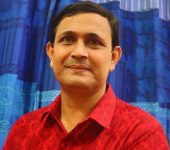

AKM Rahmatullah, a five-time Member of Parliament, veteran Awami League leader, and decorated Freedom Fighter, died in Dhaka early Wednesday at the age of 76, family members and hospital sources confirmed.
Rahmatullah, who served as a member of the Awami League Advisory Council until his death, passed away at Square Hospital in the capital at around 4 a.m. after undergoing treatment for several days.
Family members said his body was later taken to his residence in Beraid, Badda, where relatives, supporters, and local residents gathered to pay their final respects.
Confirming the news, Rahmatullah’s daughter Mansura Rahmatullah told The Voice, “He passed away at 4:05 a.m. today. His body has been brought to our residence in Beraid, Badda.”
His nephew, Faruk Hossain, also confirmed the death and funeral arrangements.
“He died at around 3:45 a.m. After receiving the news, family members went to the hospital and brought his body home. Following funeral prayers at Beraid Field, he will be laid to rest at Beraid Cemetery,” Faruk told family members and local media.
Long Political Career
Rahmatullah was one of the most recognizable figures in Dhaka Awami League politics and remained active in public life for decades.
A veteran of Bangladesh’s 1971 Liberation War, he built a long political career within the Awami League and held several influential party positions. He served as president of Dhaka North Awami League and later became a member of the party’s highest advisory body.
His political influence was particularly strong in the capital’s northern areas, where he developed a reputation as an experienced organizer and grassroots leader.
Over the course of his career, Rahmatullah was elected to Parliament five times.
He first entered the Jatiya Sangsad in 1986 during the Third Parliamentary Election, winning from the then Dhaka-5 constituency as an Awami League candidate representing the Combined Opposition Alliance.
A decade later, he returned to Parliament from the same constituency in the Seventh Parliamentary Election held in 1996 after the Awami League returned to power under Sheikh Hasina.
In the Ninth Parliamentary Election in 2008, Rahmatullah was elected from Dhaka-10 as an Awami League nominee.
He subsequently won from Dhaka-11 in the Tenth Parliamentary Election in 2014 and was re-elected from the same constituency in the Eleventh Parliamentary Election in 2018.
A Veteran of the Liberation War
Party leaders and supporters remembered Rahmatullah not only as a politician but also as a Freedom Fighter who participated in Bangladesh’s struggle for independence in 1971.
The Liberation War was the foundational event in Bangladesh’s statehood, and Rahmatullah belonged to a generation of leaders whose political identity was deeply shaped by that experience.
Throughout his career, he frequently participated in programs commemorating the Liberation War, Bangabandhu Sheikh Mujibur Rahman, and major milestones in Bangladesh’s political history.
As a senior party leader, he remained closely associated with organizational activities in Dhaka and continued to play an advisory role even after stepping back from frontline electoral politics.
Condolences and Legacy
News of Rahmatullah’s death prompted condolences from political colleagues, supporters, and residents of his former constituencies.
His passing marks the loss of another senior figure from a generation of Awami League leaders who helped shape Bangladesh’s political landscape during the post-independence era.
Rahmatullah is survived by three daughters and two sons.
Funeral prayers were scheduled to be held at Beraid Field before his burial at the family cemetery in Beraid, according to relatives.
His death comes at a time when Bangladesh’s political environment remains deeply polarized, with many veteran leaders from the country’s major political parties either retiring from active politics or passing from the scene.
For many supporters, Rahmatullah’s legacy will remain tied to both his role as a Freedom Fighter and his decades-long involvement in parliamentary politics and the Awami League’s organizational development in the capital.