
Asia Times Report Sparks Debate
A report published by Asia Times titled “Khalilur Rahman is Bangladesh’s Master of Ambiguity” has sparked debate over the direction and objectives of Bangladesh’s current foreign policy. The article questions whether the country’s present diplomatic strategy is based on ambiguity, contradiction, or deception.
Khalilur Rahman’s Role Raises Questions
According to the article, Dr. Khalilur Rahman, who previously served as National Security Advisor under the interim administration led by Dr. Muhammad Yunus, is now serving as Foreign Minister in the newly elected BNP-led government. The author describes this as an unprecedented development in Bangladesh’s political history, arguing that advisers of a supposedly neutral interim administration traditionally did not become part of a succeeding political government.
Allegations Against the Interim Government
The article claims that Bangladesh’s current political culture marks a major departure from past norms and practices. It argues that during Sheikh Hasina’s tenure, state policies and political principles maintained consistency, while the Yunus-led interim administration allegedly operated through propaganda, false promises, and instability.
It further alleges that the interim administration promised employment growth, poverty reduction, and quick Rohingya repatriation, but instead witnessed layoffs, economic hardship, and an increase in the Rohingya refugee burden.
Bangabandhu’s Foreign Policy Doctrine
The article contrasts the current administration with the foreign policy doctrine established by Bangabandhu Sheikh Mujibur Rahman, centered on the principle of “friendship to all, malice towards none.” According to the author, Sheikh Hasina continued that balanced and transparent policy while adding a regional support strategy focused on helping neighboring countries during times of crisis.
Examples cited include Bangladesh’s financial support to Sri Lanka during its economic difficulties and vaccine assistance provided to neighboring countries during the COVID-19 pandemic.
Sheikh Hasina’s Three-Pillar Foreign Policy
The article states that Sheikh Hasina’s administration developed three major foreign policy pillars:
* Economic Diplomacy
* Public Diplomacy
* Regional Peace and Stability Doctrine
Through these policies, Bangladesh allegedly attracted record foreign direct investment, expanded exports, increased overseas employment opportunities, and strengthened food security.
The Vision of “Hasinaeconomics”
The article describes “Hasinaeconomics” as a governance model designed to achieve two major objectives:
1. Transforming Bangladesh into a prosperous and sustainable “Sonar Bangla” by 2041
2. Improving citizens’ living standards through poverty reduction and expanded access to essential services
According to the article, Bangladesh achieved an average GDP growth rate of 6.8 percent during Hasina’s tenure, reduced poverty from 42 percent in 2006 to 18 percent in 2023, and increased per capita income from $543 to $2,932.
Development Model Inspired by Japan and South Korea
The article compares Bangladesh’s economic strategy under Sheikh Hasina to the development models of Japan and South Korea, emphasizing the role of large private-sector conglomerates in driving industrial growth, exports, and employment generation.
It highlights companies such as BEXIMCO, Bashundhara, Walton, PRAN, BRAC, and Summit Group as examples of local conglomerates that contributed to Bangladesh’s economic growth.
Corruption and Digital Governance Plans
However, the article acknowledges that rapid economic expansion also created areas of corruption. It claims Sheikh Hasina intended to address those issues through expanded digital governance reforms before she was removed from power.
BNP Government’s Strategic Shift
Turning to the current BNP-led administration under Tarique Rahman, the article argues that the government is attempting to strengthen ties with both Pakistan and China while simultaneously pursuing closer relations with the United States and India.
Among the concerns raised are increased weapons purchases from China and Pakistan, reports of Pakistan-backed military airfield projects in Bangladesh financed by China, and the decision to involve China in the Teesta River project despite India’s interest in participating as a technical partner.
Teesta Project and Water Sharing Concerns
The article questions whether granting the Teesta project to China could complicate the renewal of the Ganges Water Sharing Treaty, which is scheduled for renewal in October 2026.
Expanding Relations with the United States
The article also highlights recent agreements signed with the United States involving the purchase of 14 Boeing aircraft and approximately $15 billion worth of American energy products.
According to media reports cited in the article, Bangladesh may have also agreed to conditions restricting the purchase of certain products from third countries without prior U.S. approval, though details remain undisclosed.
Balancing Rival Global Powers
The article argues that Bangladesh’s simultaneous efforts to strengthen ties with rival powers — China and the United States, as well as Pakistan and India — have created uncertainty regarding the country’s true strategic direction.
The Central Question
Concluding the analysis, the author raises a central question: can Bangladesh successfully balance relationships with four competing geopolitical powers at the same time, or will its policy of strategic ambiguity eventually undermine trust among all sides?
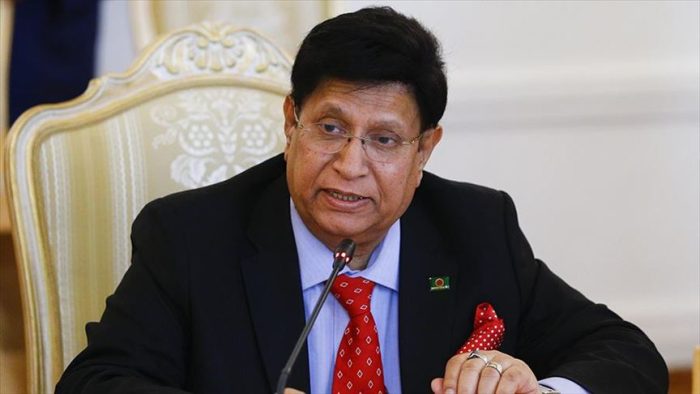
akm abdul momen – Former Foreign Minister of Bangladesh (2019-2024) and ex-Permanent Representative of Babngladesh to the UN (2009-2015).