
The U.S. Department of State has appointed Thomas “Tommy” Pigott as its new spokesperson, signaling a continuation of the Trump administration’s communications strategy at a critical time for U.S. foreign policy messaging.
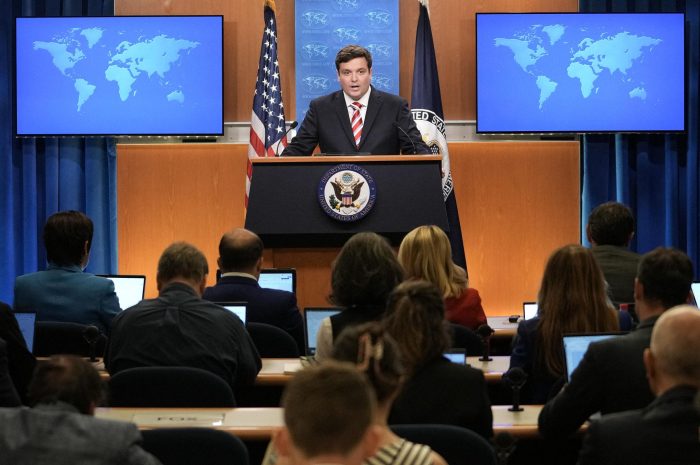
The announcement, made in an official statement, confirms that Pigott will become the primary public voice of the department, responsible for explaining U.S. diplomatic positions to both domestic and international audiences. In this role, he will lead press briefings, engage with global media, and shape messaging under Secretary of State Marco Rubio.
Transition from Deputy to Top Spokesperson
Pigott previously served as Principal Deputy Spokesperson since joining the State Department in January 2025, during the early phase of President Donald Trump’s second administration.
His promotion follows a vacancy created when former spokesperson Tammy Bruce was appointed to a diplomatic role at the United Nations, leaving the position open during a period of heightened geopolitical challenges.
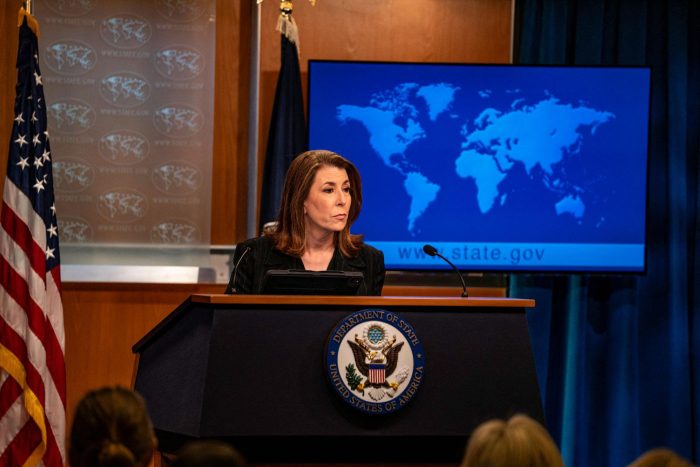
The State Department noted that Pigott will “speak directly to audiences in the United States and around the world” and “spearhead engagements with the Department’s press corps and broader media.”
Background and Experience
Pigott brings nearly a decade of communications experience to the role. Prior to joining the State Department, he worked on Trump’s 2024 presidential campaign and held positions at the Republican National Committee.
He is a graduate of Georgetown University’s School of Foreign Service and holds a master’s degree from George Washington University’s School of Media and Public Affairs.
His experience in both political communications and government messaging is seen as central to maintaining consistency in the administration’s foreign policy narrative.

Role and Strategic Importance
The State Department spokesperson is one of the most visible roles in U.S. diplomacy, tasked with delivering daily press briefings and articulating official positions on global events.
From conflicts in Europe and the Middle East to evolving U.S. alliances in the Indo-Pacific, the spokesperson serves as a key interface between policymakers and the global media. Analysts note that messaging clarity has become increasingly critical as geopolitical tensions and information warfare intensify.
Policy Messaging and Early Signals
In previous remarks as deputy spokesperson, Pigott emphasized the administration’s pragmatic foreign policy approach, including prioritizing direct negotiations in conflict zones and focusing on strategic outcomes rather than symbolic diplomacy.
His appointment is widely viewed as a move to ensure continuity in how U.S. foreign policy is communicated, particularly as Washington navigates complex international challenges.
Looking Ahead
With Pigott now officially at the helm of State Department communications, attention will turn to how he manages daily press briefings and responds to increasingly complex global issues.
As the public face of U.S. diplomacy, his role will be closely watched by international media, policymakers, and foreign governments alike.
Sources:
[https://www.state.gov/releases/office-of-the-spokesperson/2026/04/department-of-state-announces-appointment-of-thomas-tommy-pigott-as-state-department-spokesperson, https://www.reuters.com/world/us/us-state-department-appoints-tommy-pigott-spokesperson-2026-04-24, https://www.miragenews.com/state-dept-names-thomas-pigott-as-new-1661929, https://www.kyivpost.com/post/74707]