
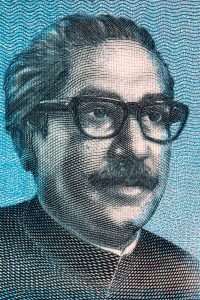
Bangladesh’s national identity is deeply intertwined with the legacy of Bangabandhu Sheikh Mujibur Rahman, the leader widely regarded as the Father of the Nation and the architect of the country’s independence. More than five decades after the birth of Bangladesh in 1971, his influence remains central to debates about democracy, national identity, and the country’s place in international affairs.
Born on March 17, 1920, in Tungipara in present-day Gopalganj district, Sheikh Mujibur Rahman emerged as one of the most influential political figures in South Asia during the mid-twentieth century. His political career began during the final years of British colonial rule, when he became active in student politics and later in the emerging Bengali nationalist movement. Over the following decades, he would become the dominant voice demanding political rights and autonomy for the people of East Pakistan.
His leadership became decisive during the political crisis that followed the 1970 general elections in Pakistan. Mujib’s Awami League won an overwhelming majority in East Pakistan, securing 167 of the region’s 169 seats in the national assembly. However, the refusal of the ruling authorities in West Pakistan to transfer power triggered widespread unrest and eventually a full-scale independence movement.
Architect of Bangladesh’s Independence
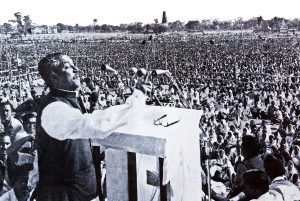
One of the defining moments of the struggle for independence came on March 7, 1971, when Mujib addressed a massive gathering in Dhaka. The speech mobilized millions of Bengalis and effectively prepared the nation for the liberation struggle that followed. The conflict escalated after the Pakistani military launched a violent crackdown on March 25, 1971.
Following nine months of war and enormous sacrifice, Bangladesh emerged as an independent state in December 1971. Mujib, who had been imprisoned in West Pakistan during the war, returned to a liberated homeland in January 1972 and soon became the country’s first prime minister.
Historians and political analysts often describe Mujib as the “architect of independent Bangladesh,” a title reflecting his role in transforming Bengali political aspirations into a sovereign state. His lifelong struggle for political rights and his leadership during the liberation movement earned him the recognition of “Father of the Nation,” a designation given to leaders who play decisive roles in founding modern states.
Why He Is Called the Father of the Nation
The title “Father of the Nation” in Bangladesh reflects Mujib’s historic role in shaping the country’s national identity and guiding the movement for independence. Scholars argue that leaders receive such recognition when their leadership becomes instrumental in the birth of a nation and in the liberation of its people.
In Bangladesh’s case, Mujib unified diverse social groups—students, workers, farmers, and intellectuals—under a shared political vision. Through decades of activism, imprisonment, and political mobilization, he transformed regional grievances into a powerful nationalist movement that ultimately led to independence.
The Greatest Bengali of All Time
Bangabandhu is frequently described by admirers and historians as the “greatest Bengali of all time.” The description reflects not only his political achievements but also his unique ability to connect with the aspirations of ordinary people.
Observers note that while Bengal has produced many influential figures in literature, philosophy, and politics, Mujib’s role in establishing an independent nation-state distinguishes him historically. His leadership gave the Bengali people a sovereign homeland for the first time in modern history.

Building a New State
When Mujib assumed leadership of the newly independent country in 1972, Bangladesh faced immense challenges. Infrastructure had been destroyed by war, millions were displaced, and the economy was severely damaged.
His government initiated reconstruction programs, restored basic administration, and began the process of building democratic institutions. Bangladesh adopted a constitution based on four fundamental principles—nationalism, democracy, socialism, and secularism—intended to guide the development of the new state.
Bangabandhu’s Role in International Relations
Bangabandhu also played a critical role in shaping Bangladesh’s early foreign policy. His guiding diplomatic principle—“friendship to all, malice toward none”—aimed to maintain balanced relations with global powers during the Cold War era.
Under his leadership, Bangladesh quickly secured recognition from the international community and joined major global organizations including the United Nations and the Non-Aligned Movement. Mujib himself addressed the United Nations General Assembly in 1974 in Bengali, marking a historic moment for the country’s global presence.
Diplomatic historians note that this approach allowed Bangladesh to establish cooperative relationships with a wide range of countries while safeguarding its sovereignty.
A Legacy That Continues to Shape Bangladesh
Bangabandhu’s legacy remains deeply embedded in Bangladesh’s national consciousness. His leadership inspired not only Bangladesh’s liberation movement but also broader anti-colonial struggles across the developing world. Scholars and policy experts have noted that his political vision and determination continue to influence contemporary debates about governance, development, and international cooperation.
For many Bangladeshis, Bangabandhu symbolizes the enduring ideals of independence, dignity, and national unity. His life and leadership are often viewed as the foundation upon which the modern Bangladeshi state was built.
More than fifty years after independence, the story of Bangladesh cannot be told without Bangabandhu Sheikh Mujibur Rahman. As the architect of the nation, the Father of the Nation, and a figure widely regarded as the greatest Bengali of all time, his legacy continues to shape the country’s identity and its place in the world.
Dastagir Jahangir
Editor, The Voice