
The United States has launched major combat operations in Iran, with President Donald Trump directly addressing Tehran’s military and the Islamic Revolutionary Guard Corps (IRGC), urging them to lay down their weapons and accept complete immunity — or face “certain death.”
Trump’s stark warning, delivered in a video statement early Saturday, underscored the dramatic escalation of hostilities after weeks of rising tensions triggered by stalled nuclear negotiations and recurring confrontations over Iran’s missile and nuclear programs.
Trump cast the campaign as both a defensive measure and a call for regime change, framing the U.S. and Israeli strikes as critical to neutralizing long-standing threats from Tehran. He appealed directly to Iranian civilians — telling them the “hour of your freedom is at hand” and encouraging them to take control of their government once military operations conclude.
At A Glance
- Donald Trump confirmed US involvement in Israeli strikes across Iran, including Tehran, on Saturday, 28 February.
- He characterised the strikes as a ‘preventative attack’ and a ‘major combat operation’.
- In the video, Trump asserted that Iran would never be permitted to develop a nuclear weapon.
- He justified the action by stating, ‘It’s been mass terror, and we’re not going to take it any longer.’
- The confirmation came after Trump expressed dissatisfaction with the progress of negotiations with Iran on Friday, 27 February.
“Operation Epic Fury” Underway
U.S. military forces, in coordination with Israel, have begun an offensive against strategic Iranian military targets, including missile systems, naval assets and infrastructure linked to ballistic and nuclear capabilities. The Pentagon has reportedly dubbed the military campaign “Operation Epic Fury.”
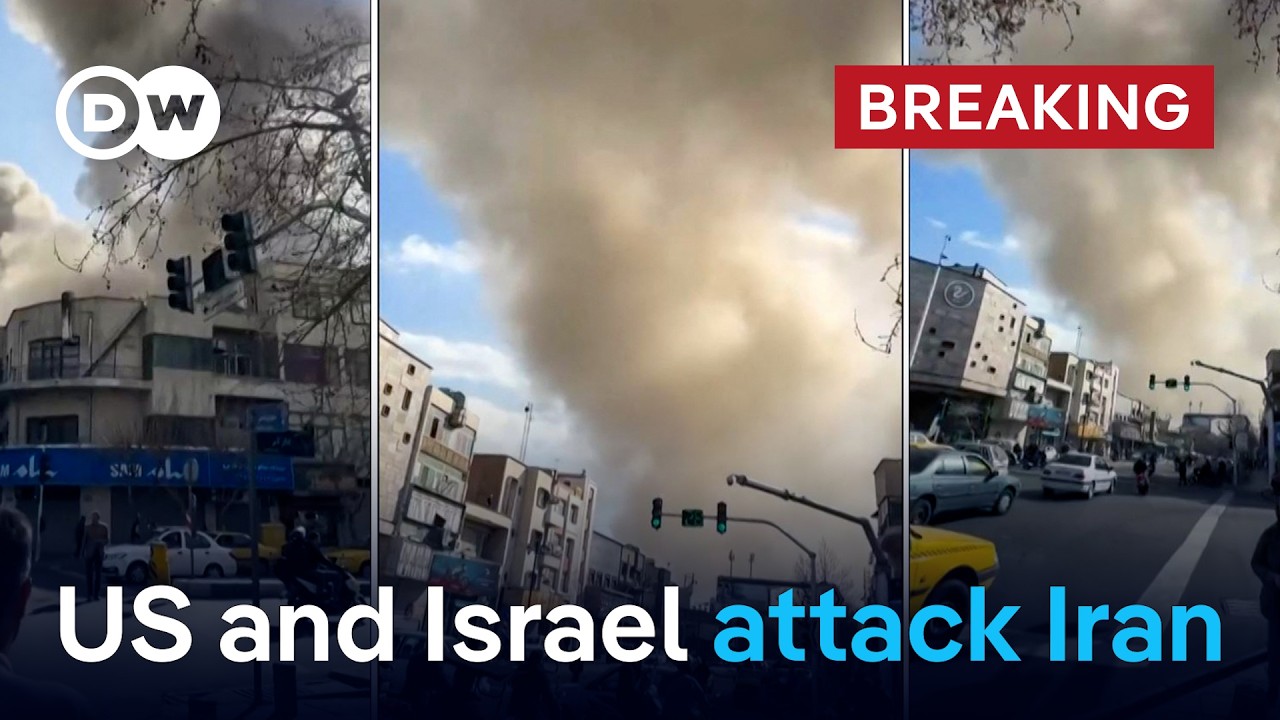
Explosions have been reported across Tehran and other Iranian cities as aerial and missile strikes have struck government and defense sites. Iran’s airspace has been shut down, and major commercial airlines canceled flights in the region as air defenses have been activated.
Israeli officials described the campaign as vital to eliminating what they have called an “existential threat” posed by Tehran’s nuclear and ballistic missile programs. Both U.S. and Israeli leaders expect the strikes to continue over several days.
Iran’s Immediate Retaliation
In response, Iranian forces have launched missiles and drones toward Israel and U.S. interests in the region, including bases in Bahrain, Qatar, Kuwait and the United Arab Emirates. Air defense systems in multiple countries were engaged early Saturday, and states across the Gulf have urged civilians to seek shelter.
Iranian authorities condemned the offensive as a “gross violation” of national sovereignty and pledged to deploy all “might and resources” to counter foreign aggression.
Trump’s Rationale and Warnings
In his statement, Trump said the strikes were designed to protect American citizens, U.S. troops abroad, and allied nations from what he described as a history of Iranian belligerence and terrorism. He reiterated that the United States will not allow Iran to obtain nuclear weapons — a longstanding policy objective of successive administrations.
While declaring the mission essential, Trump acknowledged that U.S. forces may suffer casualties — a reality he said “often happens in war” — but framed the operation as a mission for the future security of the United States.
Global Reactions and Regional Shockwaves
Governments around the world have reacted with alarm at the broadened conflict. Nations in Europe and across Asia have called for restraint and emphasized the need for diplomatic channels amid fears of full-scale war.
In the Middle East, embassies issued shelter-in-place warnings for civilians, while airlines rerouted or grounded flights in response to the broader regional instability.
A Turning Point in U.S.–Iran Relations
This marks one of the most significant military escalations between the United States and Iran in decades. The operation comes after months of heightened tension, failed negotiations over nuclear limits and repeated threats from both sides. It also follows previous U.S. strikes on Iranian nuclear facilities last year that were intended to curtail Tehran’s enrichment capacity.
Whether the conflict will broaden further or open a path to political upheaval within Iran remains uncertain. For now, the battlefield itself — and Trump’s stark ultimatum to Iran’s armed forces — are at the forefront of global attention.


