
Dhaka:
The final official ballot paper dispatched for postal voting in the upcoming referendum has triggered fresh controversy, as it reportedly contains no serial number—unlike regular election ballots that carry identifiable references.
Election observers and voters have pointed out the striking discrepancy between standard parliamentary election ballots and referendum ballots. While ordinary ballots include serial numbers that allow for procedural tracking and administrative verification, the referendum ballots reportedly lack any such numbering system.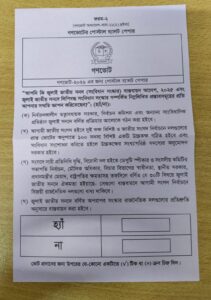
The absence of a serial number raises a fundamental question: how can a voter later verify whether their vote was counted as “Yes” or “No”?
Transparency in any electoral process depends on traceability, experts argue. Without a mechanism that allows verification—directly or indirectly—accountability becomes difficult to establish. When ballots carry no identifiable reference, independent confirmation of vote counting becomes virtually impossible,
undermining confidence in the process.
Critics say the lack of clarity surrounding the ballot design has already raised questions about the integrity of the voting procedure itself. These concerns extend beyond technicalities, touching directly on the credibility of the eventual results.
Public confidence, analysts warn, is often the first casualty when transparency is compromised. For many voters, the referendum already appears non-participatory, and without broad acceptance, no vote can genuinely claim to represent the will of the people.
A vote, they stress, is not merely a mark on paper—it embodies a citizen’s right
, their trust in democratic institutions, and a collective decision about the nation’s future.
In the absence of clear safeguards, critics argue, the process risks deepening skepticism rather than strengthening democratic legitimacy—what some have cynically described as yet another example of “magic” politics.


