
The Bangladesh Awami League has announced a boycott of Bangladesh’s upcoming national parliamentary election, citing the party’s exclusion from the electoral process. Party president and ousted Prime Minister Sheikh Hasina said her party had repeatedly expressed its willingness to take part in the election, but received no positive response from the authorities.
Over the past two months, Hasina told several international media outlets that the Awami League wanted to contest the election. However, after what the party describes as continued rejection and political obstruction by the current authorities, it formally decided to boycott the polls.
The Awami League—the political organization that led Bangladesh’s independence movement—is not being allowed to participate in the election. The party is the country’s oldest political force and has played a central role in democratic struggles since independence. It has also governed Bangladesh for the longest period in its history.
The Awami League alleges that its organizational activities have been banned by the army-backed interim administration led by Muhammad Yunus, and that the Bangladesh Election Commission has suspended the party’s official registration, effectively barring it from the electoral process.
Despite this situation, the Election Commission has announced that a general election will be held on February 12 in what the Awami League describes as a one-sided vote. Fourteen political parties aligned with the Liberation War platform have also been excluded, according to the party. Even the Jatiya Party, which governed the country for nine years and remains one of Bangladesh’s major political parties, is reportedly being prevented from taking part in the election.
The exclusion of major political parties has raised serious questions within political circles about the credibility and consequences of the election. Awami League leaders claim that following Sheikh Hasina’s boycott call, not only around 40 percent of voters traditionally loyal to the party’s “boat” symbol, but also nearly 20 percent of floating voters, will stay away from polling centers. As a result, doubts have emerged over whether voting will meaningfully take place on the scheduled date.
In a video message released on Monday, Sheikh Hasina said that if the boat symbol is not on the ballot and if the Awami League cannot participate, none of the party’s supporters will vote.
“Where there is no boat symbol, where the Awami League is not allowed to participate, our supporters and voters will not go to polling centers,” she said. “No matter how much fear, killing, terrorism, arrests, threats, repression, disappearances, murders, abductions, or brutal mob violence they carry out, people will not vote. Please deliver this message to all democracy-loving citizens.”
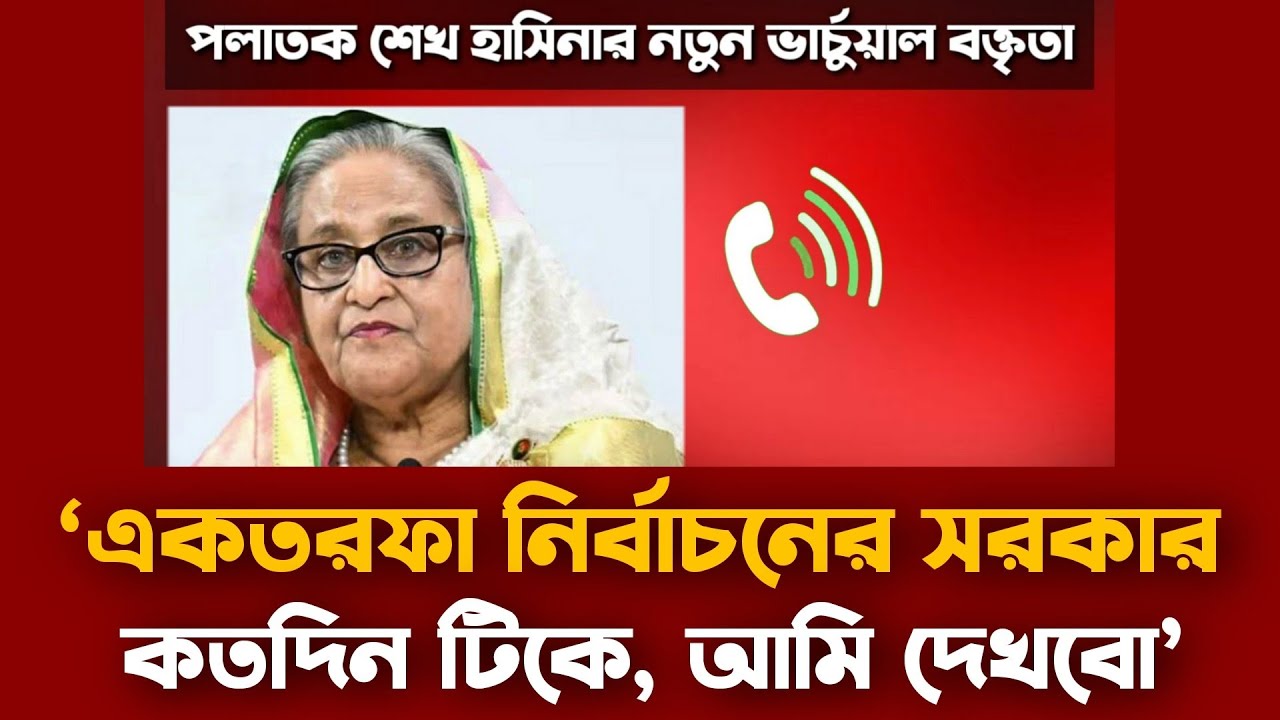
On January 13, 2026, the Awami League issued a one-and-a-half-page written statement formally calling for an election boycott. At the beginning of the statement, Hasina accused the Yunus administration of attempting to conduct a staged election under armed protection.
She urged citizens not to participate in such a vote, reiterating that no Awami League supporter should go to polling stations if the party is excluded.
Nearly three months earlier, Hasina had hinted at a possible boycott in an interview with Reuters. She said that Bangladesh’s next government must have electoral legitimacy and stressed that millions of people support the Awami League.
“In the current situation, they will not vote,” she said at the time. “You cannot take away the voting rights of millions of people in a functioning political system.”
In its statement, the Awami League described Bangladesh as being pushed into a deep economic, social, and political crisis through what it called unconstitutional seizure of power. The party alleged that democracy, human rights, and media freedom have been severely restricted, while the rule of law and justice have collapsed.
The statement also cited rising violence against women, chaos in industrial sectors, and alleged efforts to transfer national assets to foreign interests. It accused the authorities of attempting to impose a pre-planned and manipulated election.
Against this backdrop, the Awami League placed several demands before the authorities. These include the immediate resignation of the current power holders and the transfer of authority to elected representatives; the withdrawal of all cases and verdicts against Sheikh Hasina and members of her family; and the release of Awami League leaders and activists, along with members of allied parties and professionals detained under what the party calls false charges.
The party also demanded the reversal of the ban on its organizational activities, the restoration of its registration, and the lifting of restrictions on the Bangladesh Chhatra League and other pro-liberation political and social organizations.
Additionally, the Awami League called for urgent action to stop violence, killings, land grabbing, looting, arson, and repression against religious minorities and indigenous communities in the hill tracts, along with exemplary punishment for those responsible.
The party stressed that a free, fair, and peaceful election—where citizens can choose their representatives without fear—is essential to restoring democracy. It argued that any election held without the participation of the Awami League and its allies would neither reflect the will of the people nor be accepted domestically or internationally.
The Awami League reiterated that it is willing to participate in an inclusive election and said that a meaningful vote is impossible if the majority-supported political alliance is excluded. The party also suggested that elections could be held under a caretaker government if necessary.
In its concluding appeal, the Awami League urged citizens to unite during what it described as a critical national crisis to restore democracy and protect voting rights through a collective movement involving all progressive, democratic, and secular forces.
According to the announced schedule, Bangladesh’s parliamentary election is set for February 12. A referendum on the July Charter will be held on the same day. Nomination papers were submitted between December 12 and December 29, scrutiny took place from December 30 to January 4, appeals were filed until January 11, and appeal hearings will continue until January 18. The final list of candidates and symbol allocation will be published on January 21. Official campaigning is scheduled to begin on January 22 and will continue until 7:30 a.m. on February 10.


