
The Committee to Protect Journalists (CPJ) has called on Bangladesh’s Interim Chief Adviser Prof. Muhammad Yunus to urgently address the imprisonment of four journalists who are currently facing murder charges.
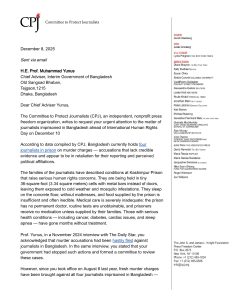
In a letter sent on December 8, ahead of International Human Rights Day, the global press freedom organization expressed deep concern over what it described as “hastily filed” cases that lack credible evidence and appear retaliatory in nature.
According to CPJ, the four journalists — Farzana Rupa, Shakil Ahmed, Mozammel Babu, and Shyamal Dutta — are being held at Kashimpur Prison under severe conditions that violate basic human rights.
Prisoners are reportedly confined in 36-square-foot cells without proper ventilation or bedding, exposed to cold weather, mosquito infestation, and inadequate medical care. CPJ also noted that some detainees with serious health issues, including cardiac problems and diabetes, have gone months without treatment.
The letter also highlighted concerns about lawyer ZI Khan Panna, who has been targeted with a murder accusation while representing the detained journalists. CPJ reminded the government that freedom of expression is protected under Article 39 of Bangladesh’s Constitution and the International Covenant on Civil and Political Rights, to which Bangladesh is a signatory.
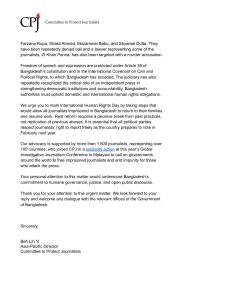
CPJ urged the government to take “decisive action” ahead of Human Rights Day to allow the imprisoned journalists to return to their families and resume work. The organization emphasized that Bangladesh must uphold domestic and international human rights obligations and avoid repeating past abuses.
More than 1,500 journalists from over 100 countries supported CPJ’s call during the Global Investigative Journalism Conference in Malaysia this year, demanding the release of imprisoned journalists worldwide and an end to impunity for attacks on the press.
In closing, CPJ stressed that Prof. Yunus’s personal intervention would demonstrate the interim government’s commitment to justice, transparency, and democratic accountability.


