
Former Foreign Minister and Bangladesh’s Permanent Representative to the United Nations, Professor Dr. A K Abdul Momen, extended warm greetings to the Bangladeshi and global community on the occasion of Thanksgiving Day, underscoring the cultural, historical and moral significance of the centuries-old American tradition.
In a message shared on Thursday, Dr. Momen reflected on the origins of Thanksgiving, tracing it back 424 years to the landmark 1621 feast in Plymouth, Massachusetts. The event is historically remembered as the first peaceful gathering between Native Americans and European settlers following prolonged conflict and devastating losses on both sides.
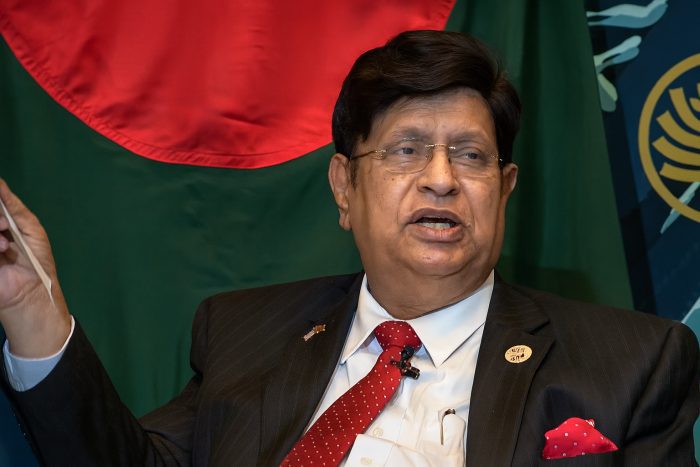
Dr. Momen noted that the first Thanksgiving emerged after a successful harvest, when the Wampanoag tribe and the newly arrived Pilgrims agreed to end hostilities and share a celebratory meal. The menu—in which the natives contributed turkey, geese, corn, potatoes, pumpkins and pecans, while settlers brought cider and liquor—laid the foundation for what would become one of the most enduring American traditions.
A Day of Gathering, Gratitude and Mourning
The former foreign minister emphasized that modern Thanksgiving carries a dual meaning. For millions of American families, the day remains an occasion of joy, reflection, and togetherness. He wrote that families typically gather around the table, light candles, and thank God for sustenance and well-being. According to U.S. media reports cited by Dr. Momen, 82 million Americans are expected to travel this year to reunite with their loved ones.
He also pointed to the customary two-day observance among families: the son’s family traditionally visits his parents on Thanksgiving Day, and the following day the family travels to the in-laws’ residence—reflecting the day’s deep-rooted social customs and emphasis on kinship.
However, Dr. Momen reminded that for Native Americans, Thanksgiving is also observed as a day of mourning, collective remembrance and prayer. He highlighted the tragic history of native–settler conflict, which saw the death of nearly half the Indigenous population and about 30 percent of settlers, as well as the devastating impact of disease on native communities.
Lessons from 1621: Peace Through Dialogue
Dr. Momen recounted how, in 1620, the leader of a small Native American tribe in Plymouth took the historic step of signing a treaty of friendship with the settlers, seeking to end the cycle of violence. It was this act of dialogue and cooperation that paved the way for the first Thanksgiving celebration—a three-day gathering attended by nearly 100 people.
He also pointed out that the original feast was held in the afternoon, not at night, as tribal leaders often traveled for days to join the festivities.
“A Truly American Tradition”
Calling Thanksgiving “a truly American tradition,” Dr. Momen emphasized that the core values of the day—gratitude, reconciliation, family bonds, and shared humanity—carry universal relevance. At a time when global conflicts, humanitarian crises and polarization dominate headlines, he suggested that Thanksgiving offers an opportunity to revisit lessons from history about peace, respect and coexistence.
The former foreign minister’s message arrives as the Bangladeshi-American diaspora and communities worldwide participate in the holiday’s cultural and family celebrations, reflecting the increasingly global nature of an event rooted in American soil but embraced far beyond its borders.
Full Text of the Message by Professor Dr. A K Abdul Momen
Happy Thanksgiving to all.
Today is a special day in the US. It is last Thursday in November. On this day 424 years ago in 1621 the never ending fighting between the pilgrims (settlers or colonists) and the natives (original indigenous people whom Christopher Columbus in 1492 termed Indians, nowadays known as Red Indians) was ended and they had a joint feast.
In fact, after several bad weather they had a good harvest and both the pilgrims and the natives celebrated it by ending the war with a Thanksgiving feast. While the natives provided turkey, geese, potatoes, pecan, pumpkin and corn, the pilgrims or settlers supplied liquor, apple cider, and drinks and they had a lovely dinner together first time since their arrival in the new world, America.
In America, on this day, all the family members gather together and prior to eating, they lit candles and thank God for good food and good living.
This year as per media, 82 million Americans will travel on Thanksgiving day to meet their parents and family members. As per tradition, nowadays, the son and his family participate at the Thanksgiving dinner at his parents house and the following day, they travel to their father-in-laws house to celebrate it.
The natives celebrate this day as a day of remembrance, a day of mourning for the dead and a day of prayers. In the wars between the natives and the colonists, nearly half of natives died while 30% of the settlers killed. In addition, due to disease, large numbers of natives died.
Therefore, in 1620, the leader of a small tribe of the natives in Plymouth, Massachusetts decided to end war and signed a treaty of friendship. The natives taught the settlers how to grow corn. Following year, they had the Thanksgiving dinner. This dinner takes place in the afternoon not at night.
Thanksgiving was celebrated for 3 days as it took many tribe leaders to reach Plymouth for days and nearly 100 people attended it. Nowadays, the Americans celebrate it on Thursday plus Saturday and Sunday. Thanksgiving is truly an American tradition.
Professor Dr. A K Abdul Momen
Former Foreign Minister and Bangladesh Permanent Representative to the UN


