
Fifteen months ago, when 16-year old Sheikh Hasina’s elected government was overthrown abruptly through a ‘meticulously designed’ students uprising, Bangladeshis were excited for a brighter future. They were pleased as their only Nobel Peace Prize Winner, Dr. Mohammed Yunus, a global celebrity with excellent PR was appointed as the Head of the Bangladesh interim government.
A full-page newspaper ad was published in major cities of the world including New York and Washington welcoming his new government by hundreds of Nobel Laureates and global celebrities. Bangladeshis were excited at it. They had high hopes and expectations. They expected “Noble Treatment” from a Nobel Laureate.
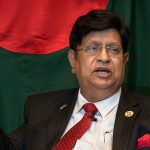
Unfortunately, soon they realized that their Nobel Laureate is not that noble. Instead, he released all terrorists and radical jihadis, created divisions, and exercised his vengeance through his radical jihadis who were like the Blackshirts of Benito Mussolini. They tortured, kidnapped, humiliated, vandalized, robbed, silenced and killed political dissidents including the nation’s police force and media.
More than 680 dissidents were lynched to death and hundreds of police officials were murdered. However, Dr. Yunus granted these killers ‘indemnity’, which means that the victims and their family members cannot bring cases against the killers. Both the police and the court are advised not to entertain such cases. Therefore, soon their hopes and expectations turned into horrors and nightmares.
The country now has plunged into uncertainty, lawlessness and anarchy. Radical jihadis have taken over the government and no one is secure and safe. He runs his administration through fear, propaganda, mob violence, extrajudicial killings, rape, murder, and by silencing the media.
Nearly half a million dissidents including hundreds of journalists have been detained. He drastically politicized the judiciary by illegally terminating the judges and now the judiciary has become a tool of extortion, intimidation and corruption. Human rights violations and corruption have exceeded all past records. No wonder, the nation’s economy is plummeting. And women and minorities are the worst victims. Nearly 3 million have lost their jobs since Yunus took over and nearly 85% of them are women workers.
Prime Minister Sheikh Hasina’s main strength was women and minorities and she empowered them by providing varieties of incentives plus guaranteeing them free mobility and freedom. No wonder women workforce increased from 6% to 46% during her tenure and contributed immensely in the development process. But now under the radical Islamists, they are being marginalized and asked to maintain purdah or hijab like that of Afghan’s Taliban. Nation’s Federal Bank instructed its staff and customers to maintain Sharia dress.
During Hasina’s tenure, the nation’s GDP grew 6.8% on average; per capita income increased almost 6/7-fold, the nation’s exports increased 10 times, poverty reduced more than half from 42% to 17% and extreme poverty from 24% to 5.6%. But now under Yunus, GDP went down to 3.3% as per World Bank/IMF, poverty increased from 17% to 22%, extreme poverty from 5.6% to 9%, and nearly 40 million people cannot afford two meals a day now.
The stock market basically collapsed, revenue collection plummeted, banks are being bankrupted, and an additional 26.6 million added to the unemployment roster. Sheikh Hasina planned to make Bangladesh a hunger-free country by 2030 and a prosperous digital economy by 2041. Those hopes have been replaced by fear and challenges of survival and to avoid arrests and false murder charges, few hundred thousand left the country.
Sheikh Hasina emphasized economic development and she raised the status of Bangladesh from a poverty-stricken, poor LDC to a developing country. Under her watch, Bangladesh turned into a land of opportunity from a bottomless basket. But in the process of rapid development, income inequality sharply increased. In addition, bureaucracy became not only ‘all powerful’ but also highly corrupt.
Since government jobs became lucrative, young graduates became more interested in joining the government service. But owing to the quota system; quota for veterans, for undeveloped or underdeveloped areas, ethnic minorities, women, and the like, they were finding difficulty to get government jobs. So they wanted an end of discriminatory quota system and the government agreed to rationalize the quota system. But the overactive judiciary gave a verdict to uphold the system and that led to students’ July uprising leading to collapse of the government.
To encourage private sector development, the Bangladesh government followed the Japanese and South Korean models of development. No wonder Bangladesh developed conglomerates like BEXIMCO, Summit, S Alam, Bashundora, Jamuna, Hameem, BRAC, etc. groups like that of Mitsubishi, Toyota, Panasonic of Japan and Kia, Hyundai, Samsung of South Korea. These conglomerates are involved in many businesses and they created jobs for young people.
But now under Dr. Yunus government, those models have been replaced by his “Social Business” model which means entrepreneurs would do business ‘not to make money or profit but to serve the welfare of the society’. His model is not working and therefore, since his takeover, no new investments domestic or foreign are taking place in Bangladesh. Moreover, hundreds of factories closed down lying off thousands of workers.
In order to reduce poverty and also to improve the domestic market, Hasina introduced varieties of social welfare programs like monthly payment for widowers, unemployed, poor, abandoned children and elderly, etc. She provided millions of homes to the homeless and she was providing free meals to nearly 5 million extremely poor families.
In addition, as the inflation increased since the Russian-Ukraine war, she used to provide essential food items to 10 million families at low cost. No wonder, poor families were her greatest support. Since Yunus took over, those programs have been virtually abandoned leading to hopelessness and sharp increase in poverty plus social instability, thefts, crimes and murders.
As Nobel Laureate Professor Yunus miserably failed in managing the economy, people are increasingly demanding the holding of a free, fair, all inclusive and transparent election under the supervision of the UN as they have no trust in him. Under pressure, Yunus has agreed to hold an election in February 2026 denying the participation of 60 to 70% voters belonging to major political parties like Awami League and its affiliated parties.
Such distorted elections may lead to more disasters. Therefore, they are demanding to establish a non-partisan Caretaker government by replacing Dr. Yunus. If Yunus doesn’t step down and instead start a proxy war in the Asia-Pacific region, there is likely to be bloodbath in the region leading to more uncertainties in this country of 170 million people.
Let me echo Dr. Z. Brzezinski, President Carter’s National Security Adviser who once said, if governments fail to respond to challenges or take political action it could lead to increased instability, conflict and disasters and therefore, we urge the global leaderships to take positive steps to save this nation from ruin.
Writer: Professor Dr. A. K. Abdul Momen, former Foreign Minister (2019-2024) of Bangladesh and also former Permanent Representative to the UN (2009-2015).


