
Gazipur, August 7, 2025 — A journalist was brutally murdered at Gazipur city in Bangladesh on Thursday night, just hours after he went live on Facebook to expose alleged extortion in one of the city’s busiest commercial areas.
The victim, Asaduzzaman Tuhin, 38, served as the Gazipur staff reporter for the Daily Protidiner Kagoj. According to police and eyewitness accounts, Tuhin was attacked around 7:45 PM while sitting at a roadside tea stall in front of Masjid Market near Chandna Chowrasta. A group of assailants suddenly surrounded him and hacked him to death with sharp weapons, slashing his throat in public before fleeing the scene.
Earlier that afternoon, Tuhin had gone live on Facebook to report on alleged extortion from footpath vendors and local shopkeepers—an issue he described as rampant in the Chandna Chowrasta area. He also posted a video around 8 PM at local time, moments before the attack, captioned: “Pedestrians crossing the road recklessly, Gazipur Chowrasta.”
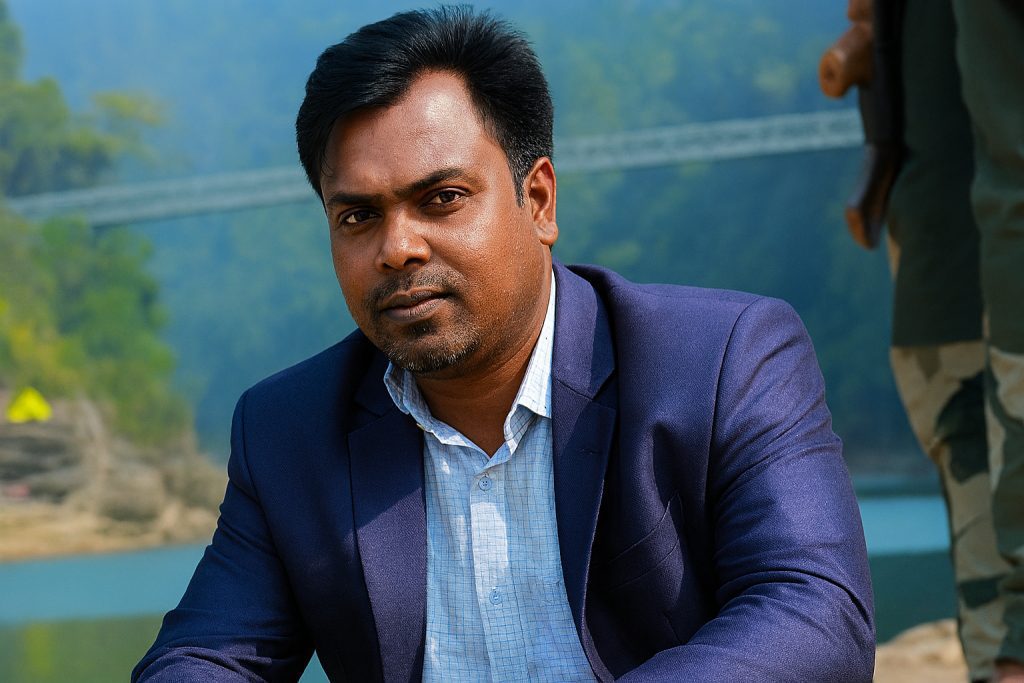
Local sources suggest his public criticism of criminal syndicates may have triggered the fatal attack.
Tuhin, originally from Bhatipara village under Fulbaria Police Station in Mymensingh, had been residing in Gazipur with his family.
“We received the report and immediately recovered the body and sent it to the morgue,” said Basan Police Station Officer-in-Charge (OC) Shaheen Khan. “We are actively investigating the motive behind this heinous killing.”
Rising Dangers for Journalists
Tuhin’s murder comes amid rising concern over press freedom and journalist safety in Bangladesh, particularly under the current Yunus-led Interim government of Bangladesh . Since taking over the interim administration earlier this year, Professor Dr. Muhammad Yunus’s regime has faced mounting criticism for its failure to protect press freedom and control political violence.
Media watchdogs and journalist unions have reported an alarming rise in threats, intimidation, and targeted violence against reporters, especially those investigating corruption, land grabbing, extortion, or political wrongdoing.
Since August 2024, at least 266 journalists have been implicated in criminal cases related to the July uprising.
Meanwhile, a statement by journalists in July 2025 reported 39 formally arrested and 412 detained in politically motivated/legal harassment.
According to the Rights and Risks Analysis Group (RRAG), 354 journalists were harassed, there were 113 criminal charges, and 167 accreditations revoked.Other sources mention 640 journalists targeted in various forms.
“The murder of Asaduzzaman Tuhin is not an isolated incident—it is part of a disturbing pattern of intimidation that has taken root under this regime,” said a spokesperson for the Bangladesh Federal Union of Journalists (BFUJ). “We demand immediate justice and effective steps to guarantee the safety of journalists across the country.”
International rights groups have also raised concerns. Reporters Without Borders (RSF) recently downgraded Bangladesh’s press freedom ranking, citing deteriorating conditions for independent journalism and increasing state surveillance of media activity.
As outrage grows both domestically and abroad, press organizations are calling for swift and transparent investigations—not only into Tuhin’s murder but also into broader attacks on the media.


