Tag: THE VOICE

  • UK Rights Group Urges UN Action Over Bangladesh Army Killings and Heritage Destruction

    UK Rights Group Urges UN Action Over Bangladesh Army Killings and Heritage Destruction

    London, New York, Dhaka

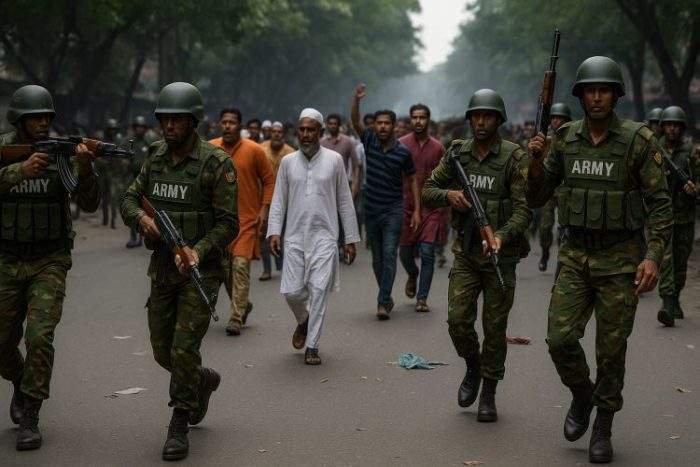
    In a dramatic escalation of international concern, the International Crimes Research Foundation (ICRF), a UK-based rights organization, has filed an urgent appeal to the United Nations over what it terms “a grave and unfolding human rights crisis” in Bangladesh. The group alleges extrajudicial killings, destruction of national heritage, and unconstitutional military action in Gopalganj on 16 July 2025.

    According to the formal complaint addressed to the UN Secretary-General and the UN Ethical Office, the Bangladesh Army reportedly opened fire on unarmed civilians in Gopalganj, killing at least 21 people. The civilians were said to be resisting the Nationalist Citizens Party (NCP)—a political outfit not registered with the Election Commission—as it attempted to desecrate the grave of Bangabandhu Sheikh Mujibur Rahman, the country’s founding father.

    The ICRF claims that the attack was “state-sponsored” and executed “in support of an unregistered political force,” with the Bangladesh Army allegedly siding with NCP activists rather than protecting civilians. The appeal also highlights the destruction of ‘House 32’ in Dhanmondi—a heritage site and museum where Bangabandhu declared Bangladesh’s Liberation War in 1971—reportedly demolished over 48 hours without military intervention.

    “Bangladesh’s journey to independence was marked by great sacrifice. The memory of our founding father and the symbols of our liberation must be protected, not erased for political gain,” the letter reads.

    In an especially disturbing allegation, the document details that one civilian was arrested, tortured with army boots, and killed in custody—amounting to a clear violation of international humanitarian law.

    The complaint also cites a broken promise by Army Chief General Waker-uz-Zaman, who publicly stated on 3 August 2024 that the army would never again fire on its own people. Yet, the events in Gopalganj appear to directly contradict this pledge.

    The ICRF has demanded the following:

    An independent international investigation into the use of lethal force.

    Accountability under international law for human rights abuses.

    Investigation into the destruction of protected heritage sites.

    Deployment of a UN fact-finding mission or human rights observers.

    Protection of cultural heritage and peaceful protest rights.

    The document also raises suspicions about the role of interim national figure Dr. Muhammad Yunus, urging an investigation into his alleged involvement.

    Timeline of Violence:
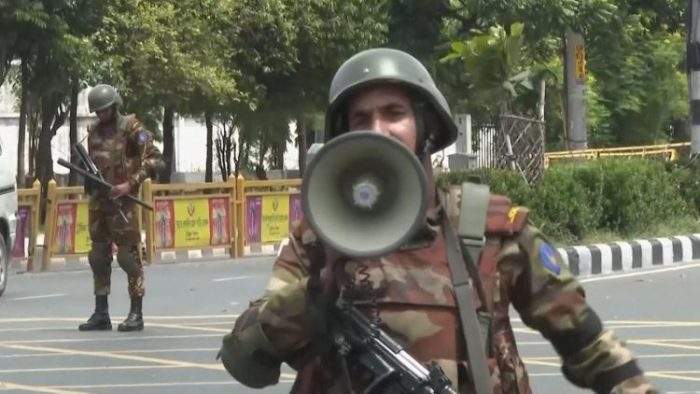
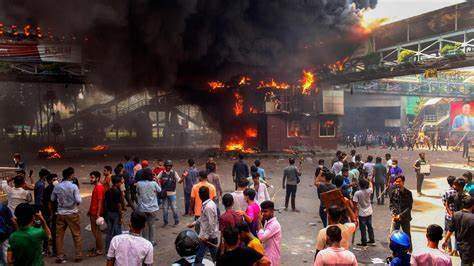
    Between 3:30 PM and 6:30 PM on 16 July, the Gopalganj district turned into what some are calling a battlefield. Video footage cited in the document shows armored military vehicles opening fire, police requesting grenades, and civilians—including journalists—being chased, shot at, and killed. Reports confirmed the deaths of at least four individuals, with many more injured.

    The violence has drawn strong domestic reactions as well, with Jamaat-e-Islami announcing countrywide protests, and the NCP declaring a national day of protest on 17 July.

    The ICRF concludes by warning the UN that “silence from the international community will only embolden further violations.” It urges swift and principled action to restore peace and accountability in Bangladesh.

  • Bangladeshi Expats Condemn Gopalganj Massacre

    Bangladeshi Expats Condemn Gopalganj Massacre

    The US-based expatriate organization Ekattorer Prohori Foundation has strongly condemned the brutal attack and massacre of civilians by the army and government-backed forces in Gopalganj, Bangladesh.

    In an immediate statement, the foundation claimed that a government-backed, unregistered political party incited violence in the region by announcing a program titled ‘March to Gopalganj’. According to the statement, the party’s leaders threatened to demolish the mausoleum of the Father of the Nation, prompting local citizens to rise in resistance.

    The statement said, “In order to crush this popular resistance, the government launched a coordinated attack using the army and armed mobs. A ruthless massacre followed through indiscriminate gunfire. Although hospital sources have confirmed the deaths of 15 people, media reports suggest the actual number may be much higher.”Signed by Foundation President Dr. Nurun Nabi and General Secretary Swikriti Barua, the statement further noted, “The Bangladesh Army is a symbol of the glorious victory of 1971.

    But the scenes of uniformed soldiers killing civilians in Gopalganj have tarnished the image of the nation in the eyes of the world.

    “The foundation stated, “This illegal, occupying government seized power through a planned terror operation and is now leading the country and its people to destruction. The use of military protocol to facilitate the escape of these criminals proves they are part of a state-sponsored mob.

    “Ekattorer Prohori Foundation also alleged that the government and its loyal groups have been engaged in killings, rapes, and oppression across the country for the past year.Calling for national unity, the foundation stated, “This murderous regime must be ousted without delay.

    As long as this regime remains in power, there can be no democracy, human rights, or peace in Bangladesh.

    “The foundation urged all international human rights organizations to be informed of this massacre and requested immediate action.Finally, the foundation made a passionate call to all patriotic expatriate Bangladeshis: “To protect the nation and its people, united protest and resistance must be organized.”

  • Gopalganj Killings: Martyrs Buried Under Army Watch

    Gopalganj Killings: Martyrs Buried Under Army Watch

    Staff Reporter, The Voice

    The burial and cremation of four people killed in police and army firing in Gopalganj were conducted under strict army surveillance. No inquest reports were prepared for any of the deceased. The bodies were buried without autopsies under the close supervision and orders of the police, administration, and the army.

    Several viral videos on social media show the army directly overseeing the funerals. Relatives of the deceased expressed deep frustration over the situation.

    They allege that due to threats and intimidation by the army, family members and neighbors were not even allowed to perform proper funeral prayers. Under pressure, they were forced to quickly complete the burial and cremation rites.

    Investigations reveal that one of the deceased, garment trader Dipto Saha, was cremated at the municipal cremation ground on Wednesday night in a hasty manner under army watch. Romzan Kazi, assistant to a tile mechanic, was buried after Esha prayers on Wednesday night. Mobile phone trader Sohel Rana and crockery shop worker Iman Talukder were buried this morning at the municipal graveyard.

    Following an NCP rally, Gopalganj city’s Municipal Park and launch terminal area turned into a battlefield on Wednesday with all-day clashes, attacks, and casualties. Four people were killed in the violence, and more than 100 were injured, including 9 who sustained gunshot wounds.

    The clashes broke out after the NCP threatened to demolish the tomb of the Father of the Nation, Bangabandhu Sheikh Mujibur Rahman, and throw it into the Madhumati River using an excavator. Ordinary residents of Gopalganj protested this move.

    One week before the rally, Awami League and Chhatra League leaders and activists were forced to leave the area due to police and army crackdowns. As a result, only ordinary civilians—farmers, laborers, and shop workers—participated in the resistance. These unarmed civilians were then fired upon by the police and army.

    In protest, enraged locals chased NCP leaders and activists. Videos circulating on social media show law enforcement brutally beating protesters, including police, APBN, and army personnel. One viral clip shows a man being shot shortly after being detained, then held down with a boot on his throat until he died—sparking massive public outrage.

    The deceased have been identified as:

    Romzan Kazi (19), son of Kamrul Kazi from Harinhati village, Kotalipara, Gopalganj, Sohel Rana (35) of Shanapara,Dipto Saha (30), son of Santosh Saha from Udayan Road, Iman Talukder (24) from Bherar Bazar area of Sadar Upazila.

    All of them were killed by law enforcement gunfire.

    Sources at Gopalganj General Hospital confirmed the presence of both gunshot wounds and signs of physical torture on the bodies.

    Dr. Jibitesh Biswas, the hospital superintendent, stated that four bodies were brought to the hospital. Additionally, three critically injured individuals were referred to Dhaka.

    Dhaka Medical College Hospital confirmed the admission of Sumon Biswas, a young man shot in the abdomen and hand. He is a professional driver.

  • Gopalganj Massacre: The Return of Military-Backed Fundamentalism in Bangladesh

    Gopalganj Massacre: The Return of Military-Backed Fundamentalism in Bangladesh

    Dr. Shyamal Das (Virginia, USA):
    MELBOURNE, July 17, 2025 — What unfolded in Gopalganj during the “March to Gopalganj” campaign in July 2025 was far more than a simple political clash. It was a premeditated, sustained conspiracy—where religion, history, the military, power, and propaganda merged into a terrifying new fascist reality. In this article, we’ll demonstrate how army chief Wakaruzzaman embodies the synthesis of “Mir Jafar” and “Mamluk syndrome,” and how the Gopalganj massacre echoes global historical atrocities like Hitler’s Germany, Mussolini’s Italy, the Taliban, or Syria.

    1. The Gopalganj Massacre: A Fascist‑Symbolic Spectacle

    The July gathering, dubbed “March to Gopalganj,” was cleverly designed as a militaristic symbolic victory—reminiscent of Mussolini’s “March on Rome” (1922) or Jinnah’s “March to Lahore” (1940). The aims were:

    Inciting tension near Bangabandhu’s mausoleum

    Undermining the Awami League and the legacy of the Liberation War

    Provoking conflict to showcase “state repression” in international media

    Paving the way to cancel elections or establish long-term military‑backed rule

    According to local sources, over 20 innocent civilians were killed and countless injured by army and police fire. A brutal crackdown is currently underway. Reports say some NCP leaders who came to Gopalganj, addressing nearly empty rallies, declared they’d “dig the grave of Mujib ideology” and wouldn’t return alive without doing so—even amid silence from many so‑called ‘civilized’ individuals who earlier protested similar killings. The author highlights this hypocrisy and the lurking Rajakar mentality.

    1. The NCP and Its Fundamentalist Structure

    Although the NCP (National Conservative Party) claims to support religious freedom, in practice:

    They actively support extremist groups tied to Qawmi madrasas and Jamaat‑e‑Islami

    They openly threatened the destruction of Bangabandhu’s mausoleum

    June–July 2025 viral videos show them calling for “Islamic revolution” against shrines and idols

    Their strategy: provoke → instigate conflict → shift blame → suspend elections → invite military intervention. That scheme is now being ruthlessly executed for their own benefit.


    1. From Plassey 1757 to Dhaka & Gopalganj 2024–25: The Wakar–Mir Jafar Syndrome

    Rather than remain politically neutral, Wakaruzzaman made pointed statements such as:

    “I am warning you… army chief tells politicians their infighting risks the country’s sovereignty.”
    “Army chief vowed to back the interim government ‘come what may.’”

    These aren’t typical for a professional military—they reflect the portrait of an ideologically conspiratorial army chief. He is likened to General Ershad in 1982, who threatened the nation prior to seizing power. The author terms Wakar’s role as the “Mir Jafar syndrome”—blending historic betrayal with modern conspiracy. From Plassey to Gopalganj, history teaches that betrayal changes only color, not character.

    Comparative Table: Mir Jafar’s Plassey vs. Wakar’s Gopalganj

    Element Mir Jafar / Plassey 1757 Wakaruzzaman / Gopalganj 2024–25

    Oath Swore on the Qur’an to protect Siraj Promised support to Sheikh Hasina (“I will fix everything”)
    True Role Secretly allied with British to defeat Siraj Enabled jihadists, permitted killings of Awami activists
    Goal Control Bengal Destroy Mujib legacy, install extremist‑leaning forces
    Outcome Bengal colonized by Britain Election delayed, rise of fundamentalism, suppression of independence spirit
    Historical Title “Traitor Mir Jafar” “Descendant Wakar”

    Mir Jafar betrayed by oath; Wakar by uniform. His promise to the nation on August 5, 2024—to protect them—was followed by empowering fundamentalists, delaying elections, and launching mass killings that decimated the symbols of independence. In Gopalganj, his mask has been finally revealed.

    1. Mir Jafar Syndrome and Mamluk Syndrome: Military + Religion in Governance

    The author identifies a unique synthesis in Bangladesh—a combination of Mir Jafar syndrome (betrayal from within) and Mamluk syndrome (military rulers using religion and nationalism to legitimize themselves). The Mamluks, originally slave‑soldiers turned rulers, set a historic precedent. In modern Bangladesh, the military repeatedly overrules constitutional norms, privileges religious extremists, and installs puppet regimes—even to protect foreign and neoliberal capital interests. Wakar’s role continues this tradition.

    1. Do Wakar and Mullah Omar Share Ideological Parallels?

    While there’s no direct ideological match between Wakar and Mullah Omar, they share a “Ideological Power Seizure through Strategic Destabilization”: using religion, the military, and instability to seize authority. A side‑by‑side comparison shows:

    Objective: Taliban aimed for Islamic Emirate; Wakar pushed for collapse of democracy and rise of religious‑right power

    Religion: Taliban enforced Sharia and shrine destruction; Wakar enabled mobs targeting Mujib’s mausoleum and protected Islamist extremists

    Method: Taliban seized via civil war; Wakar by dismantling elected government and backing a caretaker regime

    Self‑presentation: Both portrayed themselves as national protectors

    Actions: Taliban imposed extremist rule; Wakar oversaw Awami activists’ killings and election delays

    Referencing Naomi Klein: whenever a military/ideological force promises “restoring order” but empowers religious extremists, it becomes fascist. The author asks whether Wakar’s August pledge lines up with this.

    1. Global Comparisons

    The playbook appears across modern history:

    Germany (1933): Reichstag fire → crackdown on Communists → Hitler’s dictatorship

    Italy (1922): March on Rome → nationalist conflict → Mussolini’s fascism

    Afghanistan (1996): Shrine destruction → Sharia rule → Taliban regime

    Syria (from 2011): Incitement → repression → sectarian conflict and civil war

    Bangladesh (2025): March to Gopalganj → Islamic mob + military crackdown → election delays + military control?

    Today’s Wakar, Tomorrow’s Caliph?

    The Gopalganj operation—inciting a religious‑political mob at Bangabandhu’s mausoleum and following with a military shooting while blaming the Awami League—embodies a “Constructive Destabilization” model. This is the same technique used by the Taliban in Afghanistan, Musharraf in Pakistan, and Sisi in Egypt. Wherever shrines fall, history vanishes—but fundamentalism persists.

    A commander who warns about religion while enabling extremist violence isn’t safeguarding the constitution—he’s digging its grave. In Gopalganj, shots rang out at the heart of Bangabandhu’s dream. Wakaruzzaman has emerged as its killer. The Mamluks have returned—same old play, new costume.

  • AL President Sheikh Hasina Condemns Gopalganj Massacre

    AL President Sheikh Hasina Condemns Gopalganj Massacre

    In a statement, Awami League President Sheikh Hasina strongly protested and condemned the horrific attack and brutal killings in Gopalganj, reportedly carried out by the army and police under the instructions of the Yunus-led government. She termed it part of a deep conspiracy.

    She stated, “Since August 5, the nation has witnessed who has insulted our national identity — the residence of Bangabandhu, the Liberation War Museum, the national flag, national anthem, and our sacred constitution. People have seen who committed genocide, police killings, rapes, robberies, and lootings — attacking and attempting to destroy countless homes, offices, businesses, and important state installations.”

    She further said, “The enemy of the nation, the killer-fascist, anti-state element and terrorist patron Yunus has incited newly-emerging militant-terrorists through his armed thugs and so-called NCP. As a continuation of August 5 events, Yunus and his mob-terrorists, under the name of NCP, planned to destroy Bangabandhu’s mausoleum in Tungipara through a program named ‘March to Gopalganj’.”

    Sheikh Hasina emphasized, “Bangabandhu and Bangladesh are inseparable. Any attack on either is considered an attack on the entire nation. The people of Gopalganj did not remain silent — they resisted.”

    The daughter of Bangabandhu said, “In the struggle to protect Bangladesh and Bangabandhu, the brave people of Gopalganj stood firm, facing tear gas, bullets, and suppression. They defended Bangabandhu’s mausoleum. But the killer Yunus’s hired forces indiscriminately opened fire on innocent people. As a result, many were martyred and numerous others injured by gunfire from law enforcement. This state-sponsored brutality surpasses even medieval cruelty.”

    She clearly stated, “The way the killer-fascist Yunus and his accomplices are trying to push Bangladesh backward through massacre and savagery is intolerable. They want to eliminate Bangladesh’s democratic rights and implement an agenda of anti-state forces.”

    She said, “The nation is outraged by these conspirators. They are relentlessly trying to destroy the spirit of the Liberation War, Bangabandhu’s legacy, and the existence of the country. But the people of Bengal have now awakened and united. No one can suppress the power of the people. What the people of Bangladesh decide, they implement.”

    She called upon the countrymen, saying, “We must unite in the spirit of patriotism, progress, democracy, modernity, and secularism to resist the brutality and terrorism of the killer-fascist Yunus. We must defeat the evil forces of the godfather of terrorism, Yunus, and protect Bangladesh’s journey forward.”

    She expressed deep gratitude and respect for the courageous people of Gopalganj, stating, “The determination, bravery, and sense of responsibility shown by the people of this heroic region have made the nation proud.”

    She prayed for the souls of the martyrs, expressed heartfelt condolences to the bereaved families, and wished a speedy recovery for the injured. She also instructed local leaders and activists to ensure proper medical treatment and all necessary support for the victims. The statement concluded with the eternal slogans of the Liberation War — Joy Bangla, Joy Bangabandhu — and revolutionary greetings to all.
    In a statement, Awami League President Sheikh Hasina strongly protested and condemned the horrific attack and brutal killings in Gopalganj, reportedly carried out by the army and police under the instructions of the Yunus-led government. She termed it part of a deep conspiracy.

    She stated, “Since August 5, the nation has witnessed who has insulted our national identity — the residence of Bangabandhu, the Liberation War Museum, the national flag, national anthem, and our sacred constitution. People have seen who committed genocide, police killings, rapes, robberies, and lootings — attacking and attempting to destroy countless homes, offices, businesses, and important state installations.”

    She further said, “The enemy of the nation, the killer-fascist, anti-state element and terrorist patron Yunus has incited newly-emerging militant-terrorists through his armed thugs and so-called NCP. As a continuation of August 5 events, Yunus and his mob-terrorists, under the name of NCP, planned to destroy Bangabandhu’s mausoleum in Tungipara through a program named ‘March to Gopalganj’.”

    Sheikh Hasina emphasized, “Bangabandhu and Bangladesh are inseparable. Any attack on either is considered an attack on the entire nation. The people of Gopalganj did not remain silent — they resisted.”

    The daughter of Bangabandhu said, “In the struggle to protect Bangladesh and Bangabandhu, the brave people of Gopalganj stood firm, facing tear gas, bullets, and suppression. They defended Bangabandhu’s mausoleum. But the killer Yunus’s hired forces indiscriminately opened fire on innocent people. As a result, many were martyred and numerous others injured by gunfire from law enforcement. This state-sponsored brutality surpasses even medieval cruelty.”

    She clearly stated, “The way the killer-fascist Yunus and his accomplices are trying to push Bangladesh backward through massacre and savagery is intolerable. They want to eliminate Bangladesh’s democratic rights and implement an agenda of anti-state forces.”

    She said, “The nation is outraged by these conspirators. They are relentlessly trying to destroy the spirit of the Liberation War, Bangabandhu’s legacy, and the existence of the country. But the people of Bengal have now awakened and united. No one can suppress the power of the people. What the people of Bangladesh decide, they implement.”

    She called upon the countrymen, saying, “We must unite in the spirit of patriotism, progress, democracy, modernity, and secularism to resist the brutality and terrorism of the killer-fascist Yunus. We must defeat the evil forces of the godfather of terrorism, Yunus, and protect Bangladesh’s journey forward.”

    She expressed deep gratitude and respect for the courageous people of Gopalganj, stating, “The determination, bravery, and sense of responsibility shown by the people of this heroic region have made the nation proud.”

    She prayed for the souls of the martyrs, expressed heartfelt condolences to the bereaved families, and wished a speedy recovery for the injured. She also instructed local leaders and activists to ensure proper medical treatment and all necessary support for the victims. The statement concluded with the eternal slogans of the Liberation War — Joy Bangla, Joy Bangabandhu — and revolutionary greetings to all.
  • Rubio Warns Israeli Strikes Risk Derailing Syria Peace Process

    Rubio Warns Israeli Strikes Risk Derailing Syria Peace Process

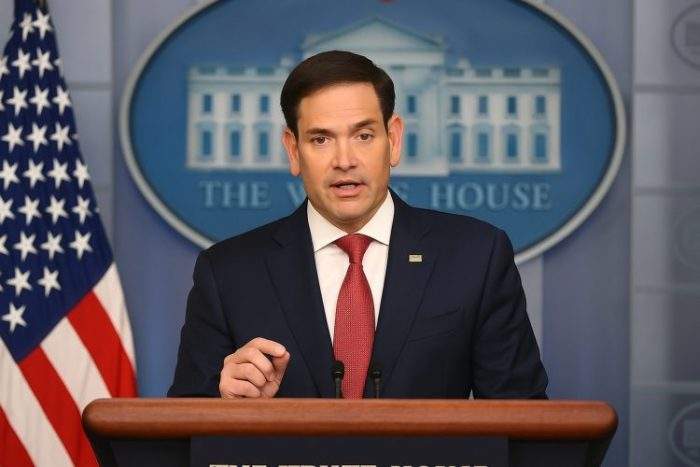
    Washington, D.C., July 17, 2025 — U.S. Secretary of State Marco Rubio has issued a stark warning that recent Israeli airstrikes on Syrian military targets could jeopardize fragile efforts to stabilize Syria and rebuild the war-torn nation. 

    Speaking to reporters at the White House, Rubio described the situation in southern Syria as “deeply concerning,” citing escalating violence in the Druze-majority city of Sweida.

    “We are very worried about the violence in southern Syria. It is a direct threat to efforts to help build a peaceful and stable Syria,” Rubio said, adding that Washington is in “repeated and constant talks” with both Israeli and Syrian officials. 

    Clashes and Airstrikes Escalate Tensions

    The Israeli Defense Forces (IDF) launched over 160 strikes in Sweida and Damascus earlier this week, targeting Syrian government forces accused of attacking Druze civilians. The strikes included hits on the Syrian Defense Ministry and the presidential palace, prompting international condemnation and fears of broader conflict. 

    Israel defended its actions as necessary to protect the Druze community, which has historic ties to Israel. Prime Minister Benjamin Netanyahu stated that Israel “will not allow Syria to become a second Lebanon,” referencing concerns over militant entrenchment near its borders. 

    U.S. Pushes for De-escalation 

    Rubio emphasized that the Biden administration is working behind the scenes to broker a ceasefire and restore diplomatic momentum. “We think we’re on our way toward a real de-escalation,” he said, noting that both sides had agreed on “specific steps” to reduce hostilities. 

    The U.S. has also called on Syrian forces to withdraw from Sweida to allow for humanitarian access and community-led reconciliation. Meanwhile, hundreds of Israeli Druze have crossed into Syria to support their kin, further complicating the security landscape. 

    International Reactions

    The United Nations and European Union have condemned the Israeli strikes, urging all parties to respect Syria’s sovereignty and avoid actions that could derail peace efforts. UN Secretary-General António Guterres called for “an immediate cessation of all violations” and stressed the need for transparency in Syria’s transitional process.

    As the region teeters on the edge of renewed conflict, Rubio’s remarks signal a shift in U.S. strategy—balancing support for Israeli security with a renewed focus on post-Assad reconstruction and regional diplomacy.

  • Dr. Sabiha Baloch Decries Pakistani Raid as ‘Collective Punishment’


    Quetta, July 17, 2025 — Prominent Baloch activist Dr. Sabiha Baloch has accused Pakistani security forces of carrying out a “collective punishment campaign” following a forceful raid on her family residence, sparking outcry from human rights organizations both domestically and abroad.
    The incident occurred Saturday evening in her native village, where personnel from the Frontier Corps (FC) allegedly stormed the home without a warrant. Dr. Baloch said family members were harassed, threatened, and subjected to an invasive search. The raid follows her outspoken activism on enforced disappearances and minority rights in Balochistan.
    Targeting of Activist Families
    Dr. Baloch’s father was forcibly disappeared three months ago, she claimed, and remains missing. She believes the state is now targeting her directly in an attempt to silence the growing voice of the Baloch Yakjehti Committee (BYC), of which she is a leading member.
    “The state wants to force me into silence by punishing my family. But I will not stop advocating for justice and dignity for the Baloch people,” she said in a statement.
    Mounting International Concern
    Dr. Baloch has called on Amnesty International, Human Rights Watch, and the United Nations to urgently investigate the raid, which she described as part of a wider crackdown on peaceful dissent. Rights groups are increasingly alarmed by Pakistan’s use of extrajudicial measures against critics, especially in Balochistan.
    The Pakistani government has yet to respond publicly. Observers say the incident reflects an intensifying climate of repression ahead of next year’s general elections.

  • Trump Denounces Epstein Files as ‘Democrat Hoax,’ Blasts Supporters as ‘Weaklings’


    Washington, D.C., July 17, 2025 — President Donald Trump has ignited a political firestorm after dismissing the controversial “Epstein files” as a Democrat-orchestrated hoax, while publicly rebuking his own supporters who continue to demand transparency on the matter.
    Speaking to reporters during a White House visit by Crown Prince Salman bin Hamad Al Khalifa of Bahrain, Trump lashed out at critics of his administration’s handling of the files, calling them “weaklings” and accusing them of falling for “bullt” spread by the “Lunatic Left”. Internal GOP Rift Widens The president’s remarks have deepened divisions within the Republican Party, with prominent MAGA influencers and conservative lawmakers expressing dismay. House Speaker Mike Johnson, typically a staunch Trump ally, broke ranks earlier this week, stating: “We should put everything out there and let the people decide it”. Trump’s comments came in response to growing backlash over Attorney General Pam Bondi’s decision not to release the full Epstein files. A recent Justice Department memo concluded that Epstein died by suicide and that no incriminating “client list” exists—findings that many conservatives have questioned. Trump’s Defense and Escalation On Truth Social, Trump wrote: “Their new SCAM is what we will forever call the Jeffrey Epstein Hoax, and my PAST supporters have bought into this ‘bullt,’ hook, line, and sinker. Let these weaklings continue forward and do the Democrats’ work, I don’t want their support anymore!”
    He later told reporters: “It’s all been a big hoax. It’s perpetrated by the Democrats and some stupid Republicans. I’ve lost a lot of faith in certain people because they got duped”.
    Fallout and Political Implications
    The president’s rebuke has stunned many in his base, with some warning that alienating loyal supporters could hurt his re-election prospects. Online reactions ranged from disbelief to anger, with one user commenting, “Trump just said he no longer wants 90% of his supporters. LMAO”.
    Meanwhile, calls for Ghislaine Maxwell to testify before Congress are gaining traction, and some lawmakers are pushing for a special counsel to investigate the Epstein case independently.
    As Trump attempts to shift focus back to his administration’s achievements, the Epstein controversy continues to dominate headlines—threatening to overshadow his foreign policy engagements and campaign messaging.

  • Trump’s September Visit to Pakistan Confirmed by Media Sources


    Islamabad, July 17, 2025 — U.S. President Donald Trump is expected to visit Pakistan on September 18, marking the first visit by a sitting American president in nearly two decades. The trip, confirmed by multiple Pakistani media outlets citing diplomatic sources, is part of Trump’s broader South Asia tour, which may also include a stop in India.
    While Pakistan’s Foreign Office has yet to issue an official statement, the visit is being viewed as a potential turning point in U.S.-Pakistan relations, which have experienced fluctuating dynamics in recent years. The announcement follows Trump’s recent hosting of Field Marshal General Asim Munir, Pakistan’s army chief, at the White House—a rare gesture that signaled warming ties.
    Strategic Talks on the Agenda
    Sources indicate that Trump will meet with both civilian and military leadership during his one-day visit, with discussions expected to focus on regional security, counterterrorism cooperation, and economic engagement. The visit comes amid renewed diplomatic efforts to stabilize South Asia following the May 2025 military standoff between India and Pakistan, which Trump claims to have helped defuse.
    Regional Implications
    Trump’s trip is likely to coincide with the Quad Leaders’ Summit in New Delhi, raising speculation about his role in shaping regional alliances. Analysts suggest the visit could also pave the way for trade negotiations and strategic realignment, especially as Pakistan seeks to balance ties between Washington and Beijing.
    Political Reactions and Uncertainty
    While some Pakistani lawmakers have welcomed the development, others remain cautious, noting that no formal itinerary has been released by either government. The overlap with Trump’s scheduled state visit to the United Kingdom from September 17–19 has also raised questions about the feasibility of the Pakistan stopover.
    As anticipation builds, observers say Trump’s visit could signal a revival of U.S.-Pakistan strategic dialogue, especially amid shifting global alliances and rising tensions in the Middle East and South Asia.

  • ASK expresses concern over Gopalganj clash deaths‘The state has failed to protect citizens’ lives’

    The Ain o Salish Kendra (ASK) has expressed deep concern over the incident in Gopalganj where four people were killed during a clash at a National Citizens’ Party (NCP) rally. The organization stated that protecting citizens’ lives is a fundamental responsibility of the state, which was grossly violated in this case.

    In a statement sent to the media on Thursday, ASK’s Senior Coordinator Abu Ahmed Faizul Kabir conveyed this concern.

    According to the statement, on Wednesday (July 16), a pre-announced NCP rally at Gopalganj Municipal Park came under attack, allegedly by a local faction of the ruling Awami League. Following the attack, law enforcement reportedly used firearms, resulting in the deaths of Dipto Saha, Ramzan Kazi, Sohel Molla, and Iman. Several others were injured, with some still undergoing treatment for gunshot wounds in hospitals.

    The statement emphasized that, under the Bangladeshi Constitution and international human rights treaties, every citizen has the fundamental right to express opinions and assemble peacefully. However, in this incident, those rights were suppressed. The use of live ammunition leading to deaths cannot be accepted in any civilized state.

    ASK highlighted inconsistencies in the police’s statements and demanded an investigation. While the Inspector General of Police (IGP) claimed no lethal weapons were used, video footage circulating on social media clearly captured gunshots and firearms. ASK questioned: Who fired the shots then? Without a clear answer, public confusion, fear, and distrust in the administration will only grow, the organization warned.

    ASK urged all parties involved in the incident to remain calm and restrained. It particularly called on law enforcement agencies to ensure that innocent civilians are not subjected to harassment or violence in such tense situations, and that no further human rights violations occur.

    According to ASK, the government cannot avoid responsibility in this incident. The organization demanded the immediate formation of an independent, impartial, and comprehensive investigation committee to thoroughly examine the events leading to the deaths. It stressed the need to identify those who opened fire and carried out the attacks, as well as to probe any negligence on the part of authorities responsible for ensuring public safety.

    Additionally, ASK urged that the injured receive proper medical care, and that the families of the deceased be compensated and supported appropriately.