
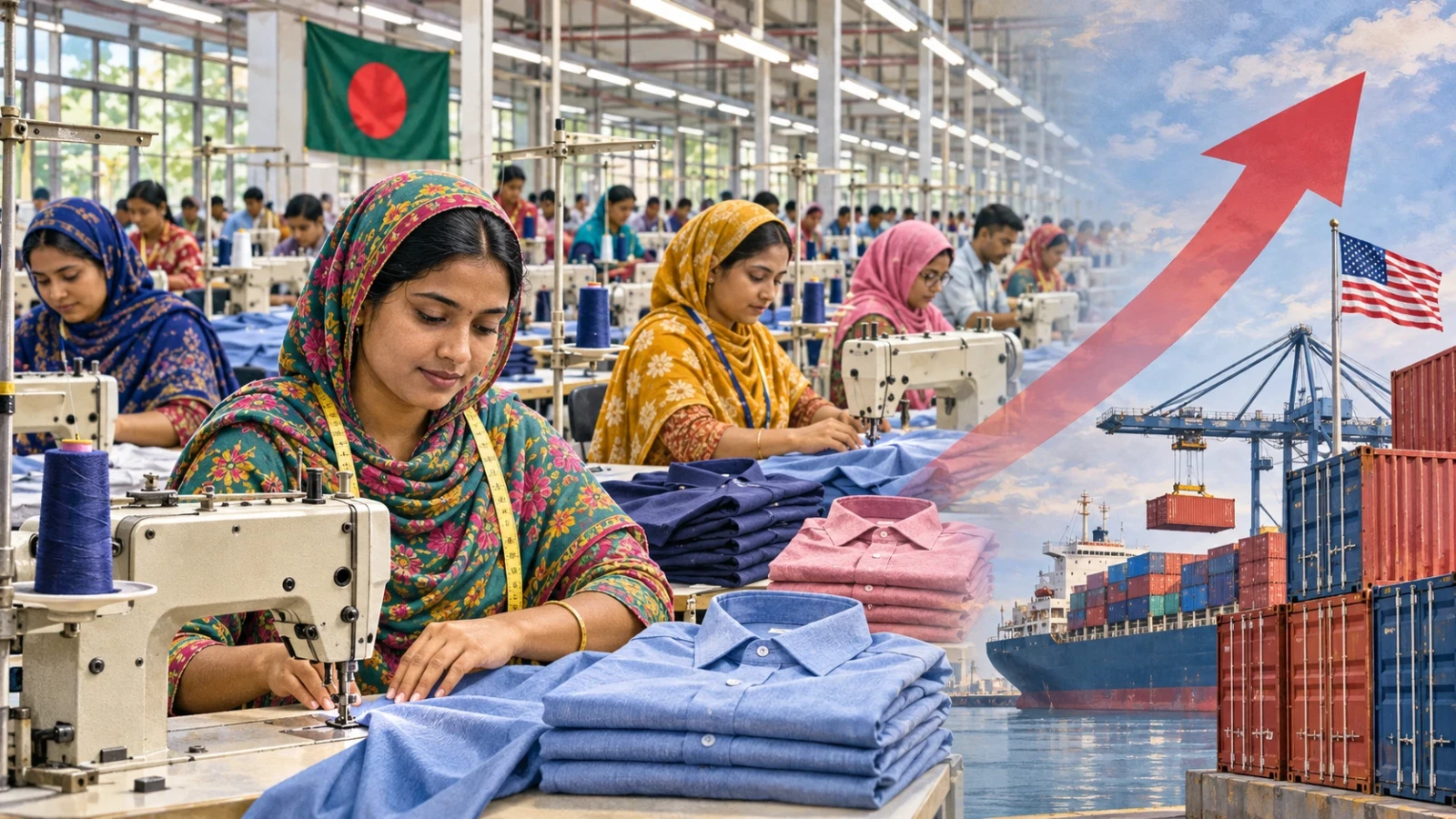
Bangladesh’s average tariff rate on ready-made garments (RMG) exported to the United States could rise to 33.6 per cent if a proposed US tariff measure targeting excess production capacity takes effect, potentially putting additional pressure on the country’s apparel exporters.
Although Bangladesh would continue to face lower tariffs than China, India and Vietnam under the proposed arrangement, its tariff burden could reach the same level as Cambodia and Indonesia. Meanwhile, potential trade agreements between the United States and India or Vietnam could further alter the competitive landscape for Bangladeshi garment manufacturers.
According to an analysis by Bangladesh Apparel Voice (BAV), the Office of the United States Trade Representative (USTR) published a proposal on November 25 following an investigation under Section 301 concerning excess manufacturing capacity.
The proposal includes additional tariffs of up to 18 per cent on Bangladeshi products, beyond the existing Section 301 tariff provisions. The rate could rise to 20 per cent if negotiations with Bangladesh and its commitments are deemed unsatisfactory.
According to BAV, the current average tariff on Bangladeshi apparel entering the US market stands at 25.6 per cent. If the proposed maximum rate is implemented, the overall rate could increase to 33.6 per cent, representing an increase of eight percentage points.
US Trade Representative Jamieson Greer told CNBC that the new tariffs would not be fully additive to existing forced-labour-related duties. In Bangladesh’s case, this means the relevant tariff could increase from 10 per cent to 18 per cent, resulting in an additional burden of eight percentage points.
Bangladesh retains an advantage over major competitors
Under the proposed arrangement, Bangladesh’s average tariff rate would remain below those of several major competitors.
BAV estimates that the overall tariff rates could reach 43.1 per cent for China, 40.6 per cent for India and 50.6 per cent for Vietnam. Bangladesh, Cambodia and Indonesia could each face an average rate of 33.6 per cent.
Pakistan, which is not covered by the US investigation, could retain its existing tariff rate of 25.6 per cent.
However, Bangladesh’s relative advantage could weaken if India and Vietnam secure trade agreements with Washington. Under such arrangements, India’s tariff rate could fall to 32.6 per cent and Vietnam’s to 35.6 per cent, according to the BAV analysis.
This would allow India to export apparel to the US at a tariff rate one percentage point lower than Bangladesh’s, potentially creating additional competitive pressure on Bangladeshi exporters.
No special tariff exemptions for apparel
The latest US proposal does not provide any specific tariff exemptions for ready-made garments. It also makes no mention of progress on a previously promised cotton import quota facility for Bangladesh, announced by the US in July.
However, the USTR has invited opinions on whether sector-specific arrangements could be introduced to reduce tariffs on certain textile and apparel products. This could create an opportunity for Bangladesh to negotiate preferential treatment for selected export items.
BAV has recommended that Bangladesh seek to keep the proposed tariff rate at or below 17 per cent through negotiations with Washington.
It has also suggested seeking special quota benefits for garments manufactured using US-imported cotton, with the aim of securing exemptions from both categories of Section 301 tariffs.
Mohiuddin Rubel, former director of the Bangladesh Garment Manufacturers and Exporters Association (BGMEA) and founder and CEO of Bangladesh Apparel Voice, described the proposed tariff increase as a matter of concern.
He said the US is one of Bangladesh’s major export destinations for ready-made garments and higher tariffs could undermine the competitiveness of Bangladeshi products.
“If India and Vietnam secure tariff advantages through trade agreements with the United States, competition will become even more challenging for Bangladesh,” he said.
Rubel stressed the need for the government to negotiate lower tariff rates while seeking special benefits for garment exports in exchange for importing cotton from the United States.
He also called for greater product diversification, improved production efficiency and increased value addition to sustain Bangladesh’s long-term position in the US market.
He said Bangladesh should seek to keep the proposed tariff at 17 per cent or below ahead of the January 5 deadline for submitting comments and the January 25 public hearing.
CPD warns of pressure on investment and employment
Dr Fahmida Khatun, distinguished fellow at the Centre for Policy Dialogue (CPD), said the proposed additional tariffs could place further pressure on Bangladesh’s garment exports.
She warned that higher tariffs could reduce exporters’ profit margins, considering production costs and competition in the international market.
The impact could extend beyond exports, potentially affecting investment and employment if competing countries secure more favourable tariff arrangements with Washington, she added.
Khatun emphasised the importance of presenting evidence-based arguments to challenge the allegations of excess production capacity and negotiating a reduction in the proposed tariffs.
She also called for close monitoring of trade negotiations between the United States and competing countries, particularly India and Vietnam.
Beyond tariff negotiations, she said Bangladesh must reduce production costs, ensure an uninterrupted energy supply and improve industrial productivity.
Diversifying export products and exploring new international markets would also be essential to strengthening the country’s competitiveness, she added.
January deadlines offer crucial opportunity
The USTR has set January 5 as the deadline for submitting comments on the proposed tariffs, while a public hearing is scheduled for January 25.
The two dates present an important opportunity for Bangladesh to put forward its position with supporting data and proposals.
As the United States remains one of Bangladesh’s leading markets for ready-made garments, any increase in import duties could affect the pricing and competitiveness of Bangladeshi products.
The BAV analysis is based on an assumed average US most-favoured-nation (MFN) tariff of 15.6 per cent and includes China’s additional 7.5 per cent tariff imposed in 2019. The figures represent projected maximum tariff rates under the proposal and do not reflect a final decision.




COMMENTS