
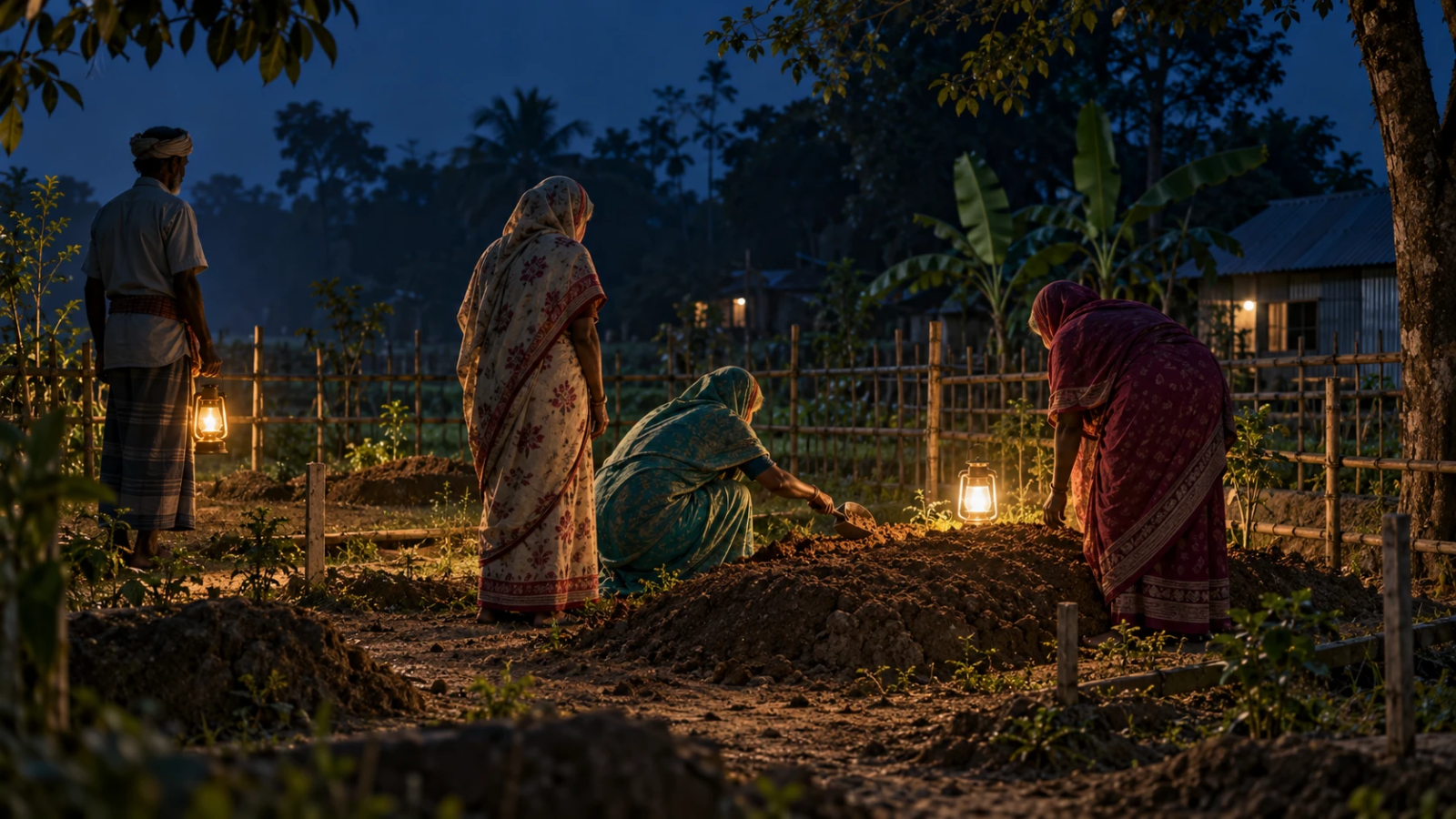
PIROJPUR, Bangladesh — The alleged obstruction of the burial of a freedom fighter by local Jamaat-e-Islami activists has triggered public outrage in Pirojpur, after the man’s daughter and two sisters were forced to re-dig his grave late at night and bury him under police protection.
Freedom fighter Manik Pashari, who had been a complainant and prosecution witness in a case against former Jamaat-e-Islami leader Delwar Hossain Sayeedi over alleged crimes against humanity during Bangladesh’s 1971 Liberation War, was finally buried at his family graveyard in Chitalia village of Shankarpasha Union, Pirojpur Sadar upazila, shortly after 2 a.m. Saturday.
His burial took place about 17 hours after his death.
According to the family, a grave prepared earlier in the afternoon was filled up after several people arrived and said Pashari would not be allowed to be buried there. The family alleged that local Jamaat-e-Islami activists and followers of Sayeedi were behind the obstruction.
Later that night, Pashari’s daughter Sumi Begum and his two sisters returned to the graveyard. With assistance from village police and using the light of mobile phones, they dug out the filled-in grave and buried Pashari.
Sumi said no local residents came forward to assist the family during the burial.
The incident has drawn strong reactions because of Pashari’s role in seeking justice for alleged atrocities committed during the Liberation War. On August 12, 2009, he filed a case before the Pirojpur Chief Judicial Magistrate’s Court against Sayeedi and four others, accusing them of murder, arson and looting during the 1971 war. He later became the sixth prosecution witness before Bangladesh’s International Crimes Tribunal.
The circumstances surrounding his burial have therefore raised renewed public anger over what critics described as an attempt to deny a Liberation War veteran his final dignity because of his role in the war-crimes case.
Pashari, who had been suffering from a prolonged illness, had been staying at his daughter’s home. He died at around 10 a.m. Saturday at his daughter’s residence in Tungipara, Gopalganj. His body was subsequently taken to his village home in Pirojpur.
Relatives said they faced obstruction after arriving in Pirojpur, with locals, Jamaat activists and followers of Sayeedi allegedly opposing the burial. Police eventually took the body to the Pirojpur Police Lines amid tension.
A guard of honour was later given to the freedom fighter under police protection.
Freedom fighter Abdul Baten condemned the obstruction, saying that preventing the burial of a freedom fighter was unacceptable.
Pirojpur Jamaat-e-Islami Assistant Secretary Abdur Razzaq, however, denied that Jamaat activists had obstructed the burial. He claimed that Pashari had given false testimony against Sayeedi and said local people had opposed the burial, while rejecting allegations that Jamaat itself had prevented it.
Pirojpur Sadar police confirmed that Pashari was eventually buried at Chitalia after midnight.
The incident has since become a focus of public anger, particularly among those who view the Liberation War and the sacrifices of its veterans as central to Bangladesh’s national identity. The image of a freedom fighter’s daughter and sisters having to re-dig his grave in the darkness has further intensified criticism and public outrage over the circumstances surrounding the burial.



COMMENTS