
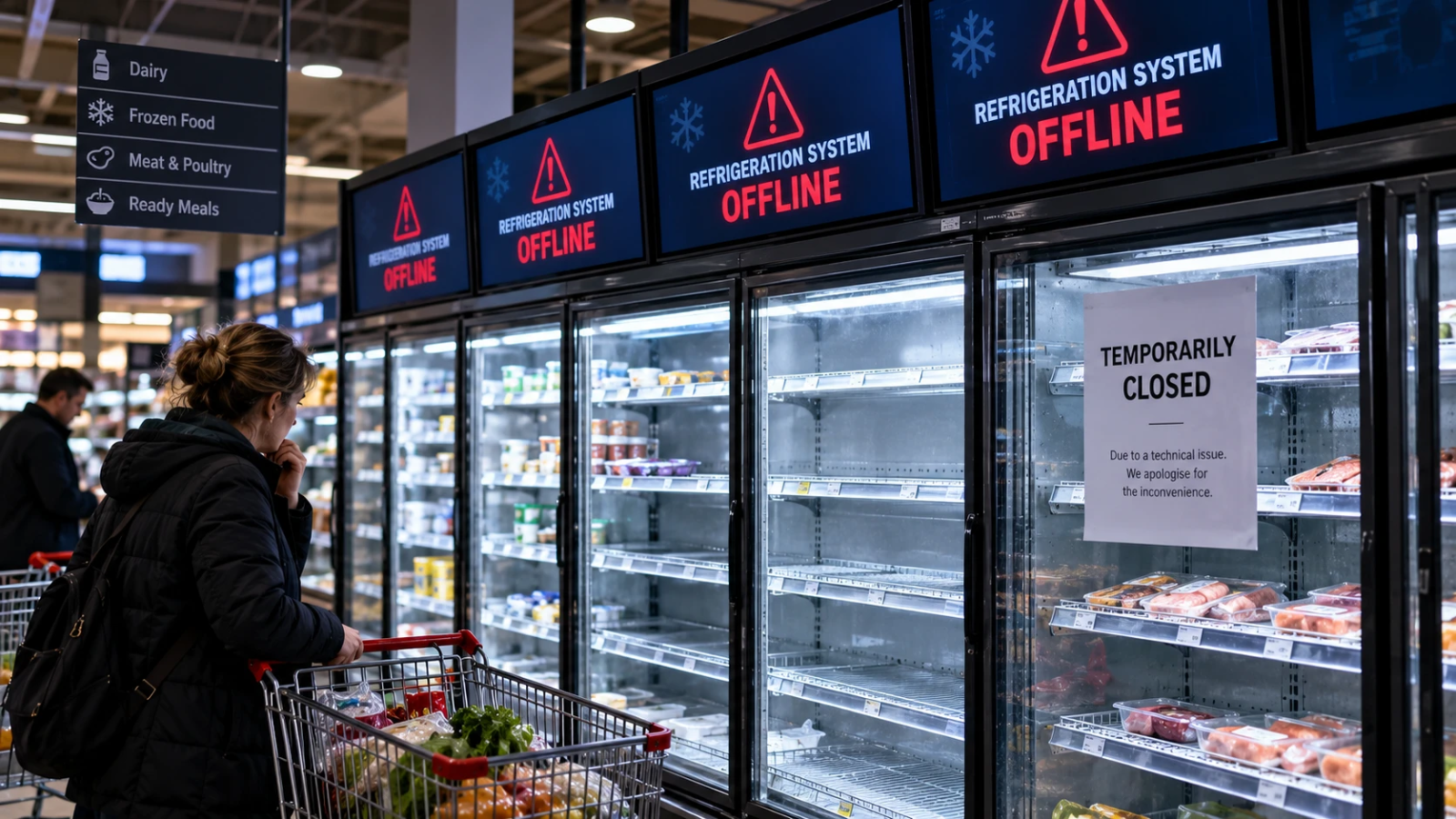
A major cyberattack has disrupted supermarket operations across Europe, disabling refrigeration systems at hundreds of stores in France and forcing a leading grocery retailer operating in Europe and the United States to take its websites offline.
French Finance Minister Roland Lescure told parliament on Tuesday that around 700 of the country’s 10,000 supermarkets had been affected. Although he said there was no immediate risk of food shortages, he described the incident as an attack on the heart of the country’s food security and called it a warning to everyone.
The Paris prosecutor’s cybercrime unit has launched an investigation into the attack. French broadcaster BFM TV reported that hackers manipulated refrigeration systems, causing temperatures to rise to 50 degrees Celsius and resulting in significant food spoilage.
Among the affected retailers were Intermarché and Netto, operated by Groupement Mousquetaires, with around 300 stores impacted, as well as 80 stores belonging to Coopérative U. Carrefour and Monoprix were also reported to have been affected.
Coopérative U chief executive Dominique Schelcher described the attack on equipment essential for preserving fresh products as unprecedented, serious and unacceptable in a post on X.
Meanwhile, Dutch supermarket giant Ahold Delhaize said it had taken its websites offline as a precaution amid security concerns. Its stores remained open, and the company said there was no evidence that customer or employee data had been stolen.
Vulnerable refrigeration systems under scrutiny
The incident has raised concerns over security vulnerabilities in older versions of remote-control modules used in refrigeration systems manufactured by Denmark’s Danfoss and US-based Copeland. Both companies said they were assisting affected customers.
Christopher White, an associate professor at Virginia Commonwealth University, said cyberattacks targeting critical systems serving the public were not uncommon, but an operation on this scale focused solely on refrigeration, without an apparent ransom demand, was unusual.
Varun Chandrasekaran, an assistant professor at the University of Illinois, warned that advances in artificial intelligence could contribute to an increase in such cyberattacks in the future.
The incident highlights the potential risks posed by vulnerabilities in connected industrial equipment, particularly systems responsible for preserving food and maintaining essential supply chains.





COMMENTS