
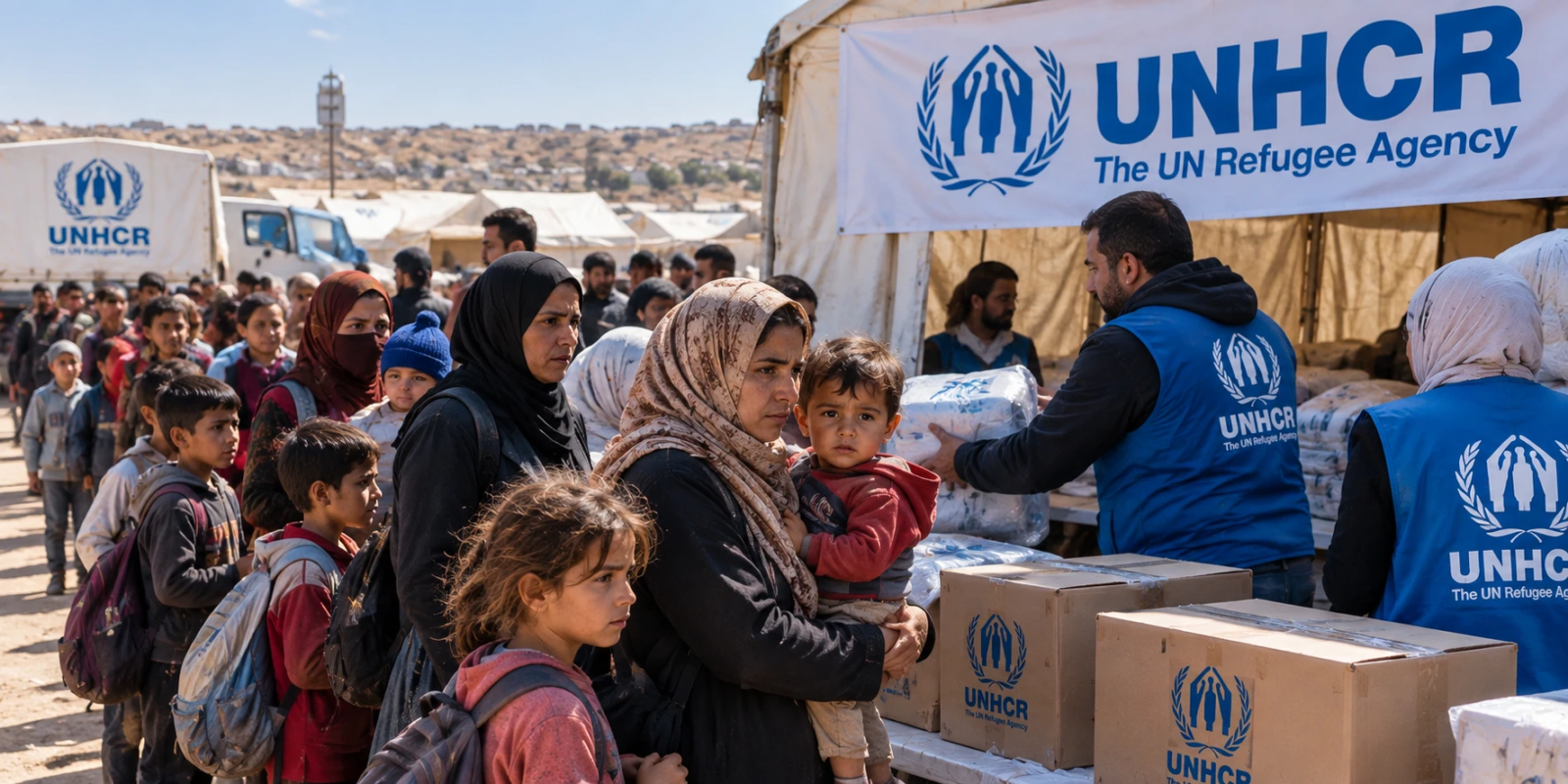
GENEVA — A severe funding shortfall is putting critical protection and assistance programmes for millions of refugees, forcibly displaced and stateless people at risk, the UN refugee agency UNHCR has warned.
In a new report titled “Protection Erosion: The Human Cost of Underfunding,” published Monday, UNHCR said around 8.3 million people could lose access to life-saving assistance as the agency is forced to scale back essential programmes in major displacement crises.
UNHCR received $3.9 billion in funding in 2025, down from $5.2 billion in 2024. By the end of July 2026, the agency had received only 32% of the $8.5 billion it said was needed for the year.
Dominique Hyde, UNHCR’s director of external relations, warned that cuts to basic protection services could expose displaced people to the same dangers from which they had initially fled.
“When registration stops, safe shelters close or child protection services disappear, the risks people fled from—violence, exploitation and abuse—return,” Hyde said.
She said the consequences could trap families in cycles of vulnerability, forcing some people to flee again or increasing their exposure to human traffickers.
Hyde also warned that once funding falls below a certain threshold, services do not simply reach fewer people but can become completely non-operational.
Impact across crisis zones
The funding crisis is already affecting programmes in several countries.
In Chad, the registration of around 319,000 refugees is at risk of disruption, potentially leaving people without essential documentation and services and increasing their risk of detention.
Around 200,000 women and girls in Chad could also lose access to safe spaces and prevention programmes, while approximately 233,000 children are at risk of losing child-protection services.
In Ethiopia, the capacity of safe shelters for survivors of gender-based violence has fallen by more than half over the past year.
In Sudan, thousands of children and survivors of sexual violence could lose access to critical protection services.
Livelihood and economic-inclusion opportunities are also under threat, with approximately 395,000 refugees and asylum seekers in Chad and 350,000 in Iraq at risk of losing such support.
Repatriation and reintegration also affected
Funding constraints are also affecting efforts to help displaced people return home and rebuild their lives.
In Syria, UNHCR said that without sufficient funding arriving quickly, around 162,500 vulnerable internally displaced people and returnees could receive no initial financial assistance.
In Afghanistan, reintegration grants reached about 5,300 families in 2024, but only 175 families had received such support in 2026 by the time covered in the report.
UNHCR also highlighted growing restrictions on the flexibility of funding. The share of funding tied to specific activities or projects increased from 19% in 2022 to 51% in 2026, limiting the agency’s ability to redirect resources to areas where needs are most urgent.
The agency has urged donors and partners to provide emergency funding, increase flexible financing and protect progress already made in assisting displaced populations.
UNHCR said greater flexible funding is also essential to help displaced people reduce their dependence on humanitarian assistance and create opportunities to rebuild their lives.




COMMENTS