
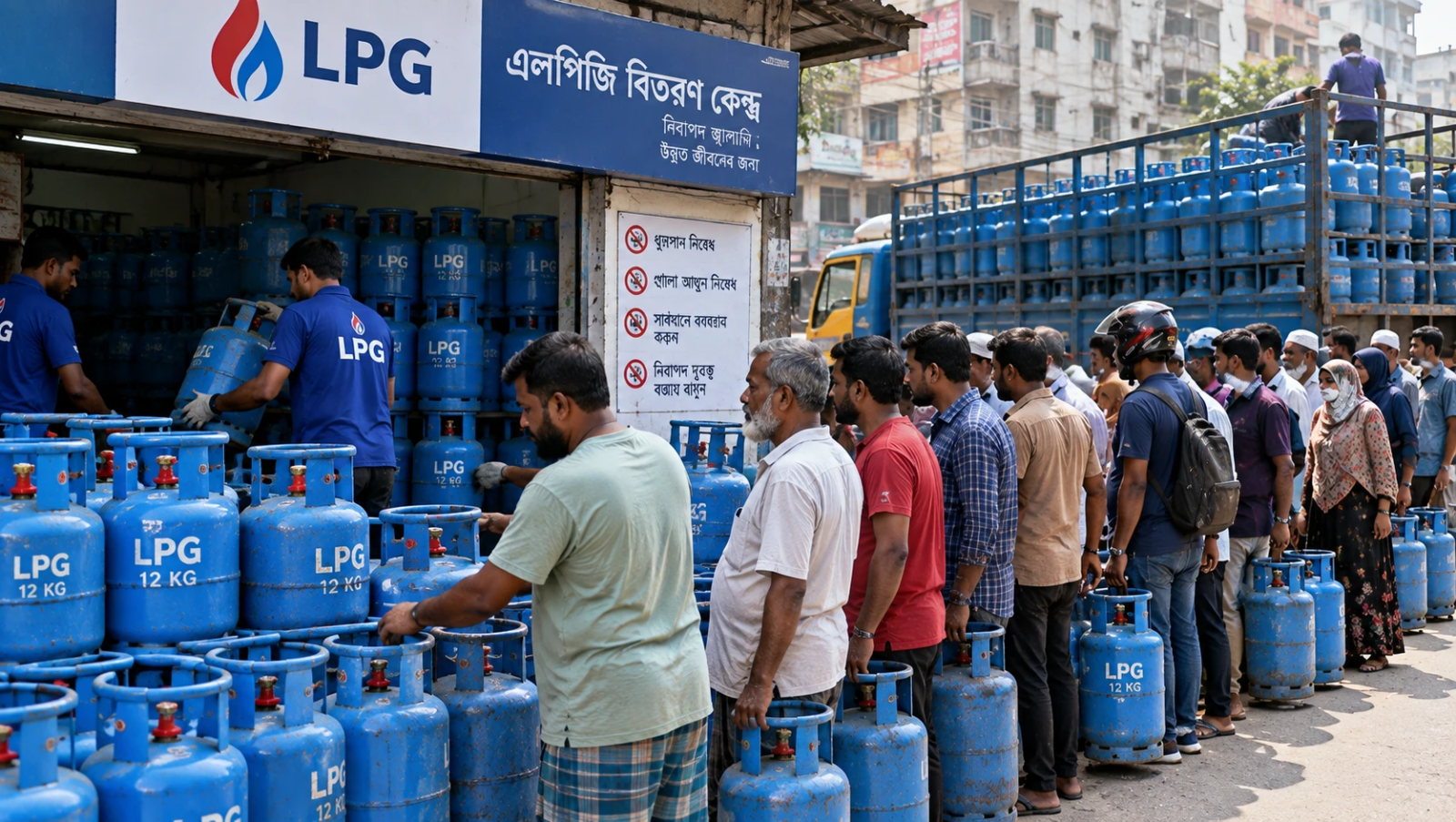
DHAKA — Liquefied petroleum gas (LPG) has become increasingly difficult to find across Bangladesh, with consumers paying substantially above the regulated price and, in some areas, failing to secure supplies even at inflated rates.
The Bangladesh Energy Regulatory Commission (BERC) has set the retail price of a 12-kilogram LPG cylinder at Tk 1,585 for September. However, the cylinder is reportedly being sold for between Tk 2,100 and Tk 2,500 in different parts of the country.
Retailers and distributors blame the situation on inadequate supplies from LPG operators, while operators maintain that there is no overall shortage in the market.
According to import data, Bangladesh imported about 118,742 tonnes of LPG up to Sept. 22, compared with around 157,760 tonnes in August. Operators said imports this month could be 25-30% lower than in August because of disruptions and higher transportation costs linked to instability around major shipping routes, including the Red Sea and the Strait of Hormuz.
Bangladesh relies heavily on imports for its LPG supply, with private operators accounting for about 98% of total imports. Operators said some international suppliers have reduced deliveries by as much as 20% despite existing long-term contracts.
The operators also pointed to higher freight costs and rising international LPG prices as factors affecting imports. The regulated premium for LPG imports in Bangladesh is $160 per tonne, while shipping and traded premiums have reportedly risen to between $250 and $450 per tonne.
Some operators have warned that continued high import costs could discourage imports unless the regulatory premium is revised.
Conflicting claims over supply
During a meeting with Energy Minister Iqbal Hasan Mahmud on Monday, LPG operators said the country had sufficient stocks and that there was no shortage in the market. The ministry said the operators assured the government that supplies would remain adequate.
The minister urged companies to maintain sufficient stocks and prevent shortages at the consumer level that could cause public hardship.
However, retailers interviewed in Dhaka described a different situation.
Mizanur Rahman Mizan, proprietor of a hardware shop in Mohammadpur’s Dhaka Udyan area, said he had been forced to purchase LPG from distributors at higher prices because of reduced supplies.
He said he sold a 12-kg cylinder for Tk 1,850-1,900 on Sept. 23 and 24, but was now selling it for about Tk 2,100.
A Mirpur-based LPG trader said prices had increased by Tk 300-400 within a week, with a 12-kg cylinder currently selling for Tk 2,100-2,200.
Consumer rights groups have alleged that an artificial shortage may be developing even though there is no major import crisis. They have called for stronger monitoring by BERC and law-enforcement agencies to prevent stockpiling and overcharging.
BERC Chairman Jalal Ahmed acknowledged reports of shortages and higher prices, while noting that import volumes did not indicate a major supply crisis. He said higher international freight costs and possible domestic supply problems would be considered by the regulator.
Autogas stations hit by supply problems
The disruption has also affected the autogas sector. About 5% of Bangladesh’s LPG consumption—roughly 20,000 tonnes—is used for vehicles, with around 1,100 autogas stations operating across the country.
According to the Bangladesh LPG Autogas Station and Conversion Workshop Owners Association, around 70% of the stations are currently closed because of inadequate supplies.
Association President Engineer Sirajul Mawla said operators had repeatedly sought assurances over supplies but had yet to receive sufficient guarantees. The association has also formally raised the issue with BERC.
LPG Operators Association of Bangladesh President Mohammad Amirul Haque said operators were not experiencing an import shortage and blamed disruptions further down the supply chain involving distributors, dealers and retailers.
Meanwhile, Azam J. Chowdhury, chairman of East Coast Group, which owns LPG operator Omera Petroleum, said there was no fundamental import crisis but acknowledged that rising international prices could encourage some market players to hold stocks.
With import costs, shipping disruptions and domestic distribution concerns occurring simultaneously, the gap between the regulated LPG price and the price actually paid by consumers has widened sharply, raising concerns over further pressure on household and transport fuel costs.




COMMENTS