
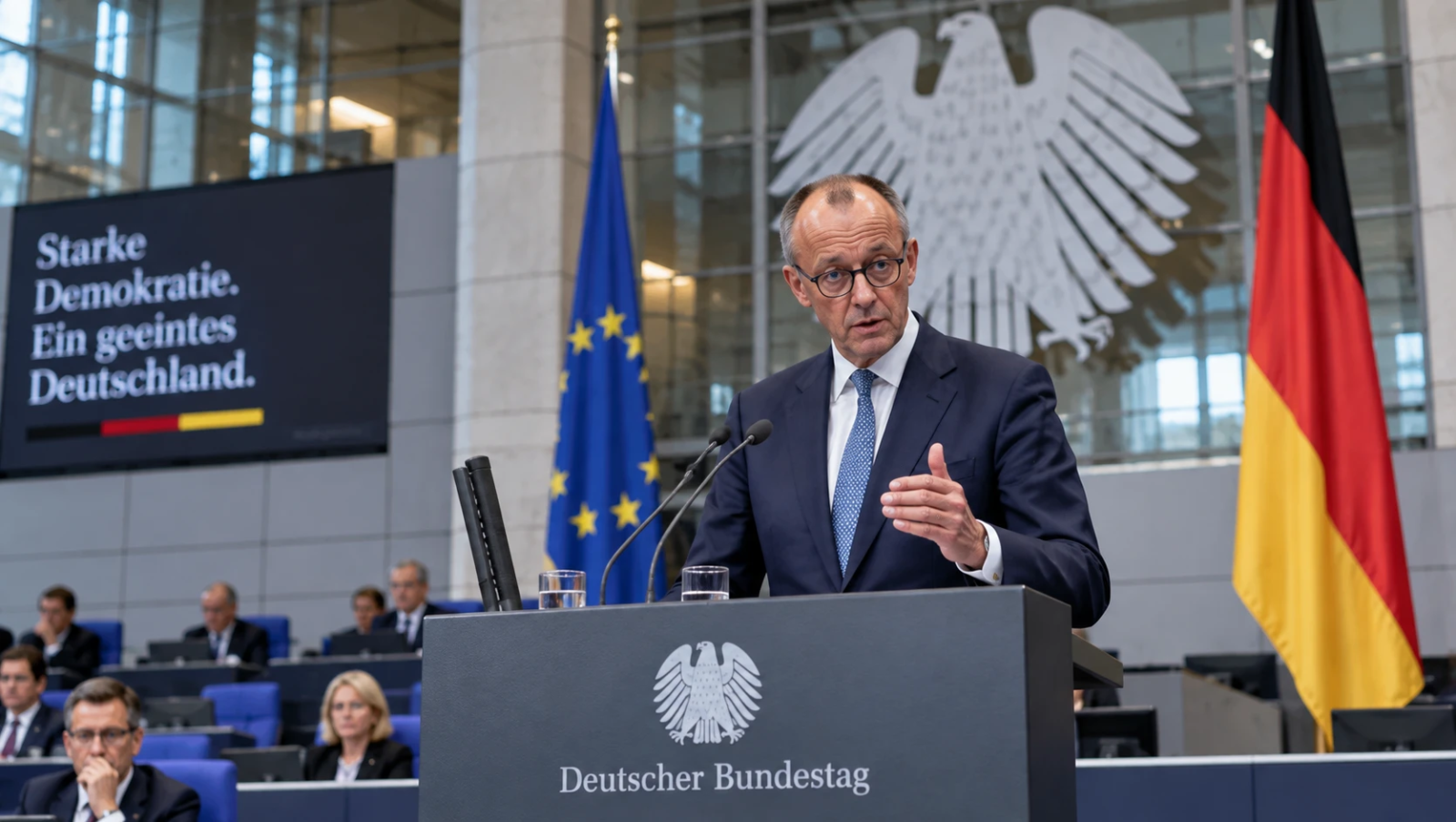
BERLIN — German voters are heading to the polls in two states on Sunday in elections that could increase pressure on Chancellor Friedrich Merz and his governing coalition.
The elections in Berlin and Mecklenburg-Vorpommern come at a difficult time for Merz’s Christian Democratic Union (CDU). Opinion polls suggest the party is facing potentially damaging results, while the far-right Alternative for Germany (AfD) continues to strengthen its position, particularly in eastern Germany.
The latest contests follow a major AfD victory in Saxony-Anhalt two weeks ago, where the party surged to first place while the CDU’s vote share was roughly cut in half.
In Berlin, the CDU is locked in a close contest with Die Linke for the leading position, according to recent polling. In Mecklenburg-Vorpommern, meanwhile, the CDU is hovering around the 5% threshold required to enter the state parliament, raising the prospect of one of its weakest-ever performances in the state.
Pressure grows on Merz
Merz has been in office for only 16 months, but his government has faced mounting challenges, including a sluggish economy, high energy costs and contentious debates over immigration.
The chancellor has also faced criticism over his communication style. His calls for Germans to work more and take less sick leave have irritated some voters, while his tougher approach to immigration has failed to significantly weaken support for the AfD.
Some CDU members have openly questioned whether Merz is sufficiently in touch with voters.
Martin Rohloff, the CDU candidate in Neubrandenburg, said Merz may want to pursue the right policies but lacks the political sensitivity to communicate effectively with ordinary people.
Asked whether Merz should leave office, Rohloff said there were other figures who might have a better connection with the public.
AfD seeks another breakthrough
The AfD is hoping to build on its recent success in Saxony-Anhalt by making further gains in Mecklenburg-Vorpommern.
The party’s anti-immigration and nationalist message has attracted significant support in parts of Germany’s former communist east. Some regional branches of the AfD have been classified as right-wing extremist by Germany’s domestic intelligence authorities, a designation the party rejects.
The governing coalition is also facing difficulties. Merz’s CDU is sharing power with the centre-left Social Democratic Party (SPD), whose national support remains under pressure despite the stronger position of its state premier in Mecklenburg-Vorpommern, Manuela Schwesig.
Schwesig has sought to consolidate voters opposed to the AfD, campaigning under the slogan “Die Frau gegen Blau” — “The Woman Against Blue”, referring to the AfD’s party colour.
Merz vows to continue
Despite growing criticism, Merz has said he intends to remain chancellor and push ahead with his government’s economic, tax and welfare reforms, which are expected to come before parliament this autumn.
Eight German state premiers recently backed Merz, arguing that restoring confidence in the CDU requires political action and greater attention to voters rather than an internal debate over leadership.
Still, speculation about a possible change of chancellor has intensified. German media have reported that Merz is due to meet senior party figures in Berlin on Sunday evening and has cancelled a planned trip to New York next week.
The outcome of Sunday’s elections will therefore be closely watched inside the CDU. A poor showing could add to calls for the party to reassess its political strategy and leadership, while another strong AfD performance would underline the continuing challenge facing Germany’s traditional parties.
For Merz, the elections come as his government attempts to regain public confidence while confronting economic difficulties, immigration disputes and the growing strength of the AfD.






COMMENTS