
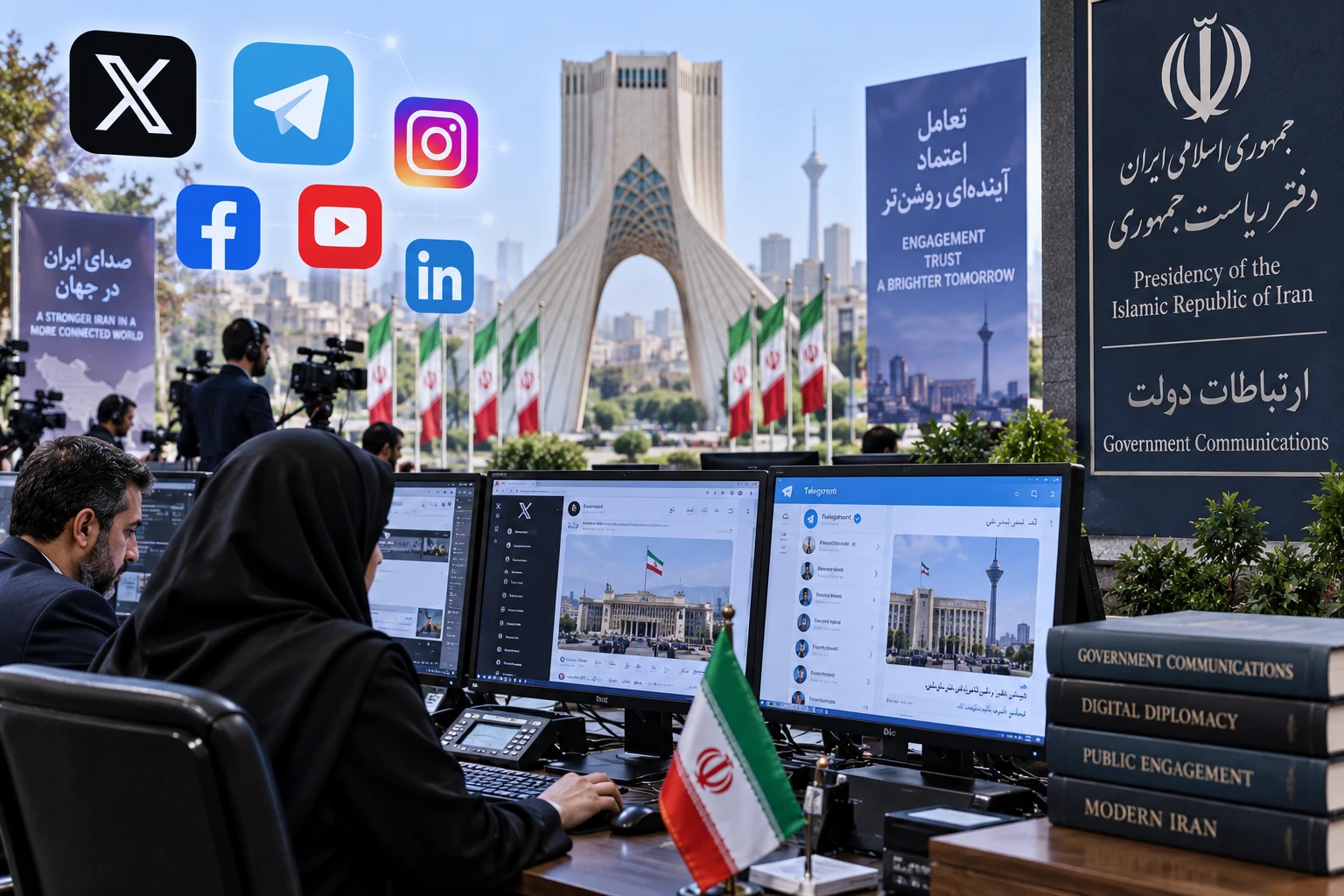
Iran has officially lifted a long-standing ban on government agencies and institutions using international and foreign social media platforms to publish official information and news.
The decision was approved by Supreme Leader Ayatollah Ali Khamenei and described as a “bold decision” by Abbas Pajouki, a senior official at the office of Iran’s First Vice President Mohammad Reza Aref. Pajouki made the remarks in a statement to Iran’s semi-official ISNA news agency.
Criticising the previous policy, Pajouki questioned why the restriction had remained in place for so long.
‘We left the field open to rumours’
Pajouki said an unusual directive issued several years ago had prohibited government bodies and institutions from providing information through foreign messaging and social media platforms.
He argued that the policy had created a communication gap between the government and the public.
According to Pajouki, Iranian citizens, particularly young people and members of the media, continued to consume news and rumours on international platforms, while government institutions were largely absent from those spaces and attempted to respond through alternative platforms.
He said the policy had effectively left the field open to what he described as hostile media campaigns and psychological operations, adding that Iran had paid a heavy price for the approach.
The restrictions have now been removed following what Pajouki described as a unanimous decision by the relevant authorities.
Restrictions on ordinary users remain
The policy change does not amount to a broad relaxation of internet censorship for the Iranian public.
While government institutions will now be permitted to use platforms such as X, Instagram and Telegram to communicate with audiences, many Iranian citizens continue to face extensive restrictions on internet access and social media use.
A large number of users rely on VPN services to access blocked platforms.
The move appears aimed at allowing Tehran to communicate its own narrative more rapidly on international platforms, particularly amid regional conflicts and an increasingly intense battle over information and public opinion.
By allowing official accounts and institutions to operate more openly on Western and international social media, the Iranian government is seeking to reach audiences directly rather than leaving those platforms dominated by competing narratives and foreign media coverage.





COMMENTS