
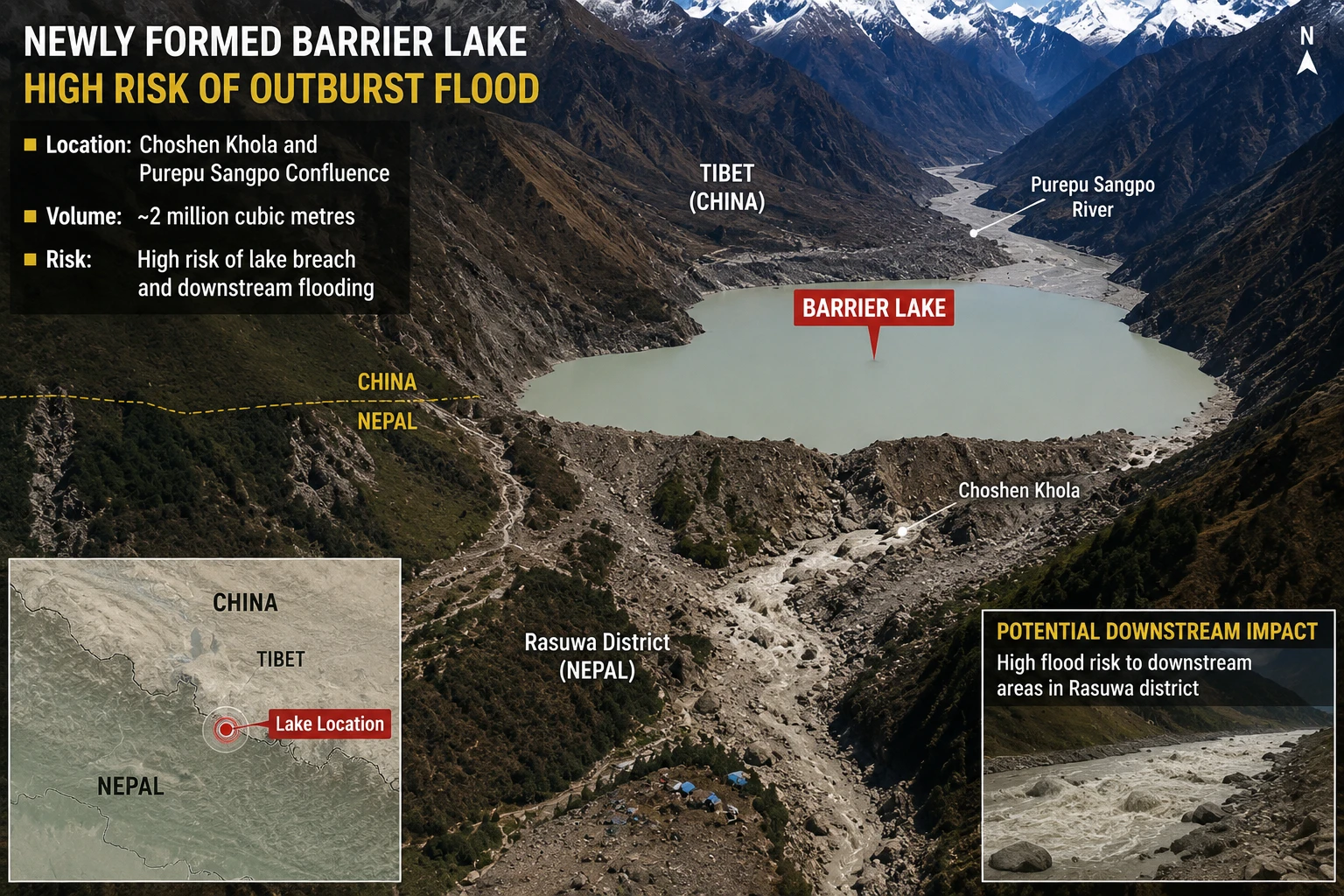
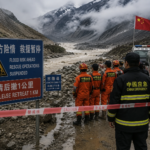
A massive barrier lake has formed in Nepal amid the ongoing flood disaster along the Nepal-China border, and Chinese authorities have warned of a potentially devastating new flood if the lake bursts.
According to China’s Ministry of Water Resources, cited by China Central Television (CCTV) and the Global Times, the lake had accumulated around 2 million cubic metres of water as of Thursday morning. Another 3 million cubic metres could flow into the lake over the next three days, significantly increasing the risk of the natural barrier collapsing.
The lake formed near the confluence of the Choshen Khola and Purepu Sangpo rivers. Originating in Tibet, the two rivers enter Nepal and are known there as the Bhotekoshi River, a major upper tributary of the Trishuli River.
Chinese authorities are closely monitoring the lake and conducting hydrological assessments to evaluate the consequences of a possible breach. They are also preparing for emergency rescue and flood-control operations.
The warning comes a day after a powerful flash flood struck the Bhotekoshi River in Nepal’s Rasuwa district. The sudden surge devastated areas including Timure and Syafrubesi, destroying roads, bridges, buildings and other infrastructure before flowing toward the Trishuli River.
The disaster has already caused widespread loss of life and left hundreds of people missing. Rescue teams are continuing searches for those swept away, while bodies are being recovered from downstream areas.
Authorities are also evacuating residents from areas considered vulnerable to further flooding and restricting traffic on major highways.
The newly formed barrier lake has added another serious threat to an already complex disaster. If the barrier collapses, a sudden surge of water could travel downstream with tremendous force, potentially causing severe damage to communities and infrastructure along the river basin.
Chinese authorities said they would continue monitoring the lake and carrying out hydrological surveillance while preparing for possible emergency rescue and flood-control operations.

COMMENTS