

Nepal is facing the threat of another flash flood after a massive amount of water remained trapped behind a suspected natural dam upstream near the Nepal-China border, experts have warned.
The warning came from the Kathmandu-based International Centre for Integrated Mountain Development (ICIMOD) following Wednesday’s devastating flash flood in Nepal’s Rasuwa area.
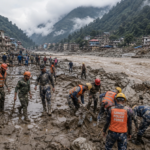
According to ICIMOD, a sudden surge of water, sediment and rocks swept through the Bhote Koshi and Trishuli river systems on August 26. Water levels rose dramatically within minutes, posing a serious threat to communities and infrastructure along the riverbanks.
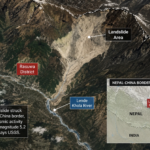
Kyangong Zhang, head of ICIMOD’s Climate and Environmental Risks division, said the affected area—which was also hit by flooding last year—remains at risk. Scientists suspect that an ice or rock avalanche into the Lende Khola River may have triggered the latest disaster, although the exact cause has yet to be confirmed.
Scientists are also investigating the possibility that debris from a landslide formed a temporary natural dam in a narrow section of the upstream river. If such a barrier collapses suddenly, it could unleash another powerful flood downstream.
Authorities have already ordered evacuations in the Jilong port area because of the potential danger. Downstream areas in Nuwakot and Dhading districts are also being monitored closely.
Preliminary assessments indicate that infrastructure and water-flow monitoring systems have again been damaged, while riverside settlements and communities remain vulnerable.
The severity of Wednesday’s flooding was highlighted by the rapid rise in river levels. At Galchhi, the Trishuli River reportedly rose by as much as nine metres within just 30 minutes. At Malekhu, the river level increased by seven metres during the same period.
Shashwat Sanyal, a disaster risk reduction expert at ICIMOD, said the Lende Khola River has experienced two floods within 14 months. He said an ice avalanche may have blocked the river and subsequently triggered the sudden surge, but more evidence is needed to confirm the sequence of events.
Scientists are also examining unusual seismic signals recorded during the flood. Monitoring stations near Jilong and Zhangmu detected abnormal activity, which could potentially have been associated with a snow or landslide event. However, ICIMOD said a direct causal link between the seismic signals and the flooding has not yet been established.
Senior cryosphere specialist Mohammad Farooq Azam said risks associated with glaciers, snow and permafrost are becoming increasingly visible across the Hindu Kush Himalaya region, underscoring the need for stronger cross-border cooperation to respond to such disasters.
ICIMOD Director General Pema Gyamtsho expressed solidarity with Nepal and offered support to those affected by the disaster.
Scientists said climate change is altering glaciers, snow, permafrost and mountain slopes across the Hindu Kush Himalaya. However, they cautioned that it is too early to determine what role climate change played in the latest flooding.
Researchers are continuing to analyse river-flow data, seismic signals and satellite imagery. Their immediate priority is to determine how stable the suspected upstream blockage is.
For people living along the Bhote Koshi and Trishuli river systems, the danger therefore has not yet passed, with authorities placing greater emphasis on evacuation efforts and continued monitoring amid fears of a second flash flood.




COMMENTS