
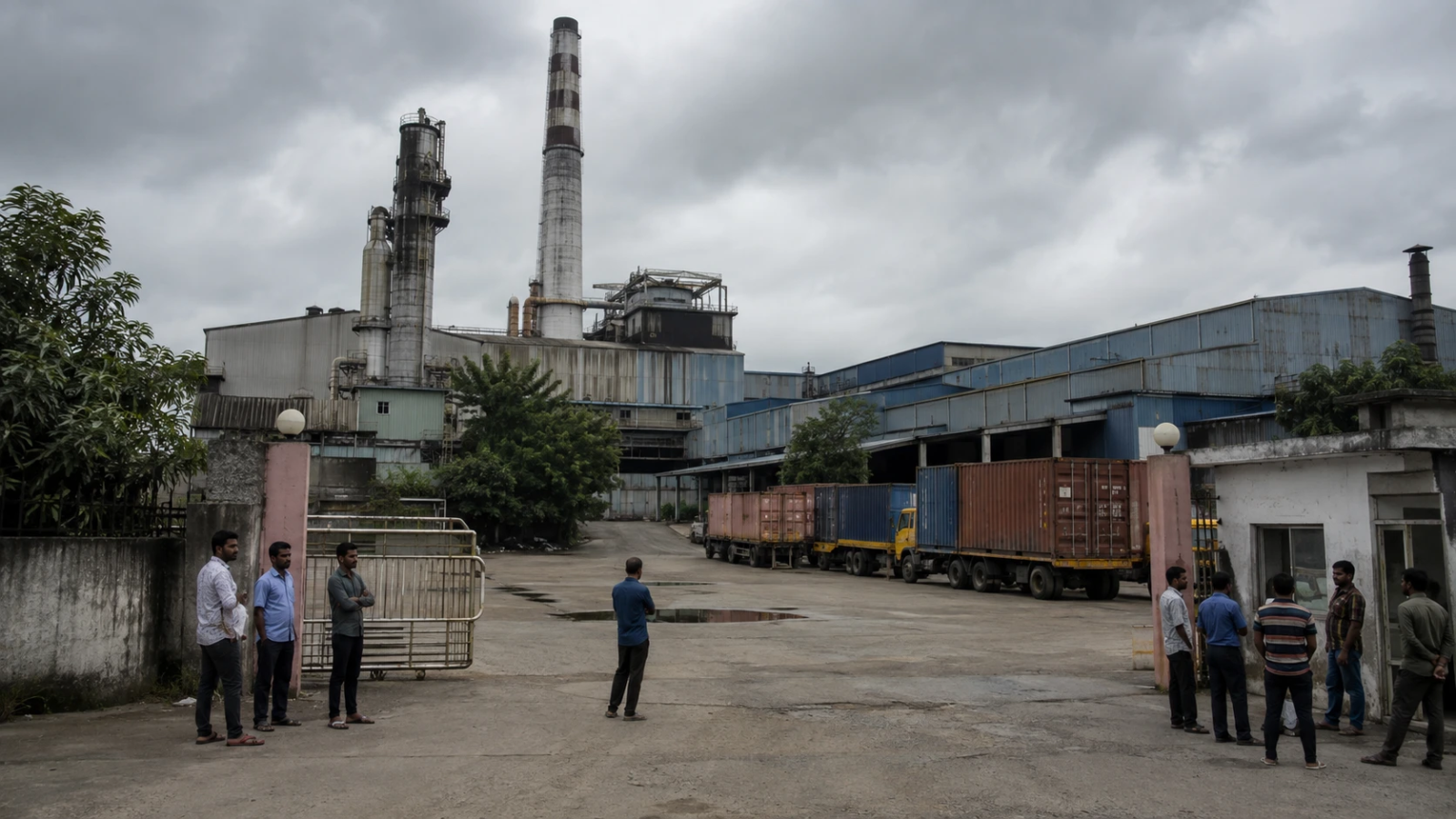
Dhaka, 15 August – A severe gas shortage has brought widespread disruption to Bangladesh’s industrial sector, with factories either shutting down completely or operating at sharply reduced capacity. The crisis has been compounded by power shortages, affecting gas-dependent industries including steel, cement, glass, textiles, dyeing, spinning, garments and essential-goods processing.
The shortage, which has persisted for nearly three weeks, has worsened in its fourth week. On Wednesday, gas supply to the national grid fell to around 2.03 billion cubic feet (bcf) against daily demand of approximately 3.85 bcf, leaving a shortfall of about 1.77 bcf.
Industrialists warn that if the crisis continues, production, employment and exports could suffer significant losses. They are particularly concerned about meeting international buyers’ orders and shipping products on schedule.
Meghna Group Shuts Down 57 Factories
One of the country’s largest industrial conglomerates, Meghna Group, has suspended production at all 57 of its factories because of the gas and electricity crisis.
Group Chairman Mostafa Kamal said production stopped from the night of August 10. The group manufactures sugar, edible oil, wheat, flour, semolina, cement, paper, LPG and animal feed, among other products. Twelve of its factories are dedicated to processing essential commodities.
Kamal said the factories were not receiving enough gas even to operate at minimum capacity. Although demand for their products remains strong, a prolonged shutdown could eventually disrupt supplies of essential goods across the country.
More than 65,000 people are employed by the group.
TK Group and Nabil Group Also Hit
Around 20 of TK Group’s 28 processing factories have reportedly been forced to close because of the gas shortage, while production at the remaining plants has also fallen below normal levels.
At Nabil Group, production capacity at around 20 factories has dropped to between 40 and 50 percent. Although some facilities are using alternative fuels, the additional cost is putting further pressure on businesses.
Industry representatives say existing stockpiles are currently helping meet market demand, but prolonged production disruptions could quickly deplete inventories and create shortages of essential goods.
Hundreds of Factories Shut in Habiganj and Gazipur
The industrial zone in Habiganj has been severely affected, with 171 factories reportedly halting production after gas supplies were disrupted. Industry representatives say nearly 200,000 workers and employees have been left without work.
The situation is also serious in Gazipur. Of roughly 3,500 industrial establishments in the district and metropolitan area, an estimated 12 to 15 percent—around 525 factories—have stopped production because of the gas shortage.
Even larger factories that remain operational are reportedly running at around 40 percent below normal production levels.
Narayanganj Dyeing Sector Faces Major Disruption
Nearly 450 dyeing factories in Narayanganj have suspended production as gas pressure has fallen close to zero.
The disruption is also threatening garment factories because they depend on dyeing units for processed fabric. Fazle Shamim Ehsan, executive president of the Bangladesh Knitwear Manufacturers and Exporters Association (BKMEA), said the shortage of gas has prevented dyeing factories from supplying the fabric required by garment manufacturers.
Industrial areas in Savar and Ashulia are facing similar problems. Low gas pressure is disrupting boilers, dyeing, washing and finishing operations. Industry sources say thousands of workers in the area have been laid off this month.
Narsingdi Textile Industry Takes Heavy Blow
Around 80 percent of textile, dyeing and printing factories in Narsingdi and Madhabdi have reportedly suspended operations, according to industry representatives.
They estimate that the disruptions are causing losses of between Tk 400 crore and Tk 500 crore every day.
Meanwhile, major steel producer BSRM has reportedly shut down all 10 of its major factories.
Garment and Textile Production Falls by Half
The combination of gas and electricity shortages has sharply reduced production in Bangladesh’s garment and textile sectors.
According to Bangladesh Garment Manufacturers and Exporters Association (BGMEA) data, production at many garment factories has fallen to around 50 percent of normal levels.
A large number of textile mills affiliated with the Bangladesh Textile Mills Association (BTMA) have also suspended operations. Those still operating are reportedly unable to produce at more than 30 percent capacity in many cases.
Gas-intensive sectors such as denim, dyeing, finishing and spinning have been particularly badly affected.
Diesel Use Sends Production Costs Soaring
Many industrial facilities are turning to diesel-powered generators to keep production running during gas and electricity shortages. However, the move has dramatically increased operating costs.
An official at a major industrial group said its factories now require around 65,000 litres of diesel a day, costing approximately Tk 70 lakh.
Syed Nasim Manzur, managing director of Apex Footwear, said prolonged load-shedding had increased the company’s diesel consumption by 390 percent. Fuel expenses at Snotex Group have also risen by around 150 percent.
Industrialists fear that continued increases in production costs will weaken Bangladesh’s competitiveness in international markets.
Export Orders at Risk
The biggest concern for industrialists is now the possibility of losing export orders.
Manufacturers warn that if they cannot produce and ship goods on time, international buyers could cancel orders or shift them to competing countries.
Business leaders say the government should provide a reliable schedule for gas and electricity supply so that factories can plan production. Unpredictable supply, they argue, has made it increasingly difficult to maintain production schedules and meet buyers’ deadlines.
Mohiuddin Rubel, founder and CEO of Bangladesh Apparel Voice and a former BGMEA director, said the gas crisis had evolved beyond a problem for the garment sector and had become a major risk for the broader industrial economy.
He noted that the garment industry depends on an integrated supply chain stretching from spinning and dyeing to finishing and garment production. A disruption at any stage can affect the entire production system.
Rubel also warned that maintaining the confidence of international buyers was becoming a major concern. Missing a shipment deadline could put not only a single order but also future business relationships at risk.
LNG Supply Disruption Behind the Crisis
A major factor behind the current shortage is the prolonged shutdown of a floating LNG terminal in Maheshkhali.
The terminal was taken offline after a fire and technical problems on July 21, reducing gas supplies to the national grid by around 450 million cubic feet a day.
Although the terminal partially resumed operations on August 6, it has yet to return to full capacity. Bad weather at sea has also prevented LNG-carrying vessels from docking, further worsening the shortage.
Under normal conditions, two floating LNG terminals supply around 1 billion cubic feet of gas a day. Current supply has fallen below 300 million cubic feet.
Businesses Call for Predictable Gas Allocation
Industrialists are calling for an immediate, transparent and predictable gas allocation system.
Rubel said industrial zones should receive a clear schedule indicating when gas pressure would be reduced and when supplies would return to normal. Such a system, he argued, would allow manufacturers to adjust production plans and communicate realistic delivery timelines to international buyers.
He also said alternative fuels alone could not solve the crisis because the additional cost of diesel-powered production was becoming unsustainable for many factories.
In the longer term, he called for greater investment in domestic gas exploration and drilling, increased LNG supply capacity, diversification of energy sources and improved infrastructure to ensure reliable energy supplies to industrial zones.
Crisis Spreads Beyond the Energy Sector
Mohammad Amirul Haque, president of the Chattogram Chamber, said the gas shortage was no longer simply an energy-sector problem but a national economic crisis.
He said industrial production in Chattogram, including at his own soybean crushing factory, had already been disrupted.
Former BKMEA president Md Fazlul Haque also called for long-term measures, including possible gas rationing with advance notice to industrial users. He stressed the need to reduce waste and improve management within the gas distribution system.
Economists have also called for greater market monitoring and priority gas allocation to factories producing essential commodities. If the crisis persists, depleted inventories could eventually lead to supply shortages and higher prices.
A Growing Threat to the Economy
The consequences of the gas crisis could spread in stages if the situation is not resolved quickly. Lower industrial production could first push up production costs, followed by cash-flow problems, difficulties in repaying bank loans and further layoffs.
For export-oriented industries, delays in production and shipment could result in lost orders, reduced export earnings and lower foreign-currency inflows. At the same time, declining production of essential goods could create shortages and put additional pressure on consumer prices.
The crisis therefore represents more than a temporary energy shortage. It is increasingly becoming a threat to Bangladesh’s industrial production, employment, exports and overall economic stability.
In the short term, industry leaders say the government needs to ensure better allocation of limited gas supplies, prioritize essential-goods and export-oriented industries, and provide predictable supply schedules. In the longer term, greater domestic gas exploration, expanded LNG infrastructure and diversification of energy sources will be crucial.
For Bangladesh, the shutdown of a factory does not simply mean a loss of production. It can also mean lost wages for workers, reduced market supplies and another slowdown in the country’s economic engine.





COMMENTS