
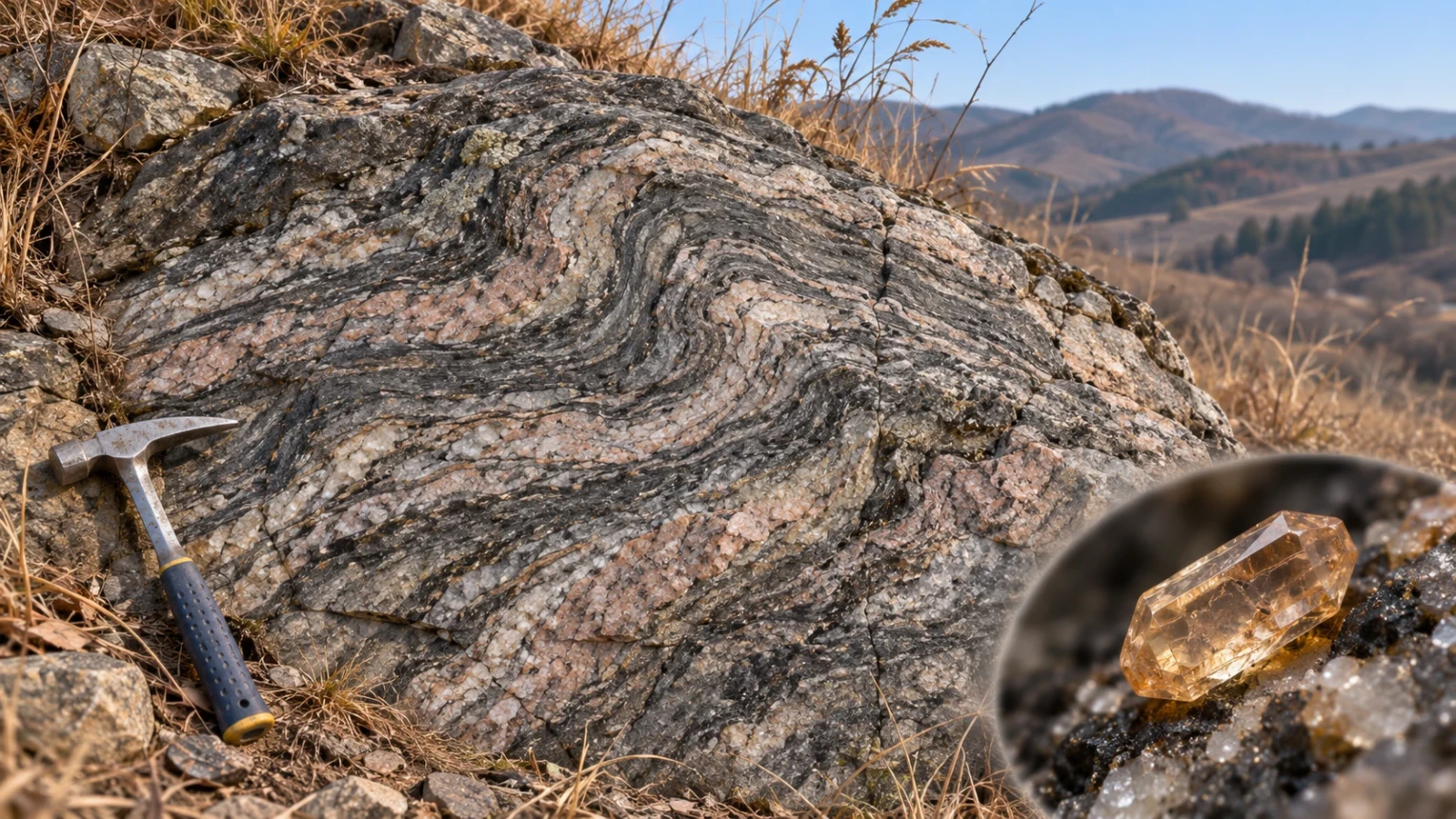
The discovery was reported by China Central Television (CCTV), citing the China Geological Survey under the Ministry of Natural Resources.
The granitic gneiss rock covers an area of approximately 15 square metres. Scientists determined its age by analysing zircon minerals contained within the rock.
William Plans to Strip Harry, Meghan and Their Children of Royal Titles
Previous Age Record Surpassed
The discovery pushes back the age of China’s oldest previously known rock by around 150 million years. It also narrows the age gap between the newly discovered rock and Canada’s Acasta Gneiss, widely recognised as one of the world’s oldest known rocks, to approximately 50 million years.
Uranium and Thorium Analysis
Wan Yusheng, a researcher at the Chinese Academy of Geological Sciences, explained that scientists calculated the rock’s age by examining the ratio of radioactive uranium and thorium decay products, particularly lead, in the zircon crystals.
This method is widely used in geological research to determine the age of ancient rocks.
New Insights into Earth’s Early Geological History
The research also suggests that subduction, the process in which one tectonic plate sinks beneath another, was already active on Earth around 3.95 billion years ago.
According to the findings, the separation of Earth’s crust and mantle had already been completed approximately 4.3 billion years ago.
The discovery could provide valuable evidence for understanding Earth’s early geological evolution and the development of its tectonic systems.






COMMENTS