
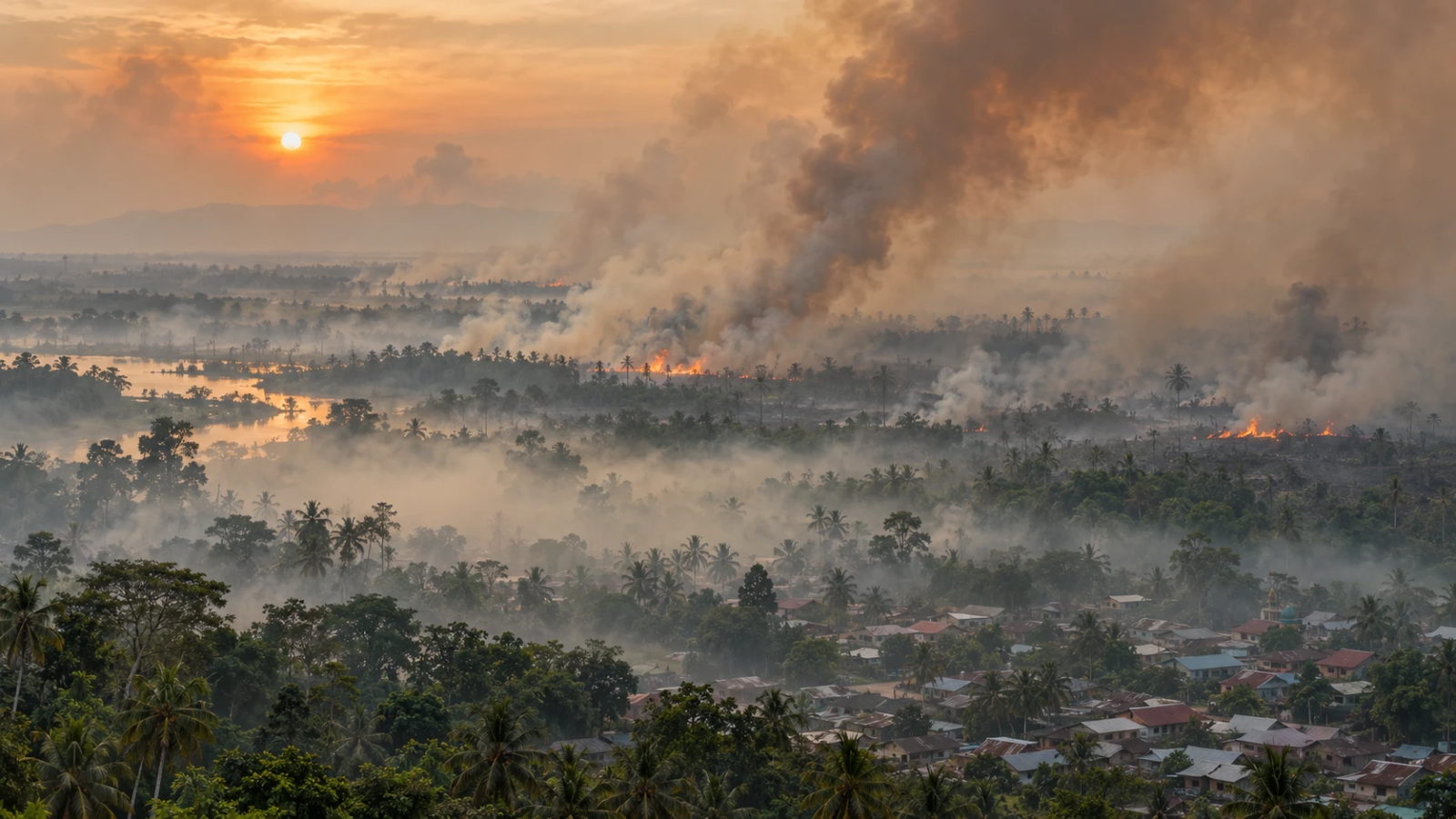
JAKARTA — Air pollution caused by smoke from prolonged forest and land fires killed an estimated 3,560 people in Indonesia in September, more than double the figure recorded in August, according to a new study by the Helsinki-based Centre for Research on Energy and Clean Air (CREA).
The study found that nearly 57.8 million people across the country were exposed to unhealthy, hazardous or extremely hazardous levels of air pollution during the month.
In a statement released on Thursday, CREA said the worsening air quality was largely driven by wildfires, which significantly increased pollution-related deaths.
The research examined the short-term health impacts of fine particulate matter, known as PM2.5. These microscopic particles can penetrate deep into the lungs and enter the bloodstream, increasing the risk of respiratory and other serious illnesses, as well as premature death, according to the World Health Organization.
Most of the estimated deaths occurred in areas including Borneo, Java, Sumatra and eastern Indonesia.
The study also assessed pollution from other sources, including urban power generation, industrial facilities and vehicle emissions. These sources were estimated to have caused an additional 1,750 deaths in September, bringing the total number of pollution-related deaths to 5,310 in the country of nearly 290 million people.
National PM2.5 concentrations during September exceeded the WHO’s annual guideline level by more than seven times. The concentration was around 10 times higher in Sumatra and 24 times higher in Kalimantan, the Indonesian part of Borneo, the report said.
More than 330,000 people across the country were also suffering from acute respiratory complications, according to the study.
Indonesia has been experiencing severe drought associated with El Niño conditions, contributing to the spread of devastating wildfires.
According to forest monitoring organisation Nusantara Atlas, more than 1.9 million hectares of forest had been burned during the first nine months of the year. The Indonesian government has neither confirmed nor rejected the figure.
The thick wildfire smoke has also spread beyond Indonesia, affecting neighbouring Malaysia, Singapore, the Philippines and Timor-Leste, while creating diplomatic tensions with neighbouring countries.
Experts have linked many of the fires to slash-and-burn practices used to clear land for timber, palm oil and mining operations.



COMMENTS