
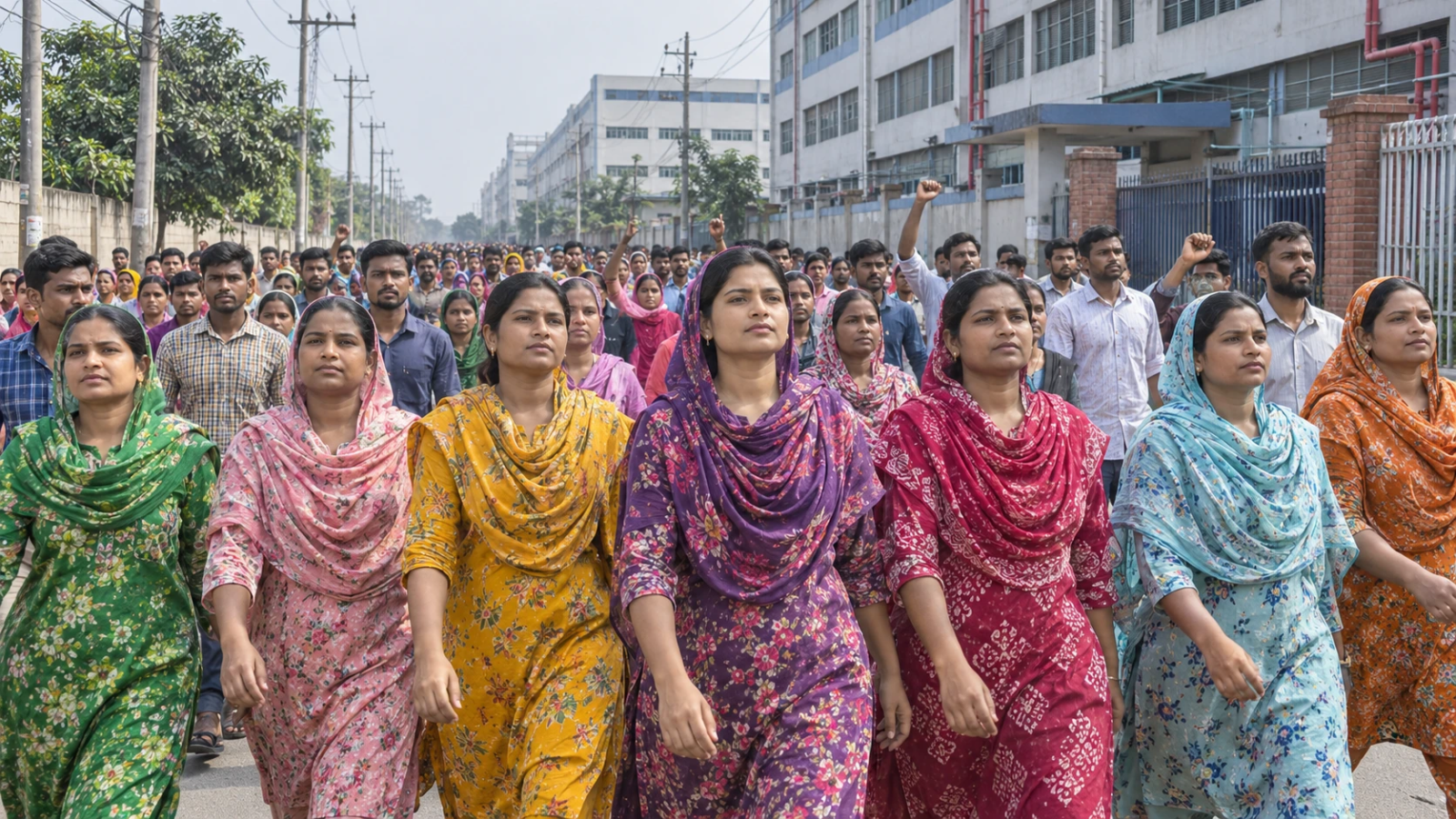
DHAKA : The ongoing movement by garment workers in Bangladesh demanding higher wages and improved working conditions is increasingly being given a political dimension, with allegations that millions of workers across the country, including those in the garment sector, are being labelled as supporters of the Awami League.
Critics allege that such political labelling is being used to undermine legitimate demands by ordinary working people and divert attention from their economic grievances.
Previously, members of Hindu, Buddhist and Christian communities, ethnic minorities, teachers, farmers, rickshaw pullers, street vendors, students, weavers, carpenters, artists, poets and scientists were also allegedly subjected to political labelling. Now, similar allegations have emerged over attempts to portray the garment workers’ movement as politically motivated.
At the centre of the workers’ ongoing protests is the demand to raise the minimum monthly wage from Tk 12,500 to Tk 30,000. Workers say rising prices and the increasing cost of living have made it increasingly difficult to support their families on their current salaries.
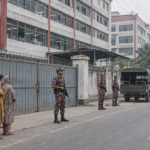
Over the past few days, demonstrations, road blockades and clashes with police have taken place in several industrial areas, including Dhaka, Mirpur, Savar, Ashulia and Gazipur. More than a hundred people, including workers and police personnel, have reportedly been injured, according to various media reports.
The temporary closure of numerous factories has also raised concerns over production and export performance.
The government, meanwhile, has alleged political instigation and the involvement of outsiders in the unrest. Home Minister Salahuddin Ahmed has claimed that certain groups are attempting to exploit ordinary workers to create instability in industrial areas.
However, some workers have rejected these allegations, maintaining that their movement is driven by economic hardship and the demand for fair wages.
Meanwhile, the government has formed a new wage board to review and revise workers’ salaries. According to a Reuters report published on November 4, the board agreed to implement a new wage structure from December, although the extent of the increase had not yet been finalised. Workers are expected to receive their first salaries under the revised structure in January.
Bangladesh’s garment industry is one of the country’s principal sources of export earnings, supporting the livelihoods of millions of workers. Consequently, workers’ legitimate demands, allegations of political interference and the law-and-order situation have all become matters of significant concern.
Observers argue that ordinary workers should not be judged on the basis of alleged political affiliations. Their demands and grievances should instead be examined through an impartial process. At the same time, any incidents of violence or vandalism committed in the name of workers’ protests should also be investigated in accordance with the law.
Dhaka, 5th November

COMMENTS