
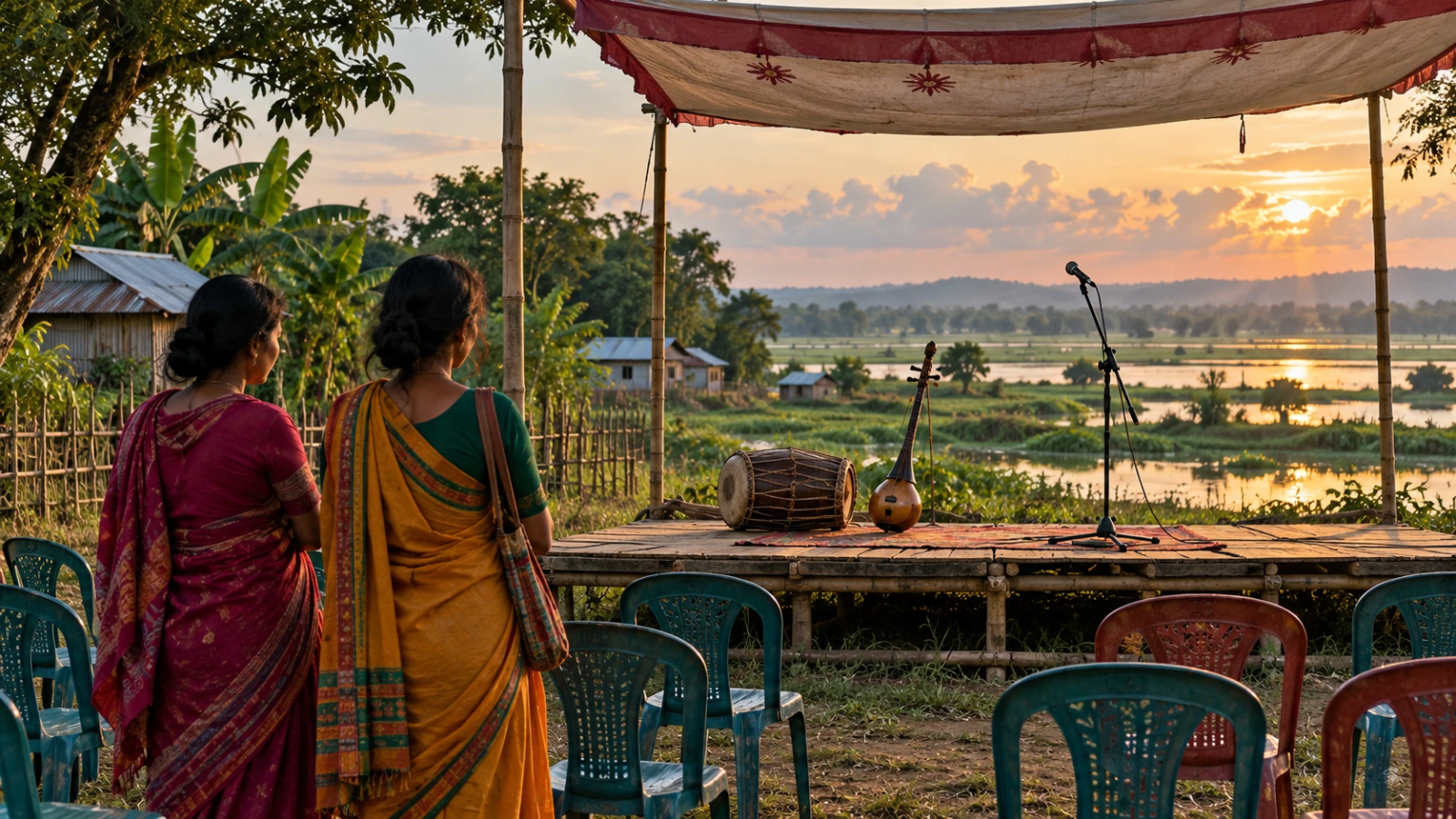
SUNAMGANJ, Bangladesh — A Baul music event in northeastern Bangladesh was cancelled after local residents objected to the participation of female performers, citing religious values and Islamic traditions.
The event was scheduled for Thursday at the home of Shaukat Ali, a UK expatriate, in Hatia-Radhanagar village in Dirai upazila, Sunamganj district, to celebrate his daughter’s birthday. Two local female Baul singers, Tanisha and Nila, were due to perform.
On Oct. 21, local residents Atahar Ali Rahat and Kamrul Hasan Mitu submitted a written complaint to the officer-in-charge of Dirai Police Station, warning that the event could cause tensions in the village.
The complainants said the village was known for its religious traditions and was home to an Islamic seminary, a shrine and several religious scholars. They urged authorities to take steps to preserve religious values and social harmony.
Mitu said the village had previously hosted musical events but that such programmes were no longer held there. He said residents had feared unrest over the planned performance by female artists.
Ali said he had planned a small gathering at his home for his daughter’s birthday but decided to cancel it after objections were raised and police contacted him. The sound system and other equipment were subsequently removed from the venue.
Dirai police chief Aminul Islam said police had spoken with the organisers after the objections were raised. The organisers later agreed not to proceed with the event, resolving the complaint, he said.
The cancellation has prompted concern among cultural activists, particularly as it follows the suspension of a women’s football match in the same upazila earlier this month.
Jahangir Alam, vice-president of the central committee of cultural organisation Udichi, said the two incidents raised questions about the space available for cultural activities and women’s participation in sports.
While acknowledging that some residents might raise concerns over religious values and social harmony, Alam said dialogue and lawful solutions were essential to ensure that disagreements did not lead to the cancellation of events.
Baul music is an important part of Bangladesh’s folk heritage, he said, warning that repeated restrictions could discourage artistic expression and weaken younger generations’ connection with traditional culture.
On Oct. 5, a women’s friendly football match scheduled at Dirai Upazila Stadium between local club Shopnochura Sporting Club and Sylhet-based Zara Sporting Club was also suspended following objections from a local group.
Rakib Ahmed Bhuiyan, president and coach of Shopnochura Sporting Club, said several individuals had visited the upazila executive officer’s office the night before the match and demanded its cancellation. The match was subsequently suspended after discussions with the administration.
Maulana Sharif Uddin, who identified himself as president of a local committee formed to prevent what it describes as anti-Islamic activities, opposed the match, arguing that bringing female players from outside the area to play on the field was unacceptable. He also expressed concern that watching the match could negatively affect young men’s character.
The organisers said the match was intended to encourage girls’ participation in sports and provide opportunities to develop their athletic abilities.
The two incidents have fuelled debate in Dirai over religious values, cultural traditions, social harmony and
women’s participation in public life.





COMMENTS