
PART TWO
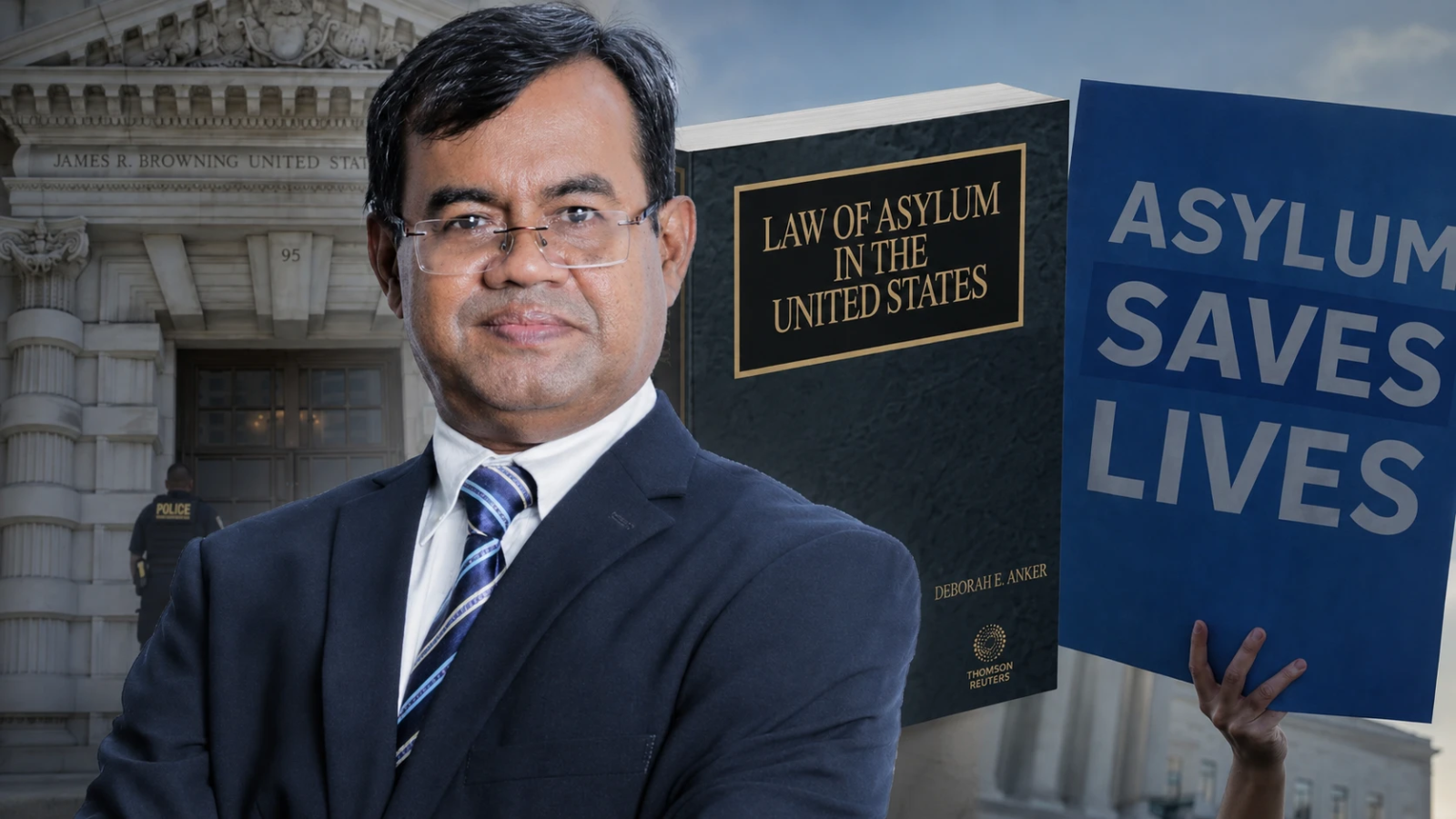
The transformation of the asylum system cannot be separated from the broader political transformation taking place in the United States under President Donald Trump.
It is important to use language carefully. The United States remains a constitutional democracy. Elections continue. Congress exists. Federal courts continue to review executive action, and courts have blocked or limited several Trump administration immigration measures.
But the political direction has changed sharply.
Immigration enforcement, executive power, border security and national sovereignty have become central themes of the administration’s governing philosophy.
This is not unique to America.
Across the world, governments are increasingly presenting migration as a national-security question rather than primarily as a humanitarian or human-rights issue.
That shift has consequences.
When governments begin to define vulnerable populations principally through the language of security, the individual human story can disappear.
The asylum seeker becomes a statistic.
The refugee becomes a border problem.
The dissident becomes a security concern.
The minority becomes a political constituency.
And the person fleeing persecution becomes an unwanted arrival.
Democracy Is More Than Elections
The asylum debate reveals something fundamental about democracy.
Democracy is not simply the right to vote every few years.
A functioning democracy also requires an independent judiciary, freedom of expression, freedom of religion, protection of minorities, due process and respect for dissent.
When those institutions deteriorate, persecution becomes easier.
And when persecution becomes easier, displacement follows.
Weak democratic institutions can produce insecurity. Insecurity can produce displacement. Displacement produces asylum seekers. Restrictive asylum systems can then leave persecuted people without effective protection.
That is why the condition of democracy in countries of origin is so important to the global refugee question.
The Bangladesh Question
For countries such as Bangladesh, this issue is particularly relevant.
A country does not need to be at war to produce people who fear returning home.
Political polarization, attacks on minorities, religious intolerance, suppression of dissent, threats against journalists and activists, arbitrary detention and weakening rule-of-law institutions can create an environment in which people begin to question whether the state can protect them.
The asylum system of another country may ultimately become the last institution available to someone who believes their own institutions have failed.
This does not mean every political disagreement or difficult situation creates an asylum claim. U.S. asylum law requires an applicant to establish specific legal grounds for protection, including persecution or a well-founded fear of persecution on protected grounds.
But the broader principle remains important.
A government that protects political dissenters, religious minorities and ethnic communities reduces the need for its citizens to seek refuge abroad.
A government that fails to do so may contribute to the conditions that produce displacement.
The International Order Is Being Tested
The American asylum debate is therefore part of a larger crisis in the international political order.
After the Second World War, the international community attempted to build institutions designed to prevent another catastrophe. Human rights treaties, refugee protections, international organizations and democratic principles emerged from the belief that sovereignty could not be an unlimited justification for the mistreatment of human beings.
That post-war order is now under pressure.
Great-power competition is intensifying. Wars continue. International institutions face political and financial constraints. Authoritarian governments are becoming more confident. Democratic governments themselves are debating how far executive power should extend.
The funding crisis facing UNHCR adds another layer to the problem. The agency is planning reductions to its 2027 budget and staffing amid a broader decline in international humanitarian funding, even as global displacement remains extraordinarily high.
The contradiction is stark.
The world needs stronger refugee protection at precisely the moment the international system is becoming less capable of providing it.
The Right to Dissent Is a Global Test
Perhaps the most important issue is the right to dissent.
A society that cannot tolerate disagreement will eventually produce people who need protection.
The dissident of today may become the refugee of tomorrow.
This is true whether the dissident challenges a military government, an authoritarian president, a religious extremist group, a dominant ethnic community or a powerful political party.
The principle should be universal.
No government should be able to define peaceful criticism as treason merely because the criticism is uncomfortable.
No religious majority should be able to deny minorities equal protection.
No political movement should be able to claim that electoral victory gives it unlimited authority.
And no democracy should believe that winning an election eliminates the obligation to respect those who voted against it.
A Refugee Is Not a Threat Simply Because He Is Afraid
America has every right to secure its borders.
It has every right to investigate fraudulent asylum claims.
It has every right to remove people who have no legal basis to remain.
But the legitimacy of an asylum system is ultimately measured by what happens to the person whose fear is genuine.
The United States must therefore confront two responsibilities simultaneously: border security and humanitarian protection.
They are not mutually exclusive.
A strong country does not become weaker because it protects a genuine refugee.
A strong democracy does not become less secure because it allows a persecuted dissident to speak.
A strong judiciary does not become less effective because it gives an asylum seeker a meaningful hearing.
In fact, these are precisely the practices that demonstrate institutional strength.
Keep the Door of Refuge Open
Asylum is not merely an immigration procedure. It is a human-rights principle. And the way the United States treats people seeking refuge is ultimately a reflection of its own democratic values.
A democracy is measured not only by elections, laws and institutions, but also by how it treats the vulnerable person who stands before the state and asks for protection.
The United States has every right to enforce its immigration laws, protect its borders and reject claims that do not meet the legal standard. But those responsibilities must never come at the expense of due process, human dignity and the fundamental right to seek protection from persecution.
The question before America is therefore larger than the asylum system itself. It is whether the country can preserve the strength of its borders while remaining faithful to the principles of liberty and human rights that have shaped its democratic identity.
America does not have to choose between security and compassion, or between sovereignty and human rights. It can uphold both.
The door of refuge should not be opened without rules. But neither should it be closed without a fair hearing.
For people fleeing persecution, that door may represent the last possibility of living in safety and dignity.
Keeping it open—fairly and lawfully—is not a sign of weakness.
It is a sign that American democracy still remembers what freedom means.
(Link of part one: When the Door of Refuge Narrows – THE VOICE NEWS
The Author is a Lawyer and Human Rights Defender
COMMENTS